

Indirect calorimetry is a fascinating way to figure out exactly how many calories your body is burning. It works by analyzing the air you breathe—specifically, by measuring the oxygen you consume and the carbon dioxide you produce. This gives us a direct look at your unique metabolic rate, essentially showing us how fast your body's internal engine is running.
Understanding Your Body's True Fuel Burn
Think about it this way: trying to manage your nutrition without knowing your true metabolic rate is like trying to guess your car's fuel efficiency without a working fuel gauge. You'd be relying on rough estimates. Most people do this with their metabolism, using generic online calculators or old formulas that are really just educated guesses.
Indirect calorimetry cuts through the guesswork. It provides the actual, hard data on your body's energy needs.
At the heart of the test is the measurement of your Resting Energy Expenditure (REE). This is the baseline number of calories your body burns just to stay alive—powering things like breathing, blood circulation, and basic cell function. This number is the bedrock of any solid nutrition or fitness plan. And to really put that number to good use, it helps to understand the 5 fundamental principles of nutrition.
Why Direct Measurement Beats Estimation
So, why not just use one of those popular predictive equations, like the Harris-Benedict formula? While they're definitely convenient, these formulas can only estimate your REE using general inputs like age, sex, height, and weight. They're built on averages and can't possibly account for your unique metabolic fingerprint, which is shaped by everything from genetics and muscle mass to hormones.
This is where indirect calorimetry really shines. It's considered the gold standard for measuring energy expenditure in both clinical and research settings for a reason.
In fact, research has shown that predictive equations can be off by more than 20%. That's a massive margin of error that can seriously derail a nutrition plan, especially for someone in a critical care setting where every calorie counts.
By directly analyzing respiratory gases, indirect calorimetry bypasses assumptions and provides a true snapshot of your metabolic reality. It’s the difference between guessing your fuel level and looking at a precise digital readout.
This level of accuracy is what allows health and fitness professionals to move beyond population averages and build truly personalized strategies based on your actual physiological data.
Indirect Calorimetry Vs Predictive Equations
Let's break down the key differences in a simple table. This really highlights why one is a measurement and the other is just a sophisticated guess.
| Attribute | Indirect Calorimetry | Predictive Equations (e.g., Harris-Benedict) |
|---|---|---|
| Method | Measures O₂ consumption & CO₂ production | Estimates energy needs using formulas |
| Data Source | Real-time, direct physiological data | General population data (age, weight, etc.) |
| Accuracy | High precision (gold standard) | Low to moderate precision; can be off by 20% or more |
| Personalization | Accounts for unique metabolic variations | Based on broad averages, cannot capture individuality |
| Best For | Clinical nutrition, elite athletes, metabolic disorders | Quick, general estimates for the healthy population |
Ultimately, while predictive equations have their place for getting a quick ballpark figure, they simply can't compete with the precision and reliability of a direct measurement from indirect calorimetry.
The Science of How Your Breath Reveals Your Metabolism
Ever wondered how the simple act of breathing can unlock the secrets of your metabolism? The science is surprisingly straightforward. Think of it like a campfire. For wood to burn, a fire needs a steady supply of oxygen. As it burns, it releases energy (heat and light) and produces smoke, which is mostly carbon dioxide.
Your body's metabolism works on the exact same principle. The food you eat—carbohydrates and fats—is the "wood" or fuel. Your body uses the oxygen you inhale to "burn" this fuel, creating the energy your cells need to function. The "smoke" from this internal fire is the carbon dioxide you exhale.
Indirect calorimetry is simply the tool that measures this process. By analyzing what you breathe in versus what you breathe out, it can precisely calculate how much oxygen your body is consuming (VO₂) and how much carbon dioxide it's producing (VCO₂). This data gives us a real-time snapshot of how much fuel your body is burning.
Decoding Your Fuel Source with the Respiratory Quotient
But it gets even more interesting. The test doesn't just tell you how much fuel you're burning; it also reveals what kind of fuel it is. This is where the Respiratory Quotient (RQ) comes in. It’s a simple ratio comparing the amount of carbon dioxide produced to the amount of oxygen consumed.
RQ = VCO₂ (Carbon Dioxide Produced) / VO₂ (Oxygen Consumed)
Why does this matter? Because carbs and fats burn differently. They require different amounts of oxygen to be metabolized and, in turn, produce different amounts of carbon dioxide. By looking at the RQ value, we can see which fuel source your body prefers to use at any given moment.
This infographic breaks down how your body's inputs and outputs are measured to determine your energy expenditure.
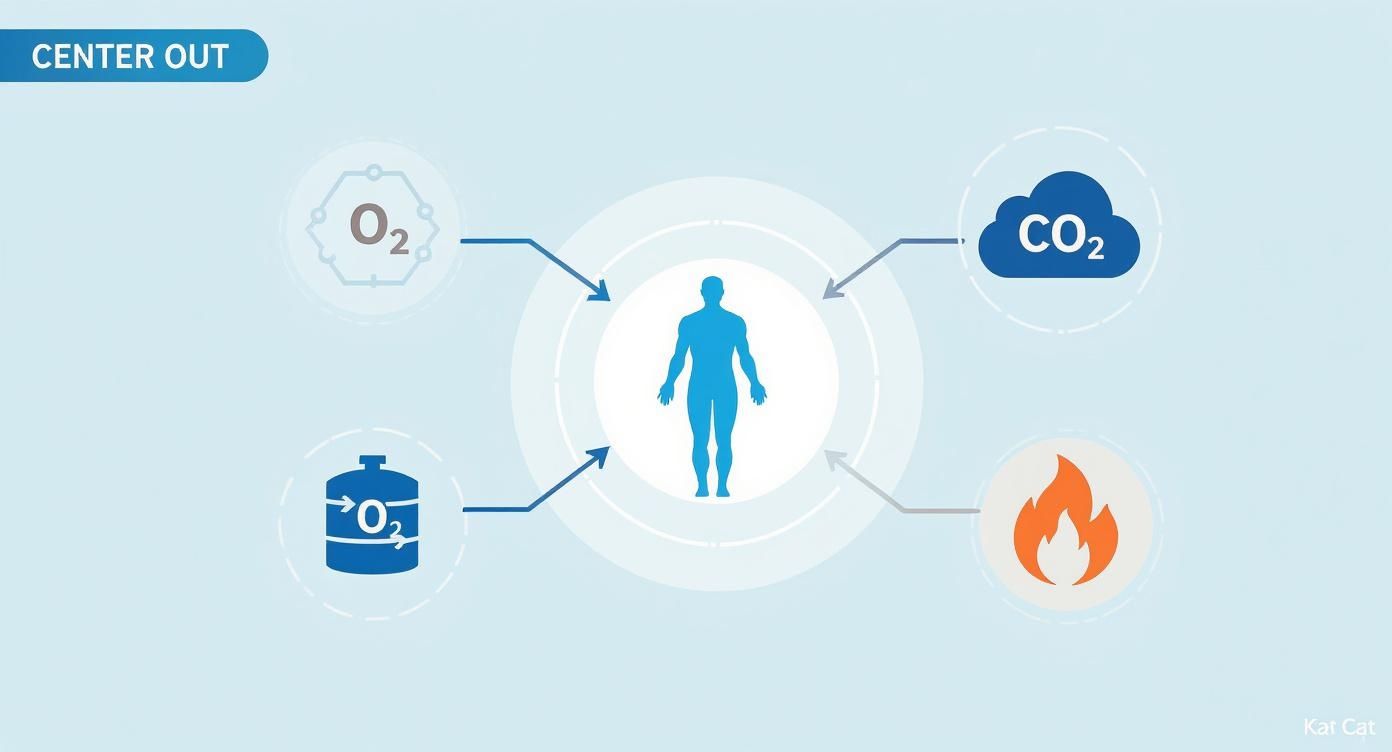
As you can see, the relationship between the oxygen you take in and the carbon dioxide you produce is the key that unlocks the calculation for how many calories you're burning.
What Your RQ Value Means for You
The RQ value falls on a scale, and your specific number provides a clear picture of your primary energy source.
- An RQ of 1.0 indicates your body is burning 100% carbohydrates.
- An RQ of 0.7 means your body is burning 100% fat.
- An RQ between 0.7 and 1.0 shows a mix of both. For instance, an RQ of 0.85 suggests a roughly even split between fat and carbohydrate metabolism.
This single data point can be a game-changer. For an athlete, knowing their RQ during exercise can fine-tune their fueling strategy for peak performance. For someone focused on weight management, understanding their resting RQ helps tailor a diet that encourages the body to burn more fat.
Ultimately, it takes nutritional guidance from a general estimate to a precise, data-driven strategy based on your unique physiology.
Tracing the History of Metabolic Measurement
The desire to peek under the hood of our own bodies isn't anything new. Long before we had smartwatches and calorie-tracking apps, scientists were obsessed with the invisible engine that turns food into fuel. The core ideas behind indirect calorimetry didn't just appear overnight; they grew out of early experiments that built the very foundation of metabolic science.
Our story really gets going in the 19th century. This was an era of clunky, complex lab equipment, but the thinking behind it was brilliant. Pioneers started figuring out how to measure energy use by analyzing the very air people breathed, moving our understanding from a vague concept to something that could actually be measured.
From Early Laboratories to Modern Devices
The first major leap forward came from scientists like Regnault and Reiset in the 1800s. They built a closed-circuit system to measure how much oxygen a subject consumed and proved something incredible: the ratio of carbon dioxide produced to oxygen consumed changes depending on what kind of food is being burned for fuel.
This was the key. Suddenly, there was a direct link between our breath and whether our bodies were using fats, carbs, or proteins. If you're curious about the nitty-gritty, you can dive deeper into the early days of metabolic research to see just how far we've come.
These early experiments proved a fundamental truth that's still at the heart of indirect calorimetry today.
The air we exhale is a direct window into the metabolic processes happening inside our bodies.
The Evolution of Metabolic Testing Technology
For decades, the technology continued to evolve. One of the most famous pieces of early equipment was the Douglas bag—literally a giant, inflatable bag that someone would breathe into. Researchers would then haul the bag back to the lab to analyze the collected air. It was groundbreaking for its time, but you can imagine how impractical it was. This kept metabolic testing mostly confined to research labs.
Thankfully, things didn't stay that way. As technology advanced through the 20th century, sensitive gas analyzers and computers started replacing these cumbersome methods. This is what led to the sophisticated metabolic carts we see in hospitals and high-performance sports clinics today.
These innovations are what finally brought indirect calorimetry out of the research lab and into the real world. Now, it's an essential tool in clinical nutrition, sports science, and personalized health, all thanks to more than a century of refinement that established it as the gold standard for measuring metabolism.
What to Expect During a Metabolic Test
The idea of a “metabolic test” might sound a little intimidating, but the actual experience is surprisingly simple and completely non-invasive. Knowing what happens from start to finish can take the mystery out of the process, so you can feel comfortable and confident about discovering your unique metabolic rate.
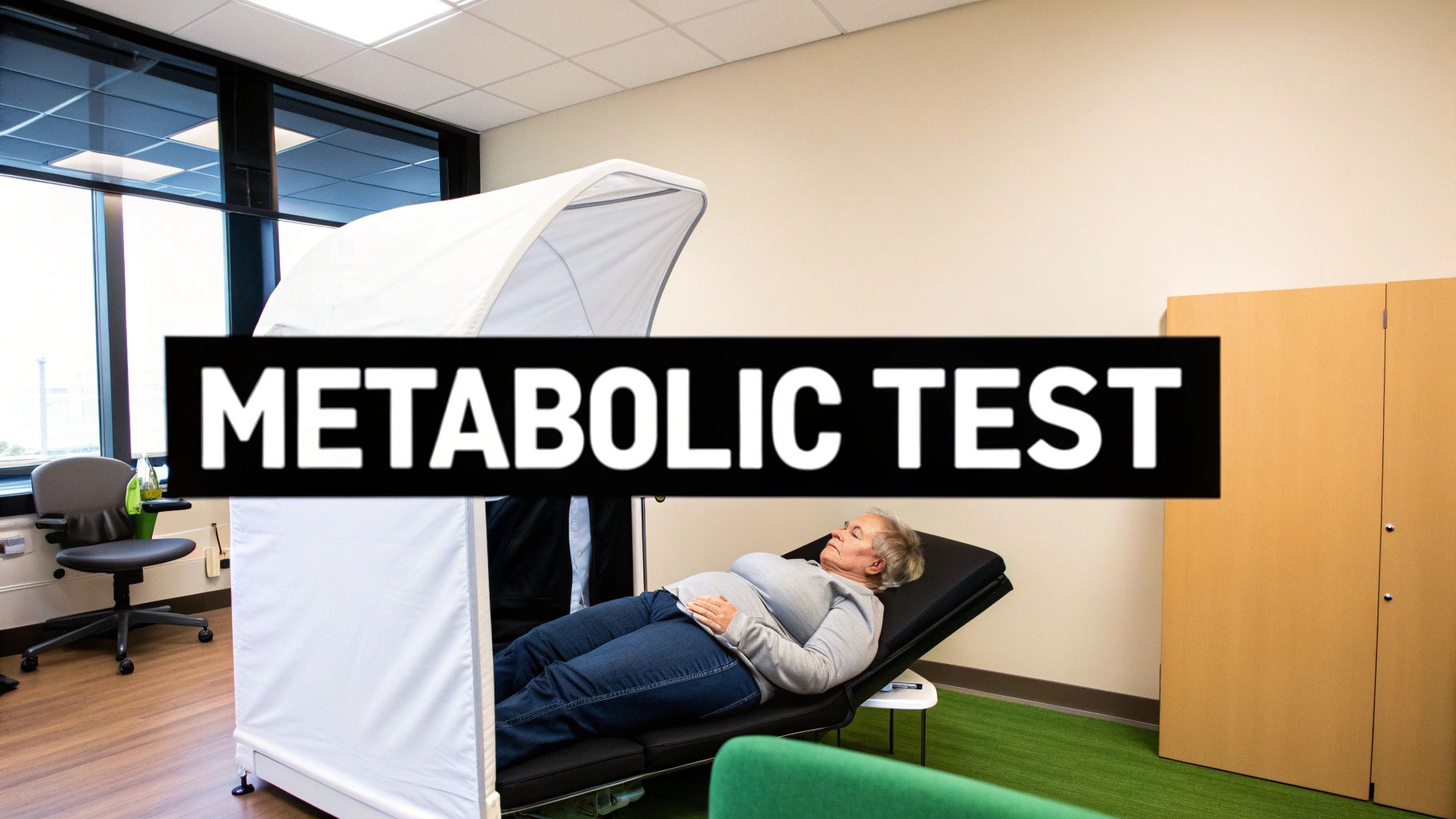
The gear can look different depending on where you go. In a hospital or clinical research setting, you'll often see a metabolic cart—a sophisticated computer system on wheels with highly sensitive gas analyzers. For tests at a fitness center or a nutritionist's office, the setup is usually a bit simpler, involving either a comfortable canopy hood that rests over your head or a lightweight mask covering your mouth and nose.
Preparing for Your Test
To get a truly accurate snapshot of your metabolism, a bit of prep work is key. The whole point is to measure your body in a genuine resting state, without anything temporarily revving up your engine.
You’ll likely be given a short checklist to follow before your appointment:
- Fast for several hours: This typically means no food or drinks (other than water) for 5-12 hours before you come in.
- Avoid caffeine and stimulants: Plan to skip coffee, tea, energy drinks, and certain medications for at least 4 hours leading up to the test.
- Hold off on strenuous exercise: Don't do any intense workouts for 12-24 hours beforehand. We want to measure your baseline, not your post-workout recovery burn.
- Steer clear of nicotine: Avoid smoking or using any nicotine products for at least an hour before the test.
Following these steps is non-negotiable for accuracy. They ensure the measurement reflects your true Resting Energy Expenditure (REE), not a metabolism that's artificially inflated by digestion, a caffeine buzz, or a recent gym session.
The Testing Procedure Itself
The test itself is actually quite relaxing. You’ll be asked to lie down or sit back in a comfortable, reclined chair, usually in a quiet, dimly lit room. The main goal here is for you to be as still and relaxed as possible for the entire measurement, which typically takes about 15 to 25 minutes.
Once you’re comfortable, the technician will place the mask or canopy hood on you. From there, your only job is to breathe normally. Seriously, that's it. No special breathing techniques or deep breaths are needed—just breathe as if you were resting quietly at home.
While you relax, the machine is hard at work, capturing every single breath. The analyzers are measuring the exact amount of oxygen you're taking in and the carbon dioxide you're breathing out. This data streams directly into the system, which runs the calculations to pinpoint your metabolic rate. The entire process is completely passive on your part.
The ease of modern indirect calorimetry is a direct result of incredible technological leaps. It wasn't until the 1960s that breakthroughs in electronics and computing allowed for automated, highly precise assessments. This paved the way for the commercial metabolic carts that brought these measurements out of the lab and to the patient's bedside. You can learn more about the fascinating evolution of metabolic measurement techniques and see how they became so accessible.
Once the test is over, the mask or hood comes off, and you're all finished. The system will have gathered all the data it needs to create a detailed report on your metabolic function, giving you the precise number of calories your body burns at rest.
Real-World Uses in Health and Performance
Knowing the science is one thing, but seeing how metabolic data actually changes outcomes is where indirect calorimetry really shines. This isn't just about getting an abstract number; it's about gaining a critical piece of the puzzle that guides decisions in both high-stakes clinical settings and elite performance arenas. The precision it offers shifts health strategies from educated guesswork to data-driven certainty.
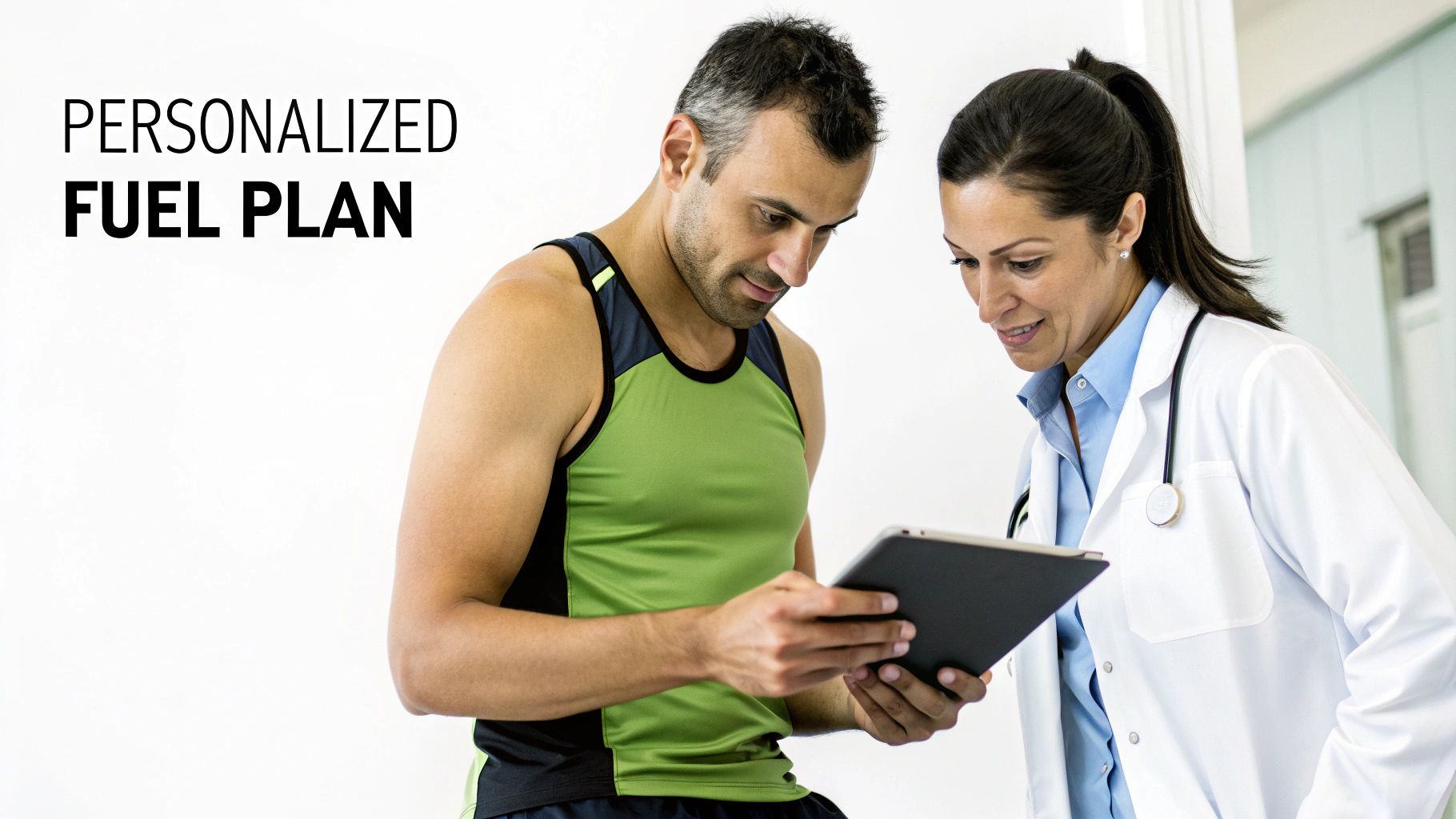
From intensive care units to Olympic training facilities, understanding a person's exact caloric needs can be the difference between stagnation and success—or even life and death. It provides a clear, personalized roadmap for fueling the body correctly for whatever challenge it's facing.
Critical Care and Clinical Nutrition
In a hospital, particularly in the intensive care unit (ICU), a patient's metabolic state can be incredibly unpredictable. Severe illness, trauma, and the body's stress response can cause energy needs to swing wildly. In these situations, generic predictive equations often miss the mark, creating serious risks.
- Underfeeding can lead to malnutrition, muscle wasting, a weakened immune response, and a much longer road to recovery.
- Overfeeding is just as dangerous. It can cause complications like high blood sugar (hyperglycemia), fatty liver disease, and increased carbon dioxide production, which puts extra strain on patients struggling to breathe on their own.
Indirect calorimetry cuts through the uncertainty. It provides the patient's exact energy expenditure, allowing dietitians to create a nutritional support plan that is perfectly dialed in. This ensures critically ill patients get precisely what they need to heal without the harmful side effects of a miscalculation.
For patients with conditions like a severe traumatic brain injury (TBI), nutritional support is a cornerstone of management. Accurately meeting their heightened caloric needs is essential to support recovery and maintain vital body mass during a period of intense physiological stress.
Optimizing Athletic Performance
For any athlete, metabolism is performance. Understanding exactly how their body uses fuel is a massive competitive advantage. Indirect calorimetry gives coaches and sports scientists the hard data needed to build nutrition plans that align perfectly with an athlete’s training load and performance goals.
By looking at the Respiratory Quotient (RQ), they can see whether an athlete is burning primarily carbs or fats at different exercise intensities.
- Endurance Athletes: A marathoner might use this information to train their body to become more efficient at burning fat, which helps preserve their limited carbohydrate stores for that final kick at the end of a race.
- Strength Athletes: A powerlifter can make sure they’re consuming enough calories to fuel muscle repair and growth without putting on unwanted body fat that could move them up a weight class.
This level of metabolic detail is key to optimizing fuel efficiency, boosting endurance, and dramatically speeding up post-workout recovery.
Personalized Weight Management
That frustrating weight loss plateau? It’s often caused by a simple mismatch between calories consumed and calories burned. Standard calorie targets are just based on population averages, but your metabolism is entirely unique to you. Indirect calorimetry removes the guesswork.
By measuring your precise Resting Energy Expenditure (REE), a nutritionist can build a plan based on your body's actual numbers. This personalized strategy is far more effective and sustainable than following generic advice because it ensures you're in a proper caloric deficit for fat loss without causing your metabolism to crash.
Nonprofit organizations conducting research in health and performance fields often rely on external funding; learning about the process of applying for research grants is a vital step in supporting such scientific endeavors.
Frequently Asked Questions About Metabolic Testing
https://www.youtube.com/embed/VAiiXhyoAnc
Stepping into the world of metabolic science often brings up a ton of questions. You might understand the basics of indirect calorimetry, but what does it all mean in practice? Let's walk through some of the most common things people ask before they book a test.
This isn't about dry science; it's about giving you clear, practical answers so you can feel confident about what's involved.
How Accurate Is Indirect Calorimetry?
This is usually the first and most important question, and for good reason. The short answer is: it’s incredibly accurate. In fact, indirect calorimetry is considered the gold standard for measuring Resting Energy Expenditure (REE).
Think about it this way: most calorie calculators are just making an educated guess based on formulas. These predictions can easily be off by 20% or more because they don't know you. Indirect calorimetry isn't guessing. It directly measures your body's oxygen use and carbon dioxide output, giving you a real-time snapshot of your unique metabolism.
Of course, getting that pinpoint accuracy relies on two key things:
- Following Protocol: You have to do your part. Following the pre-test instructions, like fasting and resting, is non-negotiable for a reliable result.
- Using Quality Gear: The clinic must use validated, high-precision equipment. Professional metabolic carts ensure the gas analysis is spot-on.
Is This Test Right for Me?
While practically anyone could find their metabolic data useful, some people stand to gain the most from this test. Indirect calorimetry is a game-changer if you're:
- An Athlete: Trying to dial in your nutrition perfectly to boost performance, improve endurance, and speed up recovery.
- Struggling with Weight: Hitting a stubborn weight-loss plateau is incredibly frustrating. This test can reveal why generic calorie targets aren't working for you.
- A Patient in a Clinical Setting: It's essential for individuals in critical care or for managing metabolic disorders where precise nutritional support is vital for recovery.
- Just Plain Curious: Maybe you're a health enthusiast who's tired of guesswork and wants real data to build a truly personalized wellness plan.
Indirect calorimetry helps you move beyond generic health advice. It hands you a fundamental piece of your personal health puzzle—your actual daily calorie burn—so you can finally make confident, informed decisions about food and fitness.
What Is the Difference Between RMR and REE?
You'll almost always hear the terms Resting Metabolic Rate (RMR) and Resting Energy Expenditure (REE) used as if they're the same thing. For all practical purposes, they are. Both measure how many calories your body burns when you're completely at rest.
If you want to get technical, there's a tiny scientific distinction. REE is the direct measurement of energy being used, which is what the indirect calorimeter calculates from your breath. RMR is a slightly broader term for all your body's metabolic processes at rest.
In the real world, the difference between the two numbers is typically less than 10%, so in fitness and even most clinical settings, the terms are considered interchangeable.
How Much Does a Test Cost?
The price for an indirect calorimetry test can vary quite a bit. It really depends on who is doing the test and where you're located.
A few factors that influence the price are:
- The type of facility (a hospital, a private clinic, or a high-performance lab).
- Whether a detailed consultation with a professional is included.
- Your geographic location.
On average, you can expect to pay somewhere between $75 and $250 for a single test. While it's an investment, many people find it's worth every penny for the clarity it provides. Having actionable, personalized data can save you months of frustration and help you reach your goals much faster.
At Cartwright Fitness, we provide the validated, high-precision equipment that professionals trust for accurate metabolic testing. Explore our range of Cosmed metabolic analysers and other professional-grade solutions.