

You've probably heard the term exercise-induced asthma, but in the medical world, we have a more precise name for it: exercise-induced bronchoconstriction, or EIB. It's a common misconception that this means you're allergic to exercise. That’s not it at all.
Instead, think of EIB as a temporary tightening of your airways that kicks in during or right after a good workout, making it a struggle to catch your breath.

What’s Really Happening in Your Lungs?
Picture your airways as a set of flexible drinking straws. Normally, these straws stay wide open, letting air flow in and out with ease, even when you’re pushing yourself hard. But for someone with EIB, those straws get pinched and narrow during exertion. This restriction is what causes those classic symptoms like coughing, wheezing, and a feeling of tightness in your chest.
This isn’t just an issue for people with chronic asthma. It can happen to anyone—from weekend joggers to professional athletes. It’s simply a physiological reaction to breathing hard.
When you exercise, you naturally start breathing faster and deeper, and you tend to breathe through your mouth. This bypasses your nose, which usually acts as a built-in filter, warming and humidifying the air before it hits your lungs. The sudden rush of cold, dry air can be a shock to the sensitive lining of your airways, causing the muscles around them to squeeze shut.
Who Gets Exercise-Induced Asthma?
EIB is far more common than you might think, affecting a surprisingly wide range of people. And while it's often seen in those who already have an asthma diagnosis, plenty of people experience it without any other underlying respiratory issues.
The prevalence of EIB is estimated to be between 5% and 20% of the general population. But among elite athletes, that number skyrockets to anywhere from 30% to 70%, depending on their sport.
That huge jump shows just how much the type of activity and the environment matter. Endurance sports in cold weather, like cross-country skiing or hockey, are notorious triggers.
Exercise-induced bronchoconstriction is a major cause of airway narrowing linked to physical activity, affecting people worldwide, whether they have asthma or not. For a deeper dive, you can explore the full research on EIB prevalence to see just how widespread it is.
The good news is that it’s completely manageable. This guide will walk you through exactly why EIB happens, what it feels like, and the best ways to keep it under control so you can stay active and breathe easy.
Here's a quick look at the signs you might be experiencing EIB. Recognizing these symptoms is the first step toward getting the right diagnosis and management plan.
Key Symptoms of Exercise-Induced Asthma
| Symptom | Description |
|---|---|
| Shortness of Breath | Feeling out of breath sooner or more intensely than your fitness level would suggest. |
| Coughing | A persistent dry cough, especially after you stop exercising. |
| Wheezing | A whistling sound when you breathe out. |
| Chest Tightness | A feeling of pressure or squeezing in your chest. |
| Fatigue | Getting tired more quickly than usual during physical activity. |
| Decreased Performance | Not being able to perform at your usual level or intensity. |
If any of these sound familiar, it doesn't mean you have to hang up your running shoes. It just means it's time to understand what's going on and learn how to handle it.
What's Really Happening Inside Your Lungs?
Ever wondered what’s going on in your chest when exercise brings on that tell-tale wheeze? It’s a common misconception that the physical activity itself is the problem. The real trigger is the air you’re breathing and, more importantly, how your airways react to it.
Think of the delicate lining of your airways as a moist, sensitive surface. As you start working out, your breathing naturally ramps up. You start gulping in huge volumes of air, usually through your mouth, which bypasses the neat little warming and humidifying system built into your nose.
This sudden rush of air—especially if it’s cool and dry—hits your airways like a blast from a hairdryer. It rapidly saps the moisture and warmth from the surface, causing the cells that line these passages to lose water and dehydrate.
The Science Behind the Squeeze
This dehydration sets off a defensive chain reaction. In response to the abrupt change in temperature and humidity, your airways release a flood of inflammatory chemicals known as mediators. These are the very same substances, like histamines and leukotrienes, that your body deploys during an allergic reaction.
These mediators act like an alarm bell, signaling the smooth muscles coiled around your airways to clamp down and tighten. This sudden narrowing is called bronchoconstriction, and it’s the direct cause of the chest tightness, coughing, and shortness of breath you feel. It's essentially your body overreacting to what it perceives as a harsh, threatening environment.
Scientists often refer to this as the "osmotic theory." As water evaporates from the airway surface, the fluid left behind becomes saltier. This imbalance pulls water out of the surrounding cells, which in turn triggers the release of those inflammatory mediators and causes the muscles to constrict.
Environmental Factors That Turn Up the Dial
While cool, dry air is the primary mechanism, other things in your environment can make your airways even more twitchy and sensitive. These irritants can prime your lungs for a reaction before you even take your first stride.
Here are a few common culprits that can make things worse:
- Cold Air: This is the big one. Cold air simply can't hold as much moisture as warm air, making it a powerful trigger for EIB.
- Dry Air: Even on a warm day, low humidity can have the same drying effect. Recognizing dry air as an environmental factor is key to understanding and managing your symptoms.
- Airborne Pollutants: Irritants from traffic, smoke, or even strong chemical fumes can aggravate your airways, making them more vulnerable during a workout.
- Allergens: If you have allergies, exercising outside when pollen counts are through the roof can feel like a one-two punch to your lungs.
- Chlorine: Many swimmers experience EIB not just from the exertion, but from breathing in the chemical vapors from treated pool water, which directly irritate the airway lining.
Getting a handle on these hidden triggers is the first real step toward managing your symptoms. Once you know what makes things worse, you can start taking control of your environment and finally breathe easier when you move.
Recognizing the Telltale Symptoms of EIB

It’s surprisingly easy to mistake the signs of exercise-induced bronchoconstriction (EIB) for just being out of shape. You push hard, you get winded—that’s normal, right? But the key is knowing what isn’t normal and paying attention to when these feelings pop up.
One of the classic hallmarks of EIB is the timing. Symptoms usually don't hit you mid-stride. Instead, they typically emerge about 5 to 10 minutes after you stop exercising, though a particularly tough workout might trigger them during the activity itself. This delayed reaction is a big clue.
Common Symptoms and What They Feel Like
Reading a clinical list of symptoms is one thing, but understanding the actual physical sensation is what really helps connect the dots. People dealing with EIB often describe a specific set of feelings that are a world away from simple breathlessness.
Here’s a more practical breakdown of what you might experience:
- Persistent Coughing: We’re not talking about a little throat-clearing tickle. This is often a dry, hacking cough that just won’t quit, long after your heart rate is back to normal. In fact, it's the most common sign of EIB.
- Chest Tightness or Pain: Imagine a tight band squeezing around your chest or the feeling of a heavy weight sitting right on you. It makes taking a deep, satisfying breath feel almost impossible.
- Audible Wheezing: This is a very distinct, high-pitched whistling sound you hear when you breathe out. That sound is air struggling to get through airways that have become too narrow.
- Unusual Shortness of Breath: You feel completely gassed, far more than you should for the amount of work you just put in. The feeling of being winded is totally out of proportion to the exercise.
- Unexpected Fatigue: You might feel your energy levels suddenly plummet, hitting a wall much earlier in your workout than you normally would. This is your body working overtime just to get enough oxygen.
A sudden, unexplained dip in your athletic performance is another major red flag. If you're struggling to keep pace with the group or your times are dropping for no reason, it might not be your training—it could be EIB.
When to Suspect EIB
If you notice a pattern where these symptoms show up again and again after you exercise, it’s a strong signal that you’re dealing with more than just post-workout fatigue. For any athlete, telling the difference between normal exertion and EIB is critical for both performance and long-term respiratory health.
For those who want to dig deeper into how athletic performance is measured, it can be helpful to learn about more advanced diagnostics. You can explore how professionals measure cardiorespiratory fitness with a CPET test to see how the experts evaluate these things. Recognizing the patterns early on is the first step toward getting a proper diagnosis and the right kind of support.
Who Is Most at Risk for EIB?

While exercise-induced bronchoconstriction can pop up in anyone—from a casual walker to a seasoned pro—some people are just more likely to experience it. Knowing where you stand is the first real step toward managing it and keeping exercise a healthy, enjoyable part of your life.
The biggest giveaway? Having a pre-existing asthma diagnosis. It's estimated that a staggering 90% of people with chronic asthma also deal with EIB. For them, a good workout can act as just another trigger, similar to pollen or dust, causing their already sensitive airways to tighten up.
Athletes in Demanding Sports
Beyond those with chronic asthma, you'll find a surprising number of elite athletes on the high-risk list. This seems backward, right? Athletes are supposed to have incredible lung capacity. And they do, but the sheer volume of air they move during intense, prolonged training puts an enormous amount of stress on their airways.
Some sports are practically notorious for triggering EIB, mainly because of how hard they make you breathe and where they take place.
- Endurance Sports: Think long-distance running, soccer, and cycling. These activities demand deep, rapid breathing for long stretches, which can quickly dry out and cool the airways.
- Winter Sports: Cross-country skiing, ice hockey, and speed skating are classic culprits. Here, you get a double-whammy: intense exertion combined with breathing in frigid, dry air—a perfect recipe for bronchoconstriction.
This isn't some rare problem, either. It's a well-known issue at the highest levels of competition. Many Olympic athletes have been diagnosed with EIB and compete at peak performance thanks to solid management plans. It proves the condition doesn't have to sideline you.
Children and Adolescents
Young people are another group to watch closely. Their airways are naturally smaller and still growing, making them more prone to narrowing. On top of that, kids' activities often involve short, intense bursts of running and playing, which means a lot of heavy breathing.
The fallout from EIB in this age group can be significant. Globally, about 9% of all children and adolescents are affected, but that figure jumps to 46% for kids who already have an asthma diagnosis. If left unchecked, EIB can make kids wary of physical activity, leading them to avoid sports and playtime, which isn't good for their physical or social development. Discover more insights about EIB in young people.
If you or your child fit into one of these groups and notice symptoms like a nagging cough or feeling unusually winded after activity, EIB could very well be the reason. Pinpointing these risks early on is key to getting the right help and staying active.
How Doctors Get a Definitive Diagnosis
If you think exercise is the culprit behind your breathing troubles, getting a proper diagnosis is the first and most important step. This isn’t a matter of guesswork; doctors follow a clear process to get to the bottom of it, making sure you get the right help.
The first thing that will happen is a good old-fashioned chat. Your doctor will want to know everything: what your symptoms feel like, when they show up, how long they stick around, and which activities seem to set them off. It's also helpful to be ready to talk about your family's medical history, especially if things like asthma or allergies run in the family.
The Exercise Challenge Test
The main event for diagnosing exercise-induced bronchoconstriction is something called an exercise challenge test. It might sound a bit intense, but it's really just a safe way to see what’s happening in your lungs when you work out, all while in a controlled medical setting.
Here’s how it works. You'll hop on a treadmill or a stationary bike for a short, vigorous workout. The idea is to get your heart pumping and your breathing rate up to the point where your symptoms usually kick in. But before you even start, a specialist will get a baseline reading of your lung function.
This is done with a device called a spirometer. You’ll be asked to take a really deep breath and then blast the air out as hard and fast as you can into a tube. The spirometer measures how much air you can force out and how quickly you do it.
A drop in lung function of 10% to 15% or more after exercise is the classic sign doctors look for. This isn't a subjective feeling; it's hard data that confirms EIB.
Once you finish the workout, you'll do the spirometry test again at regular intervals—maybe every 5 to 10 minutes for about half an hour. By comparing the "before" and "after" numbers, the doctor can see precisely how much your airways have narrowed. If you're curious about the numbers themselves, it can be useful to learn how to interpret spirometry results.
This test provides clear evidence, taking the guesswork out of the diagnosis. For the most thorough evaluation, it’s always a good idea to see respiratory medicine specialists who can manage the testing and create a plan. Once you have a firm diagnosis, you can work together on a management strategy that lets you stay active without the struggle to breathe.
Proven Strategies for Managing Your EIB
Getting a diagnosis for exercise-induced bronchoconstriction (EIB) doesn't mean you have to hang up your running shoes. Think of it as an opportunity to learn how to work with your body, not against it. The real goal is to get your symptoms under control so they don't control you.
For most people, the first step involves a conversation with their doctor, which often leads to a prescription. The most common tool in the kit is a short-acting beta-agonist (SABA), which you probably know as a "rescue inhaler." A couple of puffs 10–15 minutes before you start exercising can help relax and open up your airways, stopping them from clamping down once you get moving. If you also have chronic asthma, your doctor might add a long-term controller medication to your daily routine to keep underlying inflammation in check.
Building a Proactive Non-Medication Routine
But medication is only one part of the story. You'd be surprised how much of a difference a few simple, practical habits can make in stopping EIB symptoms before they even have a chance to start. One of the absolute best things you can do is a proper warm-up.
Spending about 15–20 minutes on a structured warm-up, where you gradually ramp up the intensity of some light cardio, can kickstart something called a 'refractory period.' This is basically a window of time, lasting up to two hours, where your airways become less twitchy and reactive to exercise. It’s like gently telling your lungs what’s coming instead of shocking them with a sudden demand for more air.
This infographic breaks down a common medication-based approach versus a non-pharmacological one, showing just how powerful pre-exercise planning can be.
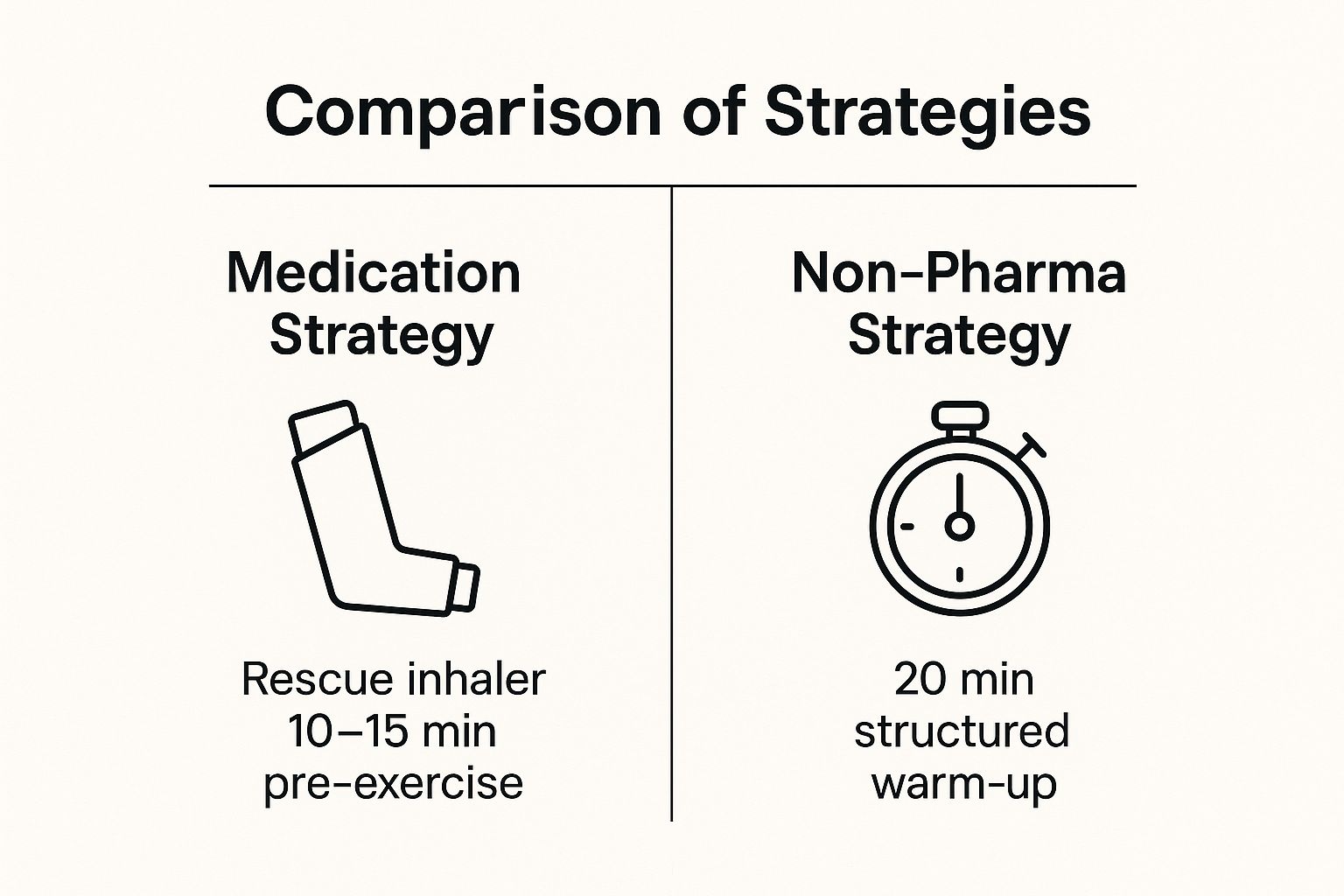
As you can see, both the rescue inhaler and a dedicated warm-up are all about timing. They're proactive steps you take to protect your airways before your workout gets going.
To give you a clearer picture, let's compare these two core approaches.
Pharmacological vs Non-Pharmacological Management
| Strategy Type | Examples | When to Use |
|---|---|---|
| Pharmacological | Short-acting beta-agonist (rescue inhaler), long-term controller medication | Prescribed by a doctor. SABAs are used 10-15 minutes pre-exercise. Controllers are often taken daily. |
| Non-Pharmacological | Structured warm-up, nasal breathing, wearing a scarf in the cold, respiratory muscle training | Can be used by anyone, every time you exercise, to proactively reduce the likelihood of symptoms. |
Each strategy plays a critical role, and the most effective plans often blend both, giving you a comprehensive toolkit to manage your breathing.
Simple Habits for Better Breathing Control
Beyond a solid warm-up, a few other small tweaks can have a surprisingly big impact on your breathing comfort. These are easy, everyday strategies that help condition the air before it even hits your sensitive airways.
- Breathe Through Your Nose: Whenever you can, try to inhale through your nose. It’s a natural filter that warms and humidifies the air, which is much kinder to your lungs.
- Cover Your Mouth in the Cold: If you're out in cold, dry weather, wearing a scarf or buff over your mouth and nose is a game-changer. It traps moisture from your own breath, creating a little pocket of warmer, moister air for you to breathe in.
- Strengthen Your Breathing Muscles: Just like any other muscle, your respiratory muscles can be trained. Specific exercises can boost their strength and endurance, making every breath more efficient. If that sounds interesting, you might want to learn more about respiratory muscle strength training and how it can support your overall lung function.
These management strategies are absolutely essential for high-performance athletes. EIB rates in endurance sports can soar as high as 70%. And for the 15–30% of Olympic athletes who have asthma, a rock-solid management plan is simply non-negotiable. Read the full research about EIB in elite sports to see just how significant its impact is at the highest levels of competition.
By combining your doctor's advice with these practical, everyday habits, you can build a powerful system that lets you stay active, manage your EIB, and perform at your very best.
Got Questions About EIB? You're Not Alone.
When you're dealing with exercise-induced bronchoconstriction (EIB), it's natural to have questions. Getting good, clear answers is the first step toward managing it well so you can get back to the activities you love.
Let's start with the big one: Does EIB ever go away? The short answer is no, there isn't a "cure." Think of it as your body's specific reaction to the stress of exercise. But the great news is that with the right approach, you can dramatically reduce its impact and keep it from getting in the way of your performance.
Can You Suddenly Get EIB as an Adult?
Absolutely. It's a common misconception that EIB is just a childhood issue. You can definitely develop symptoms for the first time as an adult. Sometimes a change in where you live, a new fitness routine, or even the development of new allergies can be enough to trigger it.
So, is it even safe to work out if you have EIB? A thousand times, yes! Staying active is one of the best things you can do for your health. The trick isn't to stop exercising, but to exercise smarter. A solid management plan—like using an inhaler before you start and never skipping your warm-up—makes all the difference.
One of the trickiest things is figuring out if you have EIB or if you're just not as fit as you'd like to be. Here’s the key difference: being out of shape means you'll breathe heavily during a workout, but you recover fairly quickly once you stop. With EIB, the worst of it—the coughing, wheezing, and that awful chest tightness—often kicks in after you've finished.
Recognizing this pattern is so important. If feeling "out of breath" comes with those extra symptoms, it’s not just fatigue talking. It's a clear sign that you should chat with your doctor. They can help you figure out if EIB is the cause and get you on a plan to control it.
At Cartwright Fitness, we equip clinicians and sports scientists with the professional tools needed to accurately diagnose and track conditions like EIB. Explore our range of validated health and fitness testing equipment to bring greater precision to your assessments.