

A university sports science department is comparing grip results from a calibrated dynamometer with readings from a consumer wearable. An occupational health team is reviewing a step-test report generated by one system and heart-rate data recorded by another. The numbers look precise, but they don't agree, and the practitioner still has to decide whether a worker is ready to return, whether an athlete needs modified training, or whether a research result can withstand scrutiny.
That problem is increasingly common. Sports science technology only earns professional value when its measurements are valid, repeatable and relevant to the decision being made. More sensors and richer dashboards can create more noise if the equipment, protocol, operator and interpretation aren't controlled. The following guidance focuses on what UK practitioners should examine before adopting technology for occupational health, rehabilitation, performance assessment or research.
Table of Contents
- Why Sports Science Technology Matters in Professional Settings
- Defining Sports Science Technology for Assessment
- Key Device and Software Categories
- Real-World Applications Across Settings
- Implementation Guidance for Professional Environments
- Evaluation Criteria for Purchasing Precision Equipment
- Future Trends and Decision-Relevant Data
Why Sports Science Technology Matters in Professional Settings
A practitioner can collect heart rate, step count, grip force, movement data and body-composition readings in the same appointment, yet still leave with an uncertain conclusion. A wearable may report a useful trend for day-to-day monitoring, while a professional dynamometer may provide the controlled measurement needed to support a rehabilitation decision. Treating those outputs as interchangeable is where the difficulty starts.
Professional assessment needs more than a plausible number. It needs a defined protocol, a suitable instrument, documented calibration, consistent operator technique and an interpretation method that fits the population. That standard matters in occupational health, where a result may inform fitness-for-duty screening or return-to-work planning. It matters in rehabilitation, where small changes can be confused with measurement error. It matters in research, where inconsistent collection methods can weaken the entire dataset.
Data must answer a decision
The first question shouldn't be, “What can this device measure?” It should be, “What decision will this result support?” A sports scientist monitoring training may value repeated trends and athlete compliance. A clinician may need side-specific strength histories. An occupational health practitioner may need a transparent report that another professional can reproduce.
The same sensor can therefore be appropriate in one setting and unsuitable in another. Consumer tracking can help identify patterns, but professional assessment requires a stronger account of accuracy, repeatability and interpretation.
Practical rule: If a result can't be explained, repeated and linked to a defined decision, the technology is collecting information rather than producing evidence.
UK reference data changes interpretation
Normative data must match the population wherever possible. A large British grip-strength analysis combined 60,803 observations from 49,964 participants across 12 general-population studies in Great Britain to produce life-course normative data, supporting the use of population-specific reference values rather than generic manufacturer ranges in UK assessment British grip-strength analysis.
The UK Biobank provides another strong example. Its normative values used 224,830 right-hand and 224,852 left-hand measurements from adults aged 39 to 73, showing why side-specific histories and UK reference curves can improve interpretation for occupational health screening, frailty assessment and return-to-work decisions UK Biobank normative values for handgrip strength.
Defining Sports Science Technology for Assessment
Sports science technology is the combination of measurement hardware, assessment software and interpretation systems used to quantify human performance, physical capacity and functional status. That definition separates professional assessment from consumer tracking. A consumer device may estimate activity for personal feedback. A professional system must support a controlled test and preserve enough information for the result to be audited.
The distinction is similar to the difference between a bathroom scale and a laboratory measurement system. Both produce a number, but the professional system gives greater attention to calibration, test conditions, operator training, reference data and reporting. The number matters, but the process behind it matters just as much.
Hardware provides the measurement
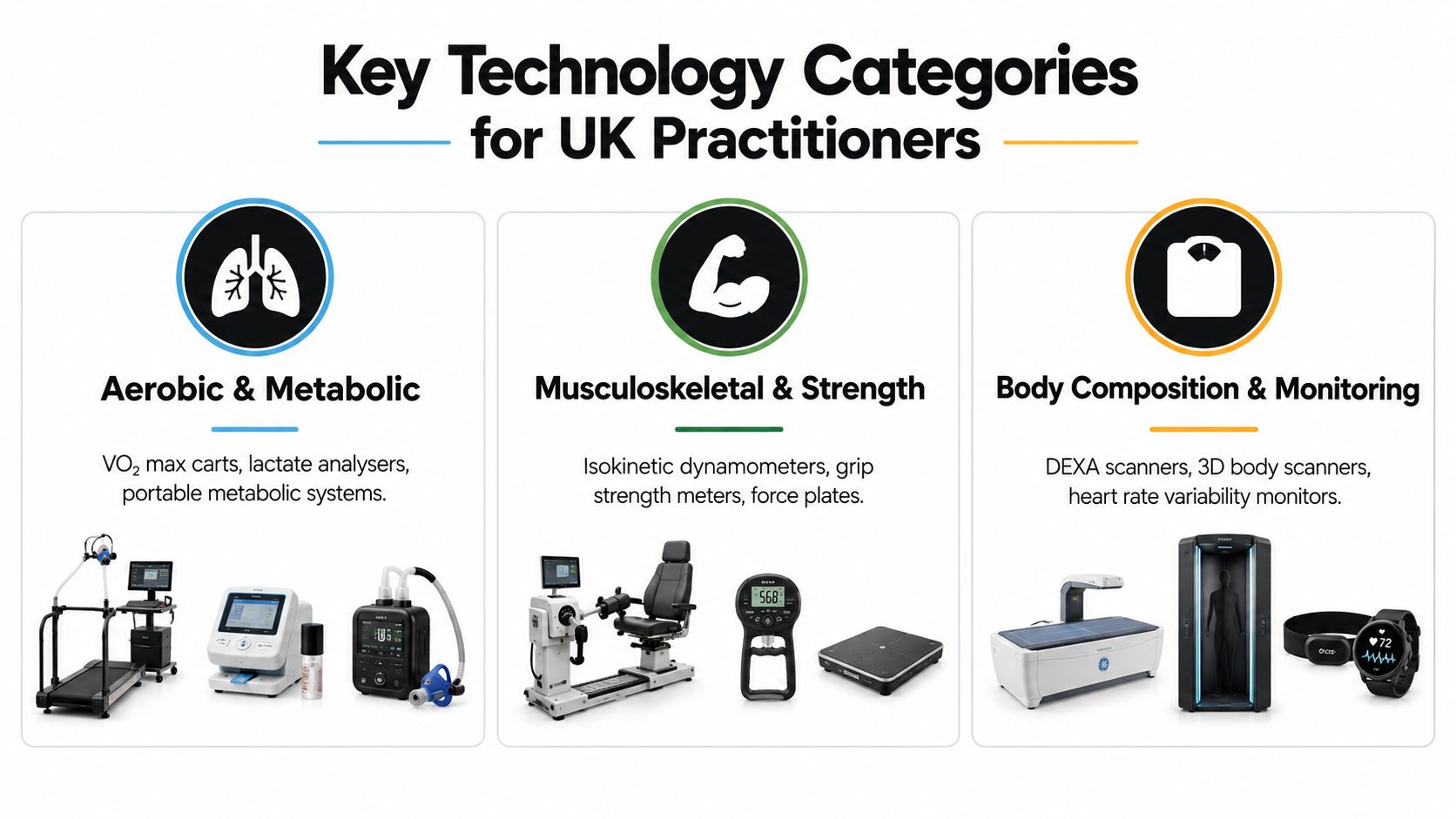
Hardware includes equipment such as:
- Dynamometers: These measure grip, back or leg force under defined conditions.
- Metabolic systems: These assess respiratory and metabolic variables during exercise.
- Heart-rate sensors: These provide physiological monitoring when the sensor and protocol are appropriate.
- Anthropometry and body-composition tools: These support structured assessment of body dimensions and composition.
- Functional assessment equipment: These helps practitioners measure movement capacity, task tolerance or physical readiness.
The hardware should match the construct being assessed. A grip dynamometer isn't a substitute for a whole-body functional test, and a wearable heart-rate estimate isn't automatically a substitute for a metabolic assessment.
For grip assessment, the Takei Hand Grip Dynamometer uses a fully adjustable isometric design for accurate and reproducible strength evaluation. It examines static flexor power in each forearm, measures from 5.0 to 100kgf and can display maximum measured values.
Software makes results usable
Software stores histories, applies calculations, compares results with reference data and generates reports. A strong platform also records the protocol, test conditions, device identity and operator details. Without that context, a dashboard can make a weak measurement look authoritative.
Integrated systems connect hardware and software so that the practitioner doesn't need to copy readings manually between separate tools. That reduces transcription risk and makes longitudinal monitoring more practical. Still, integration isn't automatically validation. A smooth workflow can deliver consistently formatted results that are still unsuitable for a high-stakes decision if the underlying measurement lacks evidence.
Key Device and Software Categories
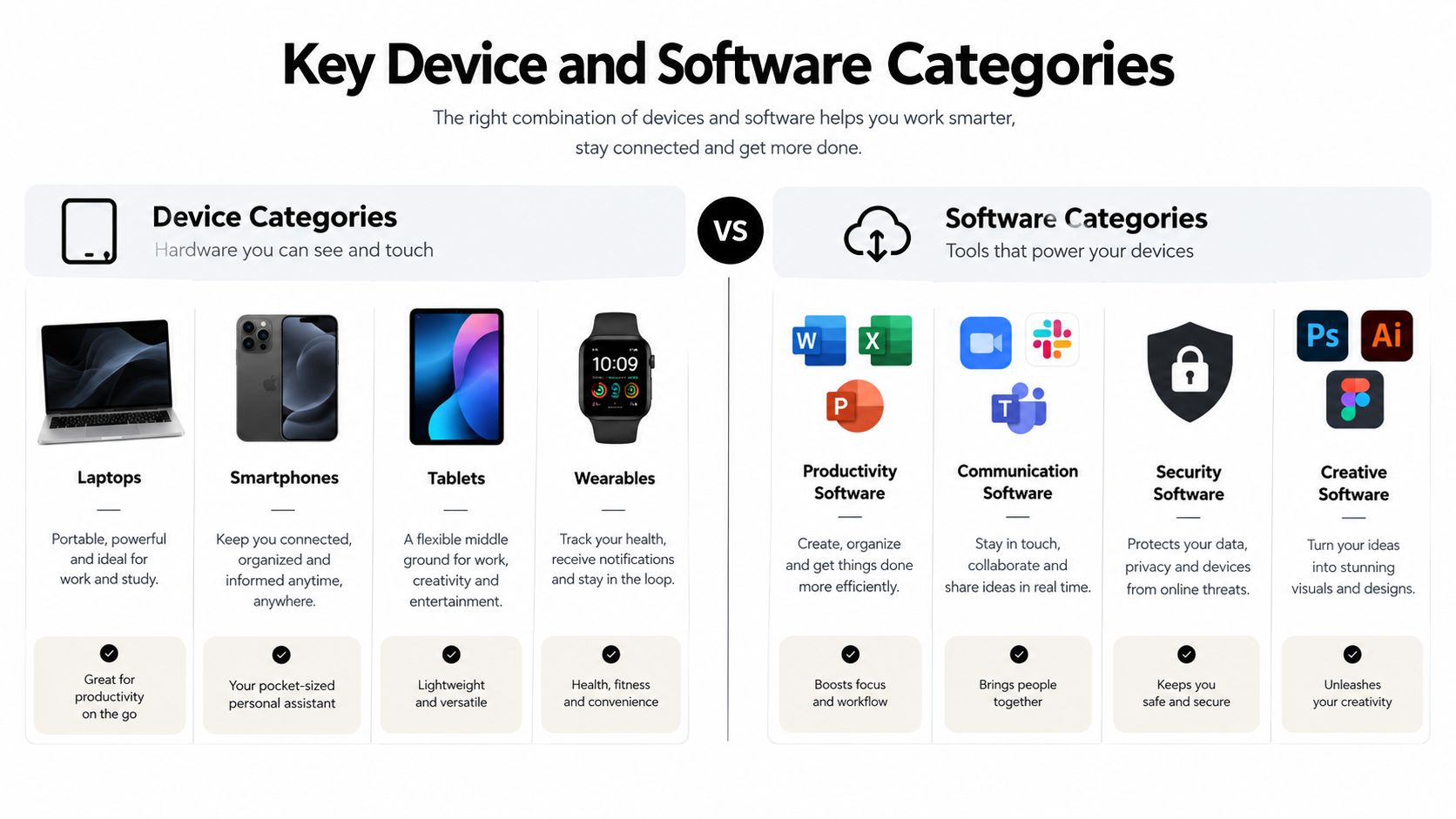
Professional technology choices should follow the assessment question. A practitioner assessing aerobic capacity needs a different level of instrumentation from a practitioner monitoring grip asymmetry or movement exposure. The most useful systems share several characteristics: calibration procedures, documented validation, suitable reference data and software that can export or integrate results.
Aerobic and metabolic assessment
VO₂ assessment systems and metabolic analysers are appropriate when the question concerns aerobic capacity, exercise response or energy use. Professional selection should include gas-analysis methodology, calibration requirements, sampling approach, environmental controls and the way results are reported. A portable system may improve practical access, while a laboratory system may offer a more controlled environment. Neither option removes the need for a standardised protocol.
The Cosmed Q-NRG Max Metabolic Analyser is described as offering true aerobic capacity assessment, individual assessment, metabolic analysis, an easy workflow, a compact format and ready-to-use operation. Practitioners should still establish how the system fits their own calibration, reporting and governance procedures.
The Chester Step Test is useful where a progressive sub-maximal aerobic assessment is more appropriate than maximal testing. It starts at 15 steps per minute and increases by 5 steps per minute every 2 minutes, with heart rate and rating of perceived exertion recorded at each stage. The typical stopping criteria are 80% of age-predicted maximum heart rate or an RPE of 14, with a maximum duration of 10 minutes Chester Step Test procedure and occupational application.
Strength and functional measurement
Dynamometers support objective assessment of grip, back and leg strength, but the protocol determines whether results are comparable. Handle position, posture, encouragement, familiarisation, rest and side order all require control. A UK clinical grip-strength procedure using the JAMAR dynamometer records three measurements for each hand while alternating sides, a practical reliability detail that should be reflected in local standard operating procedures UK clinical grip-strength procedure.
Back and leg dynamometry can support occupational and performance testing when the chain length, posture and task instructions are standardised. Functional platforms can add task-based information, but a broad movement score shouldn't replace a targeted strength or capacity measure when the decision depends on force production.
Body composition and connected systems
Anthropometry, ultrasound and other body-composition approaches can be useful in clinical, research and performance environments. The choice depends on the construct of interest, the population, operator skill and the required repeatability. A body-composition output should always be interpreted alongside the method's known limitations and the purpose of the assessment.
Low-cost wearables and smart insoles are extending what practitioners can measure outside laboratories. University of Bristol research published in 2025 examined estimation of 3D ground reaction forces using low-cost smart insoles, while UK movement-research commentary identified smartphone apps, wearables, geolocation data, automated observation and environmental audits as emerging approaches to scaling physical-activity measurement report on low-cost smart insoles and movement measurement. That progress is promising, but practitioners still need to establish whether a device is sufficiently validated for occupational, clinical or research decisions rather than consumer tracking.
For teams developing connected assessments, custom wearable software solutions may help translate sensor outputs into a controlled workflow. The software should preserve raw data, document processing steps and support secure governance. For broader assessment administration, fitness testing software can help organise results and reporting, provided the underlying protocols remain standardised.
Real-World Applications Across Settings
Technology becomes defensible when the measurement fits the setting and the consequence of error. A performance department may use repeated monitoring to guide training exposure. A rehabilitation service may use a strength result to document progress. An occupational health team may need evidence that a worker can tolerate defined job demands. A university research group needs reproducibility across operators and sessions.
Coaching and performance
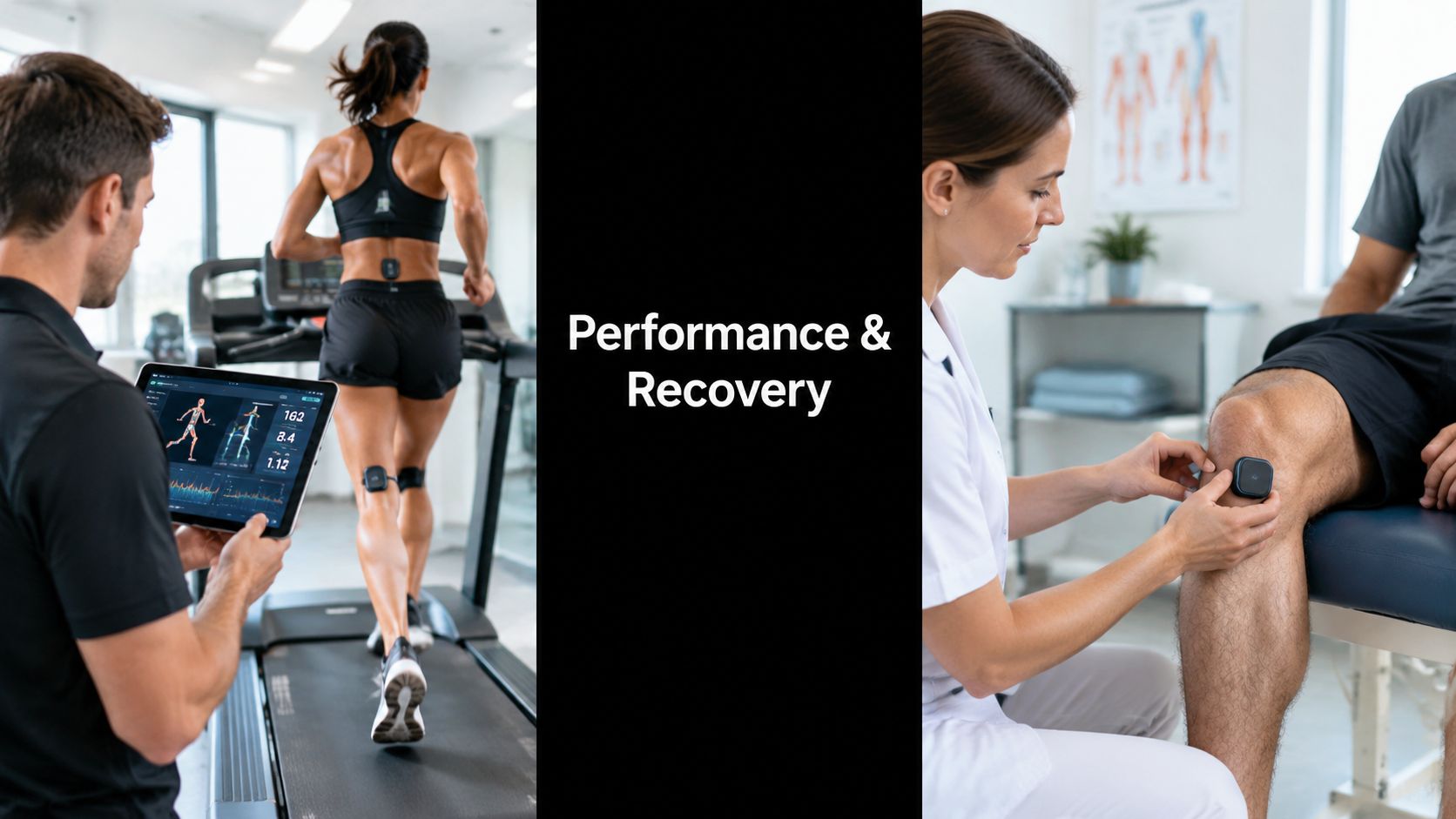
Coaches often need timely information rather than exhaustive measurement. Heart rate, external workload, force production and subjective exertion can contribute to training-load decisions, but the practitioner should define which variables will change the programme. A dashboard that presents every available metric can encourage false precision.
Athlete monitoring works best when staff understand the difference between a useful trend and an isolated abnormal reading. Equipment should support consistent collection, easy review and appropriate communication between sports scientists, coaches, medical staff and athletes.
Clinical rehabilitation
Clinical teams generally need measurements that are repeatable and interpretable across appointments. Grip dynamometry can contribute to frailty assessment or rehabilitation monitoring when the side, position and effort instructions are controlled. A functional test may then add context about task performance, while body-composition measures can support a wider health assessment.
Return-to-work decisions require particular caution. A change in force or exercise response should be considered alongside symptoms, job demands, clinical findings and the reliability of the test. Technology can structure the evidence, but it shouldn't make a decision outside the practitioner's scope.
Occupational health and research
The Chester Step Test can provide a practical sub-maximal aerobic screen where a controlled, progressive protocol is suitable. Emergency services and other physically demanding roles may also require task-specific assessment, making it important to distinguish general aerobic capacity from the ability to perform defined occupational duties.
Research teams face an additional obligation. They must document device models, calibration, software versions, operator training, protocol deviations and data-handling procedures. Ethics committees and participants need clear information about what is collected, why it's collected and how it will be stored. The same principle applies when universities share data with clubs or occupational providers.
Implementation Guidance for Professional Environments
Successful implementation starts with the workflow, not the purchase order. A department should define the decision, select the measurement, specify the protocol and then choose equipment that can deliver the required evidence. This order prevents a feature-rich device from dictating an assessment that nobody needs.
Validate before routine use
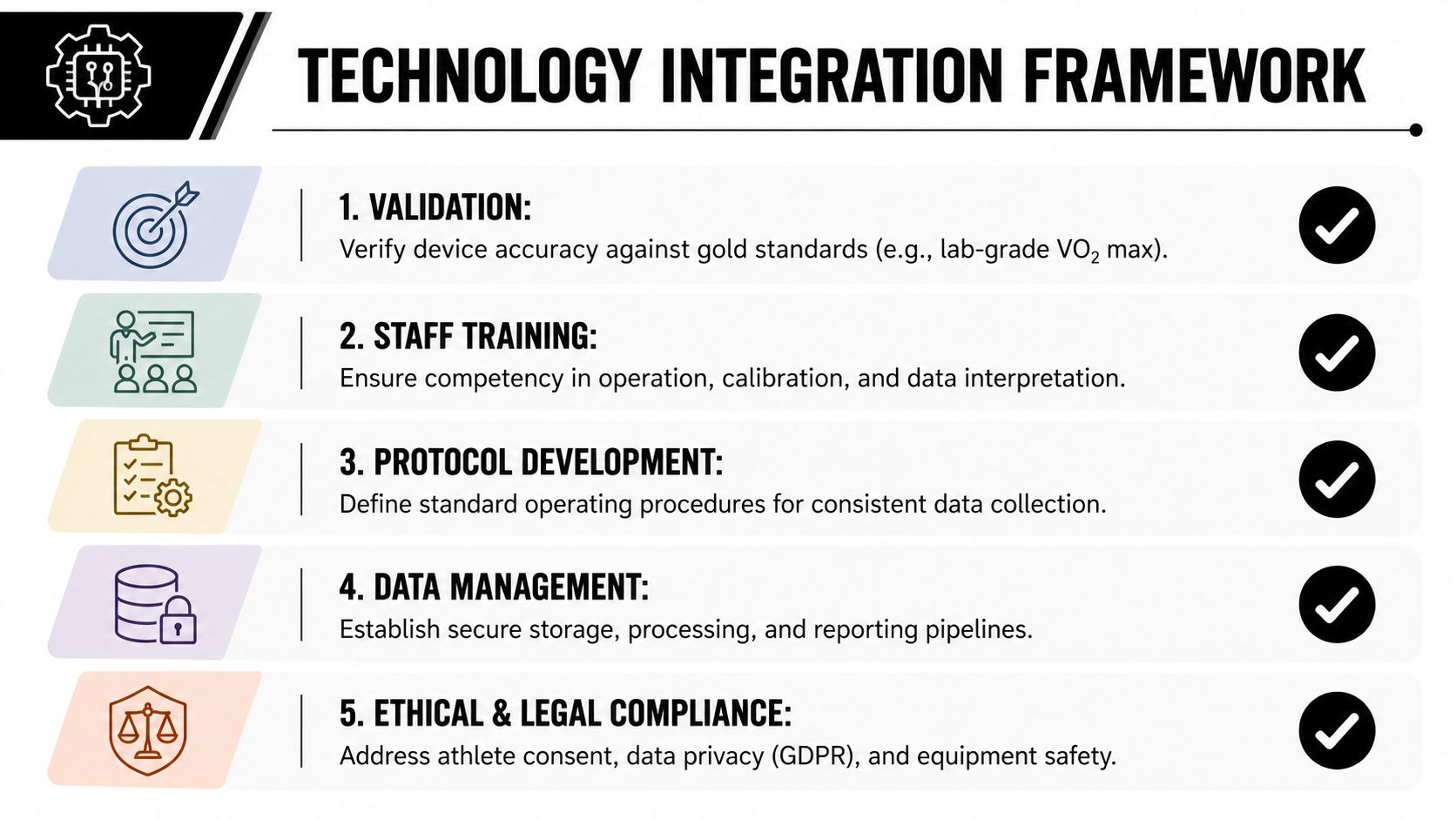
Validation should examine whether the device measures the intended construct and whether it does so consistently in the relevant population. A team should review independent evidence where available, identify the reference method and test the device under its intended operating conditions. For aerobic systems, that may involve comparison with a laboratory-grade method. For dynamometry, it means checking positioning, adjustment and repeated readings.
A local verification exercise can expose practical problems that manufacturer documentation won't show. Operators should record calibration checks, environmental conditions and any deviations from the standard operating procedure.
Train people, then standardise the protocol
Staff need competence in operation, calibration, participant instruction, safety and interpretation. Training shouldn't stop at pressing the correct button. Operators must recognise artefacts, understand when a test should stop and know when a result needs clinical or technical review.
A written protocol should specify:
- Preparation: Define screening, familiarisation, clothing, footwear and pre-test instructions.
- Positioning: Record posture, equipment adjustment and sensor placement.
- Collection: Set the order, number of trials, rest periods and verbal instructions.
- Quality control: Identify invalid readings, calibration failures and protocol deviations.
- Reporting: State the result, reference method, limitations and decision context.
Build a secure data pathway
The data pathway should run from collection to storage, analysis and reporting without avoidable manual duplication. Access permissions, retention rules, consent language and secure transfer procedures must align with UK privacy and governance requirements. A practitioner should be able to identify who accessed a record, which version of the software processed it and whether the participant consented to the intended use.
Governance matters: A technically accurate measurement can still create professional risk if the team can't explain where the data went or who was authorised to use it.
Budgeting should include calibration, maintenance, consumables, staff time, software licensing, training and replacement planning. A lower purchase cost may not represent lower total cost if the system requires frequent manual handling or can't export data into the organisation's existing workflow.
Evaluation Criteria for Purchasing Precision Equipment
A higher price and a longer feature list don't guarantee a better assessment. The strongest purchase is the one that produces decision-relevant data for a defined population and protocol, then fits the organisation's reporting and governance requirements.
Before reviewing specifications, the purchasing group should write down the intended decisions. A rehabilitation service may prioritise repeatability and side-specific histories. A university laboratory may prioritise raw-data access and research interoperability. An occupational health provider may prioritise clear reports, operator consistency and secure record management.
| Criterion | Why It Matters | Questions to Ask |
|---|---|---|
| Validation evidence | Shows whether the device measures the intended construct | What reference method was used, and does the evidence match the intended population? |
| Calibration | Protects measurement quality over time | What must be calibrated, how often, and who performs the work? |
| Normative data | Makes interpretation more relevant | Does the system support UK-specific or population-appropriate reference data? |
| Software interoperability | Reduces transcription and workflow friction | Can results be exported in a usable format or connected to existing assessment software? |
| Manufacturer support | Keeps staff competent and equipment usable | What training, technical support and documentation are available? |
| Total cost of ownership | Reveals the real operational commitment | What are the costs of maintenance, licensing, accessories and staff time? |
Apply the questions to the instrument
For a dynamometer, the buyer should examine adjustment, measurement range, display behaviour, trial management and the ability to preserve individual results. For a metabolic cart, calibration, gas analysis, environmental control and reporting deserve priority over cosmetic interface features. For body-composition tools, operator training, repeatability and the interpretation of method-specific outputs matter more than a single headline estimate.
Common purchasing errors include trusting an attractive dashboard without checking the underlying algorithm, ignoring calibration drift and buying a closed system that can't share data with existing records. A structured review of exercise science equipment can help teams compare relevant equipment categories, but the final decision still needs a local validation and governance review.
The purchasing group should ask for a demonstration using the intended protocol, not a generic sales presentation. Staff should see how the system handles an invalid trial, missing data, calibration prompts, export requirements and report interpretation. If those tasks are difficult during a demonstration, they won't become easier during a busy assessment clinic.
Future Trends and Decision-Relevant Data
Professional assessment is moving towards integrated platforms that connect sensors, testing protocols, software histories and reference data. That integration can improve continuity across clubs, universities, clinics and occupational settings, but only if systems can exchange data securely and preserve the meaning of each measurement.
The market is also becoming more complex. Sony's acquisition of STATSports Group illustrates how athlete tracking is developing into a major data business, while a 2026 sports-horizon scan described technology use in stadiums as set to accelerate sharply Epson RunSense GPS sports monitor announcement. Greater commercial investment may bring better tools, but it won't remove the need for independent validation.
Smart insoles, smartphone applications, automated observation and wearable systems may expand access to movement measurement. The unresolved question is whether each output is suitable for a specific occupational, clinical or research decision. Practitioners should resist dashboards that imply more certainty than the measurement supports.
Future-ready teams will prioritise interoperability, privacy, consent, calibration records and transparent interpretation. They'll also teach staff to distinguish a decision-relevant variable from an impressive but unnecessary metric. Investment in validation, training and disciplined workflows will determine whether sports science technology becomes useful evidence or just a larger stream of data.
Cartwright Fitness supplies professional equipment and software for aerobic and VO₂ assessment, the Chester Step Test, grip and dynamometry, body composition, metabolic assessment and occupational fitness testing. Visit Cartwright Fitness to review assessment solutions and identify equipment that fits the required protocol, reporting workflow and professional setting.


