

Unlocking Your Fitness Potential
This listicle outlines the core principles of exercise prescription, providing a framework for designing effective and safe training programs. Understanding these concepts is crucial for maximizing client outcomes and minimizing injury risk. Whether working with beginners or elite athletes, applying these principles, including overload, specificity, progression, reversibility, individualization, recovery, FITT, and variation, will enhance your ability to create impactful fitness plans. Learn how to apply these principles effectively and elevate your training expertise.
1. Overload Principle
The Overload Principle is a cornerstone of exercise prescription and a fundamental concept for anyone involved in designing and implementing fitness programs. This principle dictates that for the body to adapt and improve its physical fitness, it must be subjected to a workload that exceeds what it is normally accustomed to. Essentially, you need to challenge your body beyond its current capabilities to stimulate physiological changes that lead to improved strength, endurance, flexibility, and overall fitness. This involves strategically increasing the stress placed on the body through modifications to the frequency, intensity, time, or type of exercise, often referred to as the FITT variables. The principle is crucial to all training adaptations and forms the basis for progressive improvement in any physical fitness endeavor. Without adherence to the overload principle, individuals are likely to plateau in their progress and fail to achieve their desired fitness goals.

The Overload Principle works by creating a controlled level of stress on the body’s systems. This stress triggers a cascade of physiological adaptations. For example, in strength training, overloading the muscles with progressively heavier weights leads to muscle hypertrophy (growth) and increased strength. In cardiovascular training, progressively increasing the duration or intensity of exercise leads to improved cardiorespiratory function and endurance. The body, in its constant effort to maintain homeostasis, responds to these stressors by becoming more efficient and resilient.
The principle's power lies in its versatility. It can be applied through manipulating any of the FITT variables:
- Frequency: Increasing the number of workout sessions per week.
- Intensity: Increasing the difficulty of each workout, such as lifting heavier weights, running at a faster pace, or increasing resistance on a cycling machine.
- Time: Increasing the duration of each workout session.
- Type: Changing the mode of exercise to a more challenging one, such as switching from walking to running or incorporating plyometrics into a strength training routine.
Successful implementation of the Overload Principle demands a strategic and gradual approach. Consider a client aiming to increase their bench press strength. Instead of drastically increasing the weight each session, which could lead to injury, they might add a small increment (e.g., 2.5-5 lbs) weekly. Similarly, a runner looking to improve their endurance might increase their weekly mileage by 10% gradually. Progressive resistance training programs exemplify the Overload Principle in action, systematically increasing the weight lifted over time. Similarly, interval training with gradually increased intensity pushes the body to adapt and improve its anaerobic capacity.
Pros of Utilizing the Overload Principle:
- Ensures continuous improvement and adaptation: By consistently challenging the body, the Overload Principle prevents plateaus and fosters ongoing progress.
- Applicable to all fitness components: Whether the goal is to improve strength, endurance, flexibility, or power, the Overload Principle provides the framework for achieving results.
- Provides a clear framework for progression: The principle provides a structured approach to program design, making it easier to plan and track progress.
Cons and Considerations:
- Risk of overtraining: Implementing the Overload Principle too aggressively can lead to overtraining syndrome, characterized by fatigue, decreased performance, and increased risk of injury.
- Requires careful monitoring and adjustment: Regularly assessing the client’s response to the training stimulus and making adjustments to the program is crucial for avoiding overtraining and maximizing results.
- Can lead to injury if progression is too rapid: A gradual and controlled approach to overload is essential for minimizing the risk of injury.
Tips for Effective Implementation:
- Increase overload gradually (5-10% per week): This allows the body to adapt safely and minimizes the risk of injury.
- Focus on one FITT variable at a time: Avoid making too many changes simultaneously to better gauge the effect of each modification.
- Monitor body response and adjust accordingly: Pay attention to signs of fatigue, pain, or decreased performance and adjust the training program as needed.
- Include deload weeks every 4-6 weeks: Deloading involves reducing training volume and intensity to allow the body to recover and rebuild. This is crucial for long-term progress and injury prevention.
The Overload Principle, rooted in the work of Hans Selye (General Adaptation Syndrome), Arthur Jones (High-Intensity Training), and Tudor Bompa (Periodization theory), is a non-negotiable aspect of effective exercise prescription. Its understanding and proper application are crucial for anyone working with clients to achieve their fitness goals safely and efficiently.
2. Specificity Principle (SAID Principle)
The Specificity Principle, often referred to as the Specific Adaptation to Imposed Demands (SAID) principle, is a cornerstone of exercise prescription and a crucial element in designing effective training programs. This principle dictates that the body's physiological and performance adaptations will be specific to the type of stress or demand placed upon it. In simpler terms, you get what you train for. If your goal is to improve your marathon time, training for a powerlifting competition won't be the most effective approach. This principle underscores the importance of tailoring training programs to meet specific fitness goals, considering the muscle groups used, energy systems involved, movement patterns, and intensity of exercise. Understanding and applying the SAID principle is essential for anyone involved in exercise prescription, ensuring that training programs yield the desired results. This principle is a critical component of the principles of exercise prescription because it ensures that training is targeted and effective.

The SAID principle operates on the premise that the body is remarkably adaptable. When subjected to a specific training stimulus, it initiates a cascade of physiological changes to better handle that specific demand in the future. These adaptations can manifest in numerous ways, including increased muscle fiber size and strength, improved cardiovascular efficiency, enhanced neuromuscular coordination, and greater metabolic capacity. The principle applies to all facets of training, including:
- Muscle Groups: Training a specific muscle group will primarily lead to adaptations in that muscle group. For example, bicep curls will predominantly develop the biceps brachii.
- Movement Patterns: Practicing specific movement patterns, like the squat, enhances the neuromuscular efficiency and coordination required for that movement.
- Energy Systems: Training the aerobic system through long-distance running will result in adaptations that improve aerobic capacity, while high-intensity interval training (HIIT) will enhance the anaerobic system.
The SAID principle directs the selection of exercises and training methods to align with specific fitness goals. A powerlifter, for instance, will focus on compound movements like squats, deadlifts, and bench presses, while a marathon runner will prioritize long-distance runs and tempo runs. The principle also significantly influences skill acquisition and performance. A basketball player practicing free throws repeatedly will improve their accuracy and consistency in that specific skill.
Benefits of applying the SAID principle:
- Maximized Training Efficiency: By focusing on specific goals, training time and effort are used most effectively.
- Relevant Adaptations: The body adapts specifically to the demands placed upon it, ensuring that the desired changes occur.
- Improved Performance: Targeted training leads to enhanced performance in the specific activities being trained for.
- Guided Exercise Selection: The SAID principle provides a clear framework for selecting appropriate exercises.
Potential Drawbacks of a Narrow Focus:
- Limited Overall Fitness Development: Focusing too narrowly on one area might neglect other important components of fitness.
- Muscle Imbalances: Overemphasizing certain muscle groups while neglecting others can create imbalances and increase injury risk.
- Program Design Complexity: Designing a program based on the SAID principle requires careful planning and consideration of various factors.
Practical Tips for Implementing the SAID Principle:
- Clearly Define Goals: Start by identifying the specific performance goals. What do you or your client want to achieve?
- Mimic Target Activities: Choose exercises and movement patterns that closely resemble the target activities or sport.
- Address Energy System Demands: Consider the primary energy system used in the target activity and tailor the training accordingly.
- Balance Specificity with General Fitness: While specificity is crucial, maintain a balanced approach and include exercises that promote overall fitness and prevent imbalances.
Examples of SAID Principle in Action:
- Swimmers: They spend the majority of their training time in the water, performing stroke-specific drills to optimize their technique and endurance in the aquatic environment.
- Marathon Runners: Their training revolves around long-distance runs, tempo runs, and interval training to develop aerobic capacity and endurance.
- Powerlifters: They focus on practicing the competition lifts (squat, bench press, deadlift) with heavy weights to maximize strength in these specific movements.
The SAID principle, as popularized by researchers and practitioners like Vladimir Zatsiorsky, Mel Siff, and Charlie Francis, provides a foundational framework for exercise prescription. By understanding and applying this principle, fitness professionals can create targeted and effective training programs that help individuals achieve their specific fitness goals, optimize performance, and minimize the risk of imbalances and injuries. Its central role in guiding exercise selection and program design makes it an indispensable concept within the principles of exercise prescription.
3. Progressive Overload: The Cornerstone of Exercise Prescription
Progressive overload is a fundamental principle of exercise prescription that drives adaptation and improvement in any training program. It's the process of gradually increasing the stress placed on the body during exercise, forcing it to adapt and become stronger, fitter, and more resilient. This principle, crucial for anyone working with clients or athletes, ensures continuous progress and prevents plateaus by consistently challenging the body beyond its current capabilities. For personal trainers, exercise physiologists, and rehabilitation specialists, understanding and implementing progressive overload is essential for designing effective and results-oriented exercise programs. Within the principles of exercise prescription, progressive overload stands out as the driving force behind achieving tangible results, making it an indispensable component of any training regimen.
Progressive overload operates on the premise that the human body is remarkably adaptable. When exposed to a repeated stimulus, like lifting a certain weight or running a specific distance, the body adapts, becoming more efficient and requiring less effort to perform the same task. To continue improving, the stimulus must be progressively increased, prompting further adaptations. This continuous cycle of adaptation and increased stimulus is the essence of progressive overload.
How Progressive Overload Works:
The practical application of progressive overload involves systematically manipulating various training variables. These variables include:
- Intensity: This refers to the difficulty of the exercise. In strength training, it’s the amount of weight lifted. In cardiovascular training, it’s the speed, incline, or resistance.
- Volume: This is the total amount of work performed, calculated as sets x reps x weight in strength training or duration and frequency in cardiovascular training.
- Frequency: This is how often you exercise per week.
- Duration: This is the length of time spent exercising per session.
- Rest: Manipulating rest periods between sets or exercises can also contribute to progressive overload. Shorter rest periods increase the challenge.
- Exercise Selection: Introducing more challenging exercises, changing the order of exercises, or incorporating advanced variations can all promote overload.
Successful Implementation of Progressive Overload:
Several established training programs exemplify the effective implementation of progressive overload.
- Linear Periodization in Strength Training: This method involves gradually increasing the weight lifted each week while decreasing the number of repetitions.
- Couch to 5K Running Programs: These programs progressively increase the distance and duration of running over several weeks, enabling beginners to build up their running capacity.
- Progressive Resistance Training Protocols: These protocols utilize specific rep ranges and weight increases based on individual progress, fostering consistent strength gains.
- Graduated Return-to-Play Programs in Rehabilitation: These programs gradually increase the intensity and duration of activity following an injury, promoting safe and effective recovery.
Actionable Tips for Applying Progressive Overload:
- Track Everything: Meticulous record-keeping is vital. Track all training variables—sets, reps, weight, distance, duration, rest—to accurately monitor progress and identify when to increase the load.
- Small Increases: Progress gradually. A general guideline is to increase the load by 2.5-10% when the target number of repetitions can be comfortably performed with good form.
- Periodization: Structure your training program using periodization principles. This involves planned variations in training variables over time, incorporating phases of higher and lower intensity to optimize progress and prevent overtraining.
- Deload Periods: Include regular deload weeks in your program, reducing training volume and intensity to allow for recovery and prevent burnout. These periods are crucial for long-term adherence and continued progress.
- Listen to Your Body: Pay attention to signs of overtraining, such as fatigue, decreased performance, and persistent muscle soreness. Adjust the program accordingly if needed.
Pros and Cons of Progressive Overload:
Pros:
- Ensures continuous improvement in strength, endurance, and overall fitness.
- Prevents training plateaus and stagnation.
- Builds long-term fitness gains.
- Provides a clear framework for progression.
Cons:
- Requires careful planning, tracking, and consistent effort.
- Risk of overreaching or injury if progression is too rapid or form is compromised.
- Can be challenging to implement effectively for beginners who are still learning proper exercise techniques.
- Needs periodic reassessment and adjustment based on individual progress and responses.
By understanding and applying the principle of progressive overload, fitness professionals can create effective and customized exercise prescriptions that yield consistent, measurable results. Its importance within the broader context of exercise prescription lies in its ability to facilitate ongoing adaptation and improvement, making it a foundational element for achieving any training goal.
4. Reversibility Principle (Use It or Lose It)
The Reversibility Principle, a cornerstone of exercise prescription, reminds us that fitness gains, painstakingly achieved through consistent effort, are transient and can be lost if training is discontinued or significantly reduced. This principle, also known as detraining, underscores the dynamic nature of physiological adaptations to exercise and highlights the critical importance of continued stimulus for maintaining fitness levels. Understanding and applying this principle is crucial for anyone involved in exercise prescription, including personal trainers, exercise physiologists, and rehabilitation specialists, ensuring the creation of sustainable and effective training programs. This principle plays a crucial role in developing effective and sustainable exercise prescriptions, making it a vital component of any fitness professional’s toolkit.
The underlying mechanism of the Reversibility Principle stems from the body's constant drive for efficiency. When subjected to the stress of exercise, the body adapts by improving cardiovascular function, increasing muscle mass and strength, and enhancing metabolic processes. However, when the training stimulus is removed or reduced, the body perceives these adaptations as no longer necessary and gradually reverts back to a pre-training state to conserve energy. This process, while seemingly frustrating, is a natural physiological response.
The rate at which these fitness gains are lost varies depending on the specific component of fitness. Cardiovascular adaptations, such as VO2 max, tend to decline relatively quickly, with decreases of 6-20% observed after just 2-4 weeks of inactivity. Strength losses follow a similar trajectory, with reductions of 8-12% seen after 3-4 weeks without training. Muscle atrophy, the decrease in muscle size and strength, can begin within 1-2 weeks of cessation. These changes highlight the importance of incorporating the Reversibility Principle into the principles of exercise prescription.
The impact of detraining extends to all physiological systems, including the cardiovascular, muscular, and endocrine systems. Deconditioning is especially pronounced in individuals experiencing prolonged periods of inactivity, such as bedridden patients, further emphasizing the vital role of regular exercise in maintaining overall health and well-being.
Successful Implementation of the Reversibility Principle in Exercise Prescription:
- Personalized Maintenance Programs: A personal trainer designs a reduced-volume training program for a client who travels frequently for work. This program focuses on maintaining key fitness adaptations during periods of travel, minimizing the effects of detraining.
- Rehabilitation Protocols: Following an injury, a physiotherapist implements a gradual return-to-activity program, acknowledging the reversibility principle and the need for progressive overload to regain lost function.
- Athlete Off-Season Training: Strength and conditioning coaches design off-season training plans for athletes that incorporate sufficient stimulus to minimize detraining while allowing for rest and recovery.
Actionable Tips for Incorporating the Reversibility Principle:
- Maintain Minimum Training Frequency During Breaks: Even during periods of reduced training, aim to maintain a minimum frequency to mitigate the effects of detraining. This could involve shorter, less intense workouts.
- Plan Active Recovery Rather Than Complete Cessation: Instead of complete rest, incorporate active recovery strategies such as light cardio, yoga, or mobility work to maintain some level of physical activity.
- Gradually Return to Full Training After Breaks: After a period of reduced training or inactivity, gradually increase training volume and intensity to avoid injury and allow the body to readapt.
- Focus on Movement Quality During Reduced Training Periods: When training volume is reduced, prioritize maintaining proper movement patterns and technique to reinforce neuromuscular connections.
Pros and Cons of Considering the Reversibility Principle:
Pros:
- Motivates Consistent Exercise Participation: Awareness of potential fitness losses can encourage adherence to a regular exercise program.
- Highlights Importance of Maintenance Programs: Emphasizes the need for tailored maintenance programs to preserve hard-earned gains.
- Helps in Planning Training Breaks: Provides a framework for designing effective training breaks that minimize detraining effects.
- Guides Detraining Research and Protocols: Informs research and development of effective detraining protocols for various populations.
Cons:
- Can be Psychologically Discouraging: The prospect of losing fitness gains can be demotivating for some individuals.
- Requires Ongoing Commitment to Maintain Gains: Highlights the need for continuous effort to maintain fitness, which can be challenging for some.
- May Limit Flexibility in Training Schedules: Can create rigidity in training schedules due to the fear of losing progress.
- Can Create Anxiety About Missing Workouts: May lead to anxiety or guilt about missing workouts, potentially leading to burnout.
The Reversibility Principle, while potentially daunting, serves as a valuable reminder that fitness is an ongoing journey, not a destination. By understanding and integrating this principle into the principles of exercise prescription, fitness professionals can create sustainable and effective training programs that maximize long-term health and performance benefits for their clients and athletes. Pioneers in this field, such as Per-Olof Åstrand, William Kraemer, and Edward Coyle, have laid the groundwork for understanding the intricacies of detraining and its impact on various physiological systems, providing valuable insights for optimizing exercise prescription.
5. Individualization Principle
The Individualization Principle is a cornerstone of effective exercise prescription, recognizing the fundamental truth that one size does not fit all when it comes to exercise. This principle emphasizes that every individual responds uniquely to physical activity due to a complex interplay of factors, including genetics, current fitness level, age, sex, health status, and lifestyle. Therefore, cookie-cutter exercise programs are unlikely to yield optimal results and may even increase the risk of injury or burnout. Adhering to the principles of exercise prescription necessitates a tailored approach, customizing training plans to each individual’s distinct characteristics, goals, preferences, and limitations. This personalized approach is essential for maximizing training outcomes, promoting long-term adherence, and ensuring the safety of each individual.
This principle operates on the understanding that variations in genetic makeup influence how individuals respond to different training stimuli. For instance, some people may be naturally predisposed to greater strength gains, while others may excel in endurance activities. Physiological factors like resting heart rate, blood pressure, and metabolic rate also play a significant role. Furthermore, age and sex influence hormone levels, muscle mass, and bone density, all of which impact exercise responses. Pre-existing health conditions, such as diabetes or arthritis, also require careful consideration when designing an exercise program. Finally, lifestyle factors like stress levels, sleep patterns, nutrition, and occupational demands all contribute to an individual's capacity for and response to exercise.
The Individualization Principle shines through in its practical application across various scenarios. Genetic testing, for example, can provide insights into an individual's predisposition to specific training adaptations, allowing for a more targeted and efficient approach to program design. For individuals with physical limitations, exercises can be modified to accommodate their specific needs and ensure safe participation. Age-specific training programs address the physiological changes that occur with aging, focusing on maintaining strength, balance, and cardiovascular health. Personalized nutrition and recovery protocols further enhance training outcomes by providing the necessary fuel and promoting optimal tissue repair. Imagine a young athlete aiming to improve their sprinting speed – their program will look vastly different from that of a senior citizen seeking to improve balance and mobility or a client with hypertension working to lower their blood pressure through exercise. Each program, tailored to the individual, demonstrates the Individualization Principle in action.
Implementing the Individualization Principle effectively involves several key steps. Conducting comprehensive initial assessments is crucial. This includes gathering information on medical history, current fitness levels, lifestyle habits, and individual goals. Consideration of cultural and social factors can further enhance program adherence and motivation. For example, understanding an individual's cultural beliefs regarding exercise or their social support network can influence program design and delivery. Regular reassessment and adjustments are essential to ensure the program continues to align with the individual's progress and evolving needs. Finally, accounting for individual recovery needs, which can vary significantly based on factors like training intensity and individual physiology, is critical for preventing overtraining and maximizing adaptation.
While the benefits of individualized exercise prescription are clear, there are some challenges associated with its implementation. It requires extensive assessment and monitoring, which can be more time-intensive for practitioners. The costs associated with genetic testing, specialized equipment, or frequent consultations may also pose a barrier for some individuals. However, the long-term benefits in terms of improved outcomes, reduced injury risk, and enhanced adherence often outweigh these initial investments. Furthermore, ongoing adjustments are necessary to account for individual progress and changing circumstances, demanding a dynamic and adaptive approach from practitioners.
Pioneering figures like Claude Bouchard, known for his research on genetics and exercise response, Steven Blair, who highlighted the importance of individual health risk factors, and Barbara Ainsworth, a leader in physical activity assessment, have all contributed significantly to our understanding of the Individualization Principle and its critical role in exercise prescription. Their work underscores the importance of moving away from generic exercise recommendations and embracing the complexity and individuality of human responses to exercise. By acknowledging these individual differences and tailoring exercise programs accordingly, practitioners can optimize training outcomes, minimize risks, and empower individuals to achieve their health and fitness goals safely and effectively. The Individualization Principle is not just a best practice – it’s a fundamental tenet of responsible and effective exercise programming.
6. Recovery and Adaptation Principle
The Recovery and Adaptation Principle is a cornerstone of effective exercise prescription and a critical component of achieving optimal training outcomes. This principle emphasizes that physiological adaptations leading to improved fitness, strength, and endurance occur not during the exercise itself, but rather during the rest and recovery periods that follow. While the training stimulus initiates the process, it is the subsequent recovery phase that allows the body to rebuild and adapt, ultimately leading to improved performance. Understanding and implementing this principle is essential for anyone involved in exercise prescription, from personal trainers to sports scientists. This principle is vital for balancing the stress of exercise with the body's ability to recover and adapt, ultimately leading to sustainable progress and minimizing the risk of overtraining and injury. Ignoring this principle can lead to plateaus, overtraining syndrome, and increased susceptibility to injuries, highlighting its significance in the principles of exercise prescription.

During exercise, muscle fibers undergo micro-tears, energy stores are depleted, and various physiological systems are stressed. The recovery period allows the body to repair these micro-tears, replenish energy reserves (like glycogen), and adapt to the imposed stress by building stronger muscles, increasing cardiovascular capacity, and improving overall performance. This adaptation process involves multiple complex physiological mechanisms, including hormonal regulation, protein synthesis, and immune system modulation. The timing and quality of recovery significantly influence the type and magnitude of adaptations achieved. Insufficient recovery can lead to overtraining, while adequate rest allows for supercompensation, where the body rebuilds stronger and more resilient than before.
The Recovery and Adaptation Principle involves a variety of recovery modalities, each playing a specific role in optimizing the adaptation process. These modalities can include:
- Passive Recovery: Complete rest, allowing the body to naturally restore itself. This is crucial after particularly intense training sessions.
- Active Recovery: Light, low-intensity exercise that promotes blood flow, removes metabolic waste products, and reduces muscle soreness. Examples include light jogging, swimming, or yoga.
- Nutritional Strategies: Consuming adequate protein and carbohydrates to replenish energy stores and support muscle repair. Hydration also plays a crucial role in recovery.
- Sleep Optimization: Prioritizing high-quality sleep, as it is during sleep that many crucial hormonal and restorative processes occur.
- Stress Management: Chronic stress can impair recovery. Implementing stress-reduction techniques can significantly enhance the recovery process.
Examples of Successful Implementation:
- Periodized Training Programs: Incorporating planned recovery weeks with reduced training volume and intensity allows for adaptation and prevents overtraining. These programs, popularized by Tudor Bompa, strategically manipulate training variables to optimize performance gains and recovery.
- Heart Rate Variability (HRV) Monitoring: HRV, a measure of the variation in time between heartbeats, can be used as an objective marker of recovery status. Research by Marco Cardinale and others has demonstrated the utility of HRV in guiding training decisions and preventing overtraining.
- Sleep Optimization Protocols for Athletes: Shona Halson, a leading expert in sleep and recovery, advocates for individualized sleep protocols that prioritize sleep hygiene and address specific sleep challenges athletes may face.
Actionable Tips for Incorporating the Recovery and Adaptation Principle:
- Prioritize Sleep: Aim for 7-9 hours of quality sleep per night. Establish a consistent sleep schedule and create a conducive sleep environment.
- Implement Active Recovery: Include active recovery days in training programs, especially after intense workouts.
- Monitor Recovery Markers: Pay attention to subjective markers like fatigue, muscle soreness, and mood. Use tools like HRV monitoring for more objective data.
- Utilize Periodization: Structure training programs with planned recovery periods to prevent overtraining and optimize adaptation.
- Individualize Recovery Strategies: Recognize that individual recovery needs vary significantly. Factors like training age, genetics, and lifestyle all influence recovery requirements.
Pros and Cons:
Pros:
- Prevents overtraining and burnout
- Optimizes training adaptations
- Reduces injury risk
- Improves long-term performance
Cons:
- May conflict with the "more is better" mentality
- Requires discipline to prioritize rest
- Individual recovery needs vary significantly, making it challenging to prescribe one-size-fits-all solutions
- Quantifying optimal recovery can be challenging
The Recovery and Adaptation Principle is not merely a suggestion but a fundamental requirement for safe and effective exercise prescription. By understanding and applying this principle, fitness professionals can help clients achieve their goals while minimizing the risk of overtraining and injury. Its inclusion within the principles of exercise prescription is not only justified but essential for long-term athletic development and overall well-being.
7. Frequency, Intensity, Time, Type (FITT) Principle
The Frequency, Intensity, Time, and Type (FITT) principle is a cornerstone of exercise prescription, providing a structured framework for designing and adapting exercise programs for individuals of all fitness levels. It allows fitness professionals to manipulate four key variables – frequency, intensity, time, and type – to create comprehensive workout plans that align with specific goals, whether it be improving cardiovascular health, building muscle strength, or enhancing overall fitness. This systematic approach is crucial for maximizing training effectiveness and promoting safe, progressive overload, a key principle for continued adaptation and improvement.
The FITT principle's strength lies in its simplicity and adaptability. It offers a clear, concise methodology for personalizing exercise plans. By adjusting the frequency, intensity, time, and type of exercise, trainers can tailor programs to meet the unique needs and goals of each client. For example, a beginner might start with a lower frequency and intensity, gradually increasing these variables as their fitness improves. Conversely, a seasoned athlete may require higher frequency, intensity, and longer durations to continue challenging their body and achieving further gains. The FITT principle ensures that exercise programs are not static but rather dynamic and evolving, mirroring the individual's progress.
This approach deserves its place in the principles of exercise prescription because of its widespread acceptance and practical application across diverse fitness settings. From designing beginner fitness programs to structuring rehabilitation exercise progressions, the FITT principle provides a valuable tool for professionals. Organizations like the American College of Sports Medicine (ACSM), the Centers for Disease Control and Prevention (CDC), and the World Health Organization (WHO) have incorporated the FITT principle into their exercise guidelines and recommendations, solidifying its importance in the field. This broad acceptance ensures a common language and understanding among fitness professionals, facilitating collaboration and best practice sharing.
Here are some examples of how the FITT principle can be implemented:
- ACSM exercise prescription guidelines: ACSM utilizes the FITT principle to provide specific recommendations for various components of fitness, including cardiorespiratory, resistance, and flexibility training.
- Beginner fitness program templates: The FITT principle forms the basis for many beginner programs, allowing for gradual increases in exercise volume and intensity.
- Rehabilitation exercise progressions: Physical therapists and other rehabilitation specialists use the FITT principle to guide patients through progressively more challenging exercises as they recover from injuries.
- Public health physical activity recommendations: Public health initiatives frequently employ the FITT principle to encourage individuals to meet minimum physical activity guidelines.
While the FITT principle offers a valuable framework, it also has some limitations. It can sometimes oversimplify the complex interactions between training variables. For example, significantly increasing intensity might necessitate a decrease in time or frequency to allow for adequate recovery. Additionally, the FITT principle doesn’t explicitly account for individual recovery needs, which can vary based on factors like age, training experience, and genetics. Furthermore, the FITT principle has limited consideration for exercise order and sequencing within a workout, which can significantly impact training outcomes. Finally, it may not address all training variables, such as rest intervals between sets or exercise selection, which are also important considerations in program design.
The following infographic illustrates a simplified progression through three key FITT variables. This process visualizes how these variables can be systematically adjusted to progressively overload the body.
The infographic below illustrates the step-by-step process of adjusting Frequency, Intensity, and Time within a fitness program:
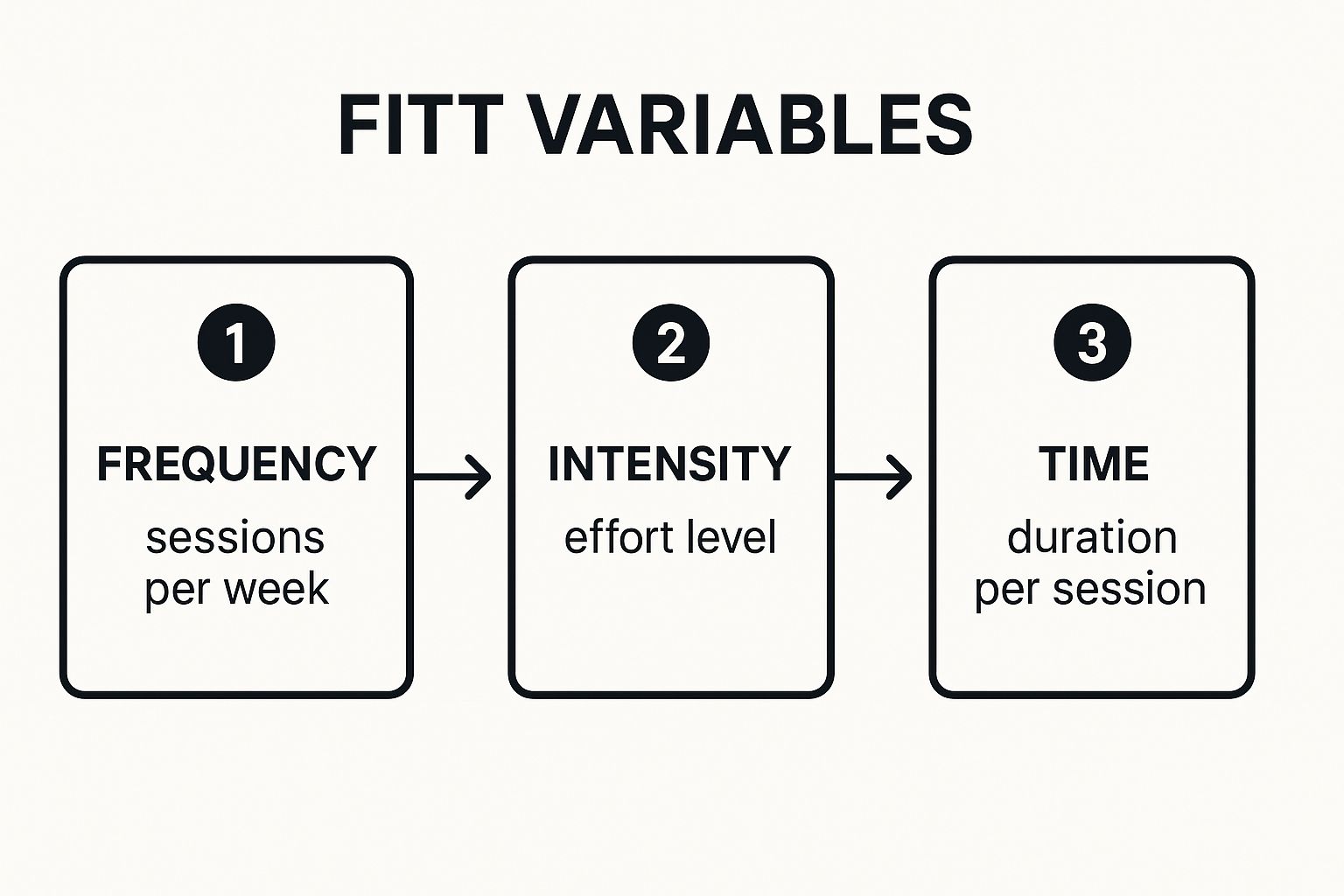
The infographic visually represents the sequential progression of increasing training load by first adding more sessions per week (Frequency), then increasing the effort level of each session (Intensity), and finally extending the duration of each session (Time). This structured approach allows for controlled progression and minimizes the risk of overtraining.
To effectively apply the FITT principle, consider the following tips:
- Start conservatively: Begin with manageable FITT parameters and gradually increase them over time.
- Modify one variable at a time: Avoid changing multiple variables simultaneously to isolate the effects of each adjustment.
- Consider individual goals: Tailor FITT parameters to align with specific fitness goals, whether it be weight loss, muscle gain, or improved endurance.
- Use FITT-VP: Incorporate volume and progression into the framework for a more comprehensive approach.
By understanding and implementing the FITT principle, fitness professionals can design effective and personalized exercise programs that lead to positive training outcomes for their clients. While understanding the limitations of the FITT principle is crucial, its utility as a fundamental framework remains undeniable.
8. Variation and Periodization Principle
The Variation and Periodization Principle is a cornerstone of effective exercise prescription, particularly for those seeking to optimize performance and achieve specific fitness goals. This principle acknowledges the body's remarkable ability to adapt to training stimuli. Without consistent variation, progress stagnates, leading to plateaus and increasing the risk of overuse injuries. This principle, a crucial element in the principles of exercise prescription, encompasses two interconnected concepts: variation and periodization.
Variation, at its core, involves systematically manipulating training variables such as exercise selection, intensity, volume, rest periods, and training frequency. This prevents the body from becoming accustomed to a single stimulus, forcing continuous adaptation and promoting ongoing improvements in strength, power, endurance, and overall fitness. For example, instead of performing the same chest press routine every week, variation might involve alternating between barbell bench press, dumbbell incline press, and decline push-ups, each emphasizing different muscle fibers and movement patterns. Changing the sets, repetitions, and rest periods further challenges the muscles and prevents stagnation.
Periodization builds upon the concept of variation by structuring training into distinct cycles and phases, each with specific goals and training emphases. This systematic planning allows for targeted development of different fitness components and optimizes performance timing. Periodization is especially important for athletes preparing for competitions, as it allows them to peak at the right time. However, it can also be beneficial for individuals seeking general fitness improvements by providing structure and preventing overtraining.
Several periodization models exist, each tailored to different training goals and athlete populations. Linear periodization, often used by strength athletes, involves a gradual increase in intensity and a decrease in volume over time, culminating in a peak performance phase. Undulating periodization, on the other hand, incorporates more frequent fluctuations in training variables, offering greater variety and potentially mitigating adaptation plateaus. Block periodization, favored by endurance athletes, divides training into distinct blocks, each focusing on a specific physiological adaptation, such as aerobic base building or anaerobic capacity. Seasonal training variations, common in team sports, adjust training plans based on the competitive calendar, emphasizing different skills and fitness components throughout the year.
Successful implementation of the Variation and Periodization Principle hinges on careful planning, monitoring, and adjustment. Consider the following tips to effectively integrate this principle into exercise prescription:
Plan training phases around specific goals: Clearly define your objectives for each training cycle, whether it's increasing strength, improving endurance, or peaking for a competition. This provides a framework for selecting appropriate exercises and manipulating training variables.
Vary exercises, intensities, and volumes regularly: Introduce new exercises to challenge different muscle groups and movement patterns. Manipulate intensity through changes in resistance, speed, or incline. Adjust volume by altering sets, repetitions, and rest periods.
Include different training methods and modalities: Incorporate a variety of training methods, such as plyometrics, interval training, and circuit training, to stimulate different physiological adaptations. Explore different modalities like swimming, cycling, or yoga to enhance overall fitness and prevent overtraining.
Monitor performance and adjust plans accordingly: Track progress regularly and be prepared to modify training plans based on individual responses. If progress stalls, consider altering the training variables or adjusting the periodization model.
While the Variation and Periodization Principle offers numerous benefits, including preventing boredom, reducing overuse injury risk, optimizing performance timing, and facilitating comprehensive fitness development, it is important to acknowledge its potential drawbacks. Implementing periodization effectively requires advanced planning and knowledge of training principles. It can be complex to implement correctly, especially for beginners. For recreational exercisers with less specific goals, a less structured approach might suffice. Finally, successful periodization requires careful monitoring and adjustment, which may not be feasible for all individuals.
The pioneers of modern periodization theory, including Tudor Bompa, Vladimir Issurin, and Yuri Verkhoshansky, have significantly contributed to our understanding of this powerful training principle. Their work highlights the importance of structured training variation for maximizing athletic performance and achieving long-term fitness goals. This principle earns its place within the principles of exercise prescription due to its effectiveness in driving continuous adaptation, preventing training plateaus, and optimizing performance outcomes. It provides a framework for both personal trainers designing programs and individuals seeking to structure their own training effectively.
8 Principles of Exercise Prescription Comparison
| Principle | Implementation Complexity ? | Resource Requirements ⚡ | Expected Outcomes ? | Ideal Use Cases ? | Key Advantages ⭐ |
|---|---|---|---|---|---|
| Overload Principle | Moderate – requires progressive increase and monitoring | Moderate – need to adjust frequency, intensity, time, or type | Continuous fitness improvement and adaptation | All fitness components aiming for progression | Prevents plateaus, clear progression framework |
| Specificity Principle (SAID) | Moderate to High – precise exercise selection and program design | Moderate – needs targeted resources for specific muscles/systems | Targeted adaptations and improved performance in specific activities | Sport-specific training, skill acquisition | Maximizes training efficiency for goals |
| Progressive Overload | Moderate – systematic, gradual progression and regular tracking | Moderate – consistent monitoring and planning required | Continuous improvement, prevents stagnation | Strength training, endurance programs, rehab progression | Builds long-term gains with clear structure |
| Reversibility Principle | Low – understanding need for continued training | Low – ongoing training maintenance | Loss of fitness gains if training ceases | Long-term fitness maintenance planning | Emphasizes consistency, guides training breaks |
| Individualization Principle | High – requires personalized assessment and program adjustments | High – time and tools for assessments and ongoing modifications | Optimized training effectiveness and safety | Personalized programs for diverse populations | Maximizes results, reduces injury risk |
| Recovery and Adaptation | Moderate – balancing training and rest, employing recovery modalities | Moderate – recovery tools and monitoring needed | Optimal adaptation, injury prevention, improved performance | All training programs emphasizing long-term progress | Prevents burnout, enhances adaptations |
| FITT Principle | Low to Moderate – easy to apply framework with 4 variables | Low – simple manipulation of training variables | Structured progression and comprehensive program design | Beginner to intermediate program design | Simple, systematic, widely accepted |
| Variation and Periodization | High – requires advanced planning with cycles and phases | Moderate to High – planning, monitoring, and adjusting training phases | Prevents plateaus, peak performance optimization | Athletes, advanced trainers requiring periodized plans | Maintains motivation, reduces injury risk |
Putting Principles into Practice
Mastering the principles of exercise prescription is crucial for developing safe and effective training programs. We've explored eight key principles: Overload, Specificity (SAID), Progressive Overload, Reversibility, Individualization, Recovery and Adaptation, FITT (Frequency, Intensity, Time, Type), and Variation/Periodization. Each plays a vital role in optimizing performance, preventing injuries, and fostering long-term adherence to exercise. Remember, understanding the individual needs and responses to training is paramount. Applying these principles, alongside accurate assessment and progression strategies, ensures your clients achieve sustainable results. For those looking to improve their leadership skills within a team context, understanding the key attributes of a team leader is essential. Discover the 8 Attributes of a Team Leader from Kirke Leadership. This can be especially helpful for fitness professionals working with groups or managing a team of trainers.
By integrating these principles of exercise prescription into your practice, you empower individuals to reach their full potential. This holistic approach, encompassing not just the physical, but also the psychological aspects of training, allows for a truly individualized and effective fitness journey. Ultimately, successful application of these principles contributes to improved health, well-being, and overall quality of life for your clients.
Ready to take your understanding of exercise prescription and client management to the next level? Cartwright Fitness offers tools like the Chester Step Test and BodyMetrix Professional Ultrasound system to help you accurately assess fitness levels and track progress, allowing you to practically apply the principles of exercise prescription. Visit Cartwright Fitness today and discover how their resources can enhance your practice and empower you to deliver exceptional results.