

Think of your body's metabolism as its own unique engine. Some engines are built for speed, burning through high-octane fuel quickly, while others are designed for long-haul efficiency, sipping fuel slowly. Metabolic type testing is essentially the diagnostic check that tells you exactly what kind of engine you have.
This isn't about the latest diet trend. It's a scientific assessment that analyzes how your body converts food into energy, giving you a personalized blueprint for how you operate.
What Is Metabolic Type Testing?

At its core, metabolic type testing measures your Resting Metabolic Rate (RMR)—the number of calories your body burns just to stay alive. But it goes a step further. By analyzing the oxygen you breathe in and the carbon dioxide you breathe out, it can also determine your preferred fuel source: are you a "carb burner" or a "fat burner"?
This process gives us a precise, data-driven look into how your body functions at a cellular level. It moves you past the frustrating guesswork of generic health advice and provides a truly personalized strategy for nutrition and fitness.
Decoding Your Personal Energy Blueprint
Getting this blueprint is a game-changer for anyone serious about their health. Instead of blindly following a calorie calculator or adopting a diet that worked for a friend, you get concrete answers tailored to your unique physiology.
This knowledge is incredibly powerful for:
- Weight Management: It reveals your exact daily calorie needs for maintenance, loss, or gain. No more guessing.
- Fitness Performance: Athletes can dial in their nutrition and training intensity to maximize fuel efficiency and push past performance plateaus.
- Overall Wellness: It can finally explain why you feel sluggish or why certain popular diets just haven't worked for you in the past.
It's no surprise that more people are seeking this kind of personalized data. The global metabolic testing market was valued at USD 473.75 million and is on track to hit USD 908.29 million, which really shows how much demand there is for data-driven health solutions. You can dig deeper into these market projections to understand the industry's rapid growth.
A metabolic test replaces vague health guidelines with a clear, actionable roadmap based on your individual physiology. It tells you not what works for the "average" person, but what works specifically for you.
The test uncovers several key data points that form the foundation of your personalized plan.
Key Metrics Revealed by Metabolic Testing
This table breaks down the primary data points you get from a typical metabolic test and explains what they mean for your health and fitness journey.
| Metric | What It Measures | Why It Matters |
|---|---|---|
| Resting Metabolic Rate (RMR) | The number of calories your body burns at complete rest over a 24-hour period. | This is your baseline calorie need. It's the most accurate way to set targets for weight loss, gain, or maintenance. |
| Respiratory Exchange Ratio (RER) | The ratio of carbon dioxide produced to oxygen consumed (VCO₂/VO₂). | This tells you your body's primary fuel source at rest—carbohydrates or fats. It helps tailor your macronutrient intake. |
| VO₂ Max (during exercise test) | The maximum rate of oxygen your body can use during intense exercise. | A key indicator of cardiovascular fitness and aerobic endurance. Essential for athletes looking to optimize performance. |
| Metabolic Efficiency Point (MEP) | The exercise intensity at which your body is most efficient at burning fat for fuel. | Helps you design workouts that maximize fat burning and improve endurance without hitting a wall. |
Understanding these numbers is the first step toward working with your body, not against it.
Ultimately, metabolic testing gives you the powerful advantage of precision. It turns your health and fitness journey from a series of hopeful guesses into a science-backed endeavor.
The Science of Your Personal Energy Engine
To really get what metabolic type testing is all about, we have to look under the hood at the science making it tick. At its heart, the test is a deep dive into your body's energy management system, and it gets this information simply by analyzing your breath. This process is called indirect calorimetry.
It’s less about what you’re eating and more about what your body actually does with the fuel you give it.
Think of your body like a high-performance engine. Even when you’re parked on the couch, that engine is still idling, burning a little bit of fuel just to keep all the systems online. This is your Resting Metabolic Rate (RMR). It’s the minimum number of calories your body needs to function at complete rest—literally just to stay alive.
Knowing your true RMR is the first, and most crucial, step toward dialing in your nutrition. It swaps out those generic online calculators for a number that is 100% unique to you, giving you a solid, accurate starting point for any health goal.
Your Body's Preferred Fuel Mix
The test also figures out your Respiratory Exchange Ratio (RER), which is basically the fuel gauge for your personal engine. This number comes from a simple comparison: how much oxygen (O₂) you breathe in versus how much carbon dioxide (CO₂) you breathe out.
But don't let its simplicity fool you. This ratio tells a remarkably detailed story about which fuels your body prefers to burn.
- An RER value hovering around 0.7 means your body is running primarily on fat.
- An RER value closer to 1.0 shows your body is dipping into its carbohydrate stores for energy.
Most of us land somewhere in the middle, using a mix of both. This single number can finally explain why one person feels amazing on a high-fat diet while their friend needs more carbs to feel human. For a closer look at this measurement, you can read more about the respiratory quotient, which is a very similar concept.
This infographic does a great job of showing how all these pieces fit together to influence your health.
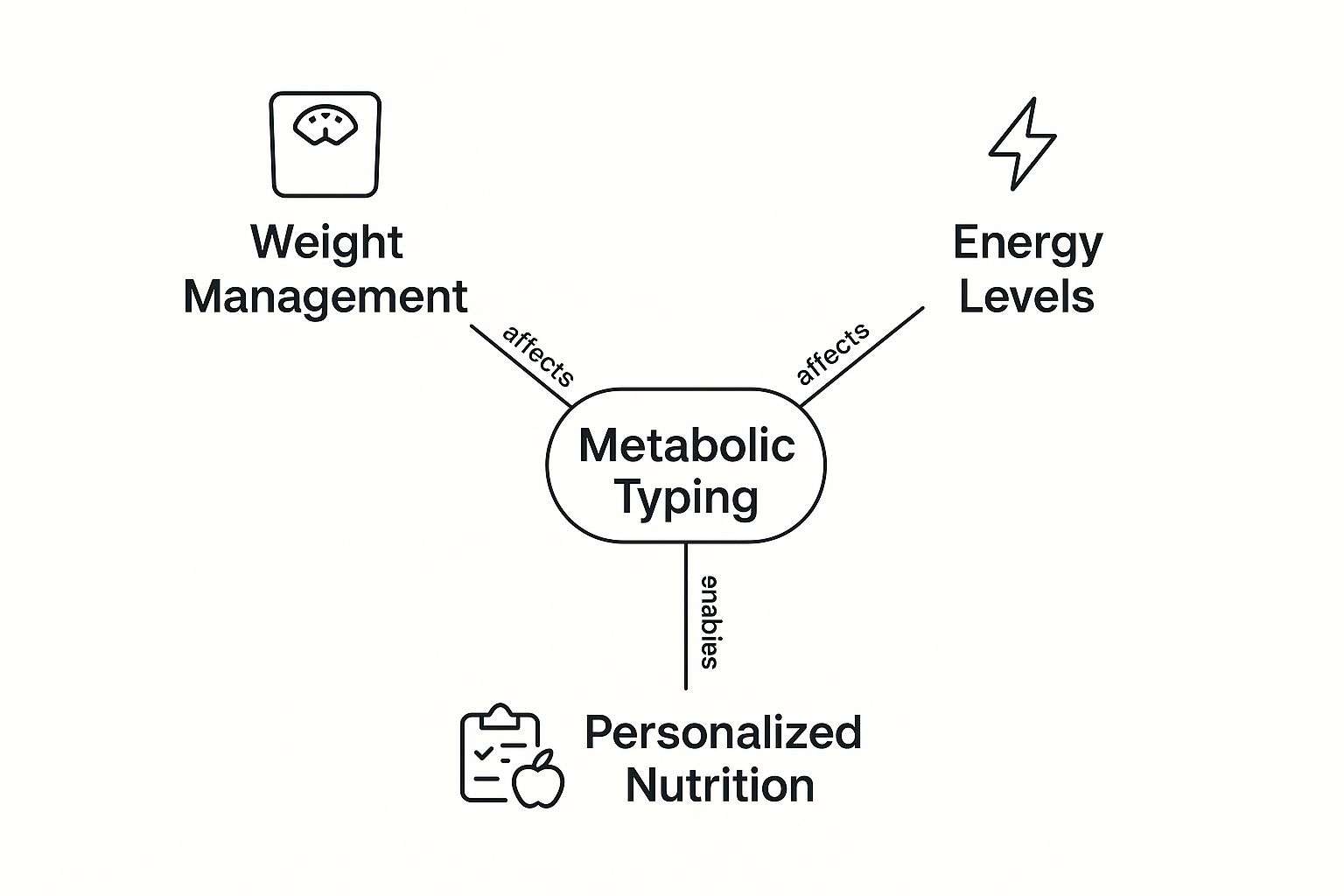
As you can see, figuring out your metabolic type is the key that unlocks better weight management, more consistent energy, and a nutrition plan that's genuinely built for you.
From Breath to Blueprint
By analyzing these simple measurements, metabolic type testing gives you a detailed physiological blueprint. This isn't just a guess or an estimate based on averages; it's a real-time snapshot of how your body is spending energy and what fuel it's choosing to do so.
This data provides the "why" behind how you feel and perform, allowing you to make smarter, more effective tweaks to your diet and workouts.
This solid scientific footing is what makes metabolic testing so different from the fad diets that come and go. It delivers concrete, actionable data rooted in your personal biology. It empowers you to finally work with your body’s natural tendencies instead of constantly fighting against them.
The end result? A much more efficient, sustainable, and frankly, enjoyable path to hitting your health and fitness goals.
How a Metabolic Test Is Actually Performed
The term “metabolic test” can sound pretty clinical, but the process itself is surprisingly simple and non-invasive. The gold standard method is called indirect calorimetry, which is a fancy way of saying we analyze your breath to figure out how your body produces energy.
First, you’ll get comfortable, usually sitting or lying down in a relaxed state. A trained technician then fits a soft mask over your nose and mouth or, in some cases, places a clear hood over your head. Both devices are designed to do one thing: capture all the air you breathe in and out.
That’s it. There are no needles or strenuous tasks involved. You just need to breathe normally for about 15 to 20 minutes while the equipment works its magic. It’s far less intimidating than it sounds—most people find it's just a quiet, restful break in their day.
What the Equipment Measures
While you're relaxing, the machine—known as a metabolic cart—is performing a sophisticated analysis. It’s measuring the precise amount of oxygen your body consumes and the volume of carbon dioxide you exhale with every breath.
This simple gas exchange tells us two incredibly important things about your metabolic engine:
- Your Resting Metabolic Rate (RMR): The test calculates the exact number of calories you burn while doing nothing at all. This gives you a true, personalized baseline for your daily energy needs.
- Your Preferred Fuel Source: By looking at the ratio of oxygen used to carbon dioxide produced, the system can tell whether your body is primarily burning fats or carbohydrates for fuel at rest.
This kind of data-driven insight is becoming more mainstream. The market for metabolic testing solutions was recently valued at USD 735.48 million and is on track to surpass USD 1 billion as more health and fitness professionals integrate this technology. You can see the growth of metabolic testing solutions to get a better sense of how the industry is expanding.
Of course, getting reliable data depends entirely on the accuracy of the equipment. For any clinic or gym offering these tests, a deep understanding of proper metabolic cart calibration is non-negotiable.
Here’s a look at a typical metabolic cart setup you'd find in a professional setting.
As you can see, the person simply breathes into a tube connected to the main analysis unit, which processes the data in real-time.
Testing at Rest Versus During Exercise
A resting test is perfect for establishing your metabolic baseline, but we can also use the same technology to see how your body responds to physical stress.
The core principle is always the same—we’re measuring gas exchange. It’s the context that changes, revealing completely different insights into your physiology.
For an exercise test, you’d wear the same mask but perform the test while on a treadmill or stationary bike. Instead of measuring your RMR, this active assessment shows how your fuel preferences—that fat-versus-carb burn—shift as you ramp up the intensity. This information is a game-changer for athletes trying to dial in their optimal training zones and maximize fat-burning efficiency.
Using Metabolic Data to Optimize Your Fitness
If you're an athlete or just serious about your fitness, you've probably hit a wall with generic training advice. Those cookie-cutter diet plans and one-size-fits-all workout programs are often the biggest things holding people back. This is where metabolic testing completely changes the game. It cuts through all that noise and gives you a precise, physiological roadmap to train smarter and finally break through those frustrating plateaus.
Forget about those outdated, age-based formulas for calculating heart rate zones. Real metabolic data shows you exactly how your body uses fuel at different intensities. This means you can pinpoint the exact intensity where your body burns the most fat—a massive advantage for endurance athletes and anyone focused on changing their body composition.
Think about it from an endurance runner's perspective. Once they know their precise fat-burning zone, they can design long runs to stay right in that sweet spot. This trains their body to become a far more efficient fat-burning engine, saving those precious glycogen stores for when they really need them on race day.
Precision Fueling for Peak Performance
This level of detail makes a huge difference in your nutrition, too. For anyone trying to build muscle, the guesswork of figuring out a calorie target is gone. Your Resting Metabolic Rate (RMR) gives you the baseline—the exact number of calories your body needs simply to exist.
From that starting point, you can strategically add calories based on your actual activity levels. This creates a surplus designed specifically for lean muscle growth, not unnecessary fat gain. It’s the difference between blindly throwing food at a problem and intentionally fueling your body for a specific outcome. To dive deeper into the process, you can learn more about how to measure Resting Metabolic Rate and why it’s so critical for hitting your goals.
Metabolic testing provides the actionable data needed to align your training and nutrition with your unique physiology, ensuring every workout and meal serves a distinct purpose.
This personalized approach creates a powerful synergy between how you train and how you eat.
Building Personalized Training Zones
One of the most practical and powerful outcomes of a metabolic test is the creation of truly personalized training zones. These aren't based on generic estimates; they're built from your unique cardiovascular and metabolic response to exercise.
Here’s a simple breakdown of how this translates into smarter training:
- Zone 1 Recovery: This is your lowest intensity. It’s perfect for active recovery days, promoting blood flow and healing without adding any real training stress.
- Zone 2 Endurance: This is your "fat-burning zone." It’s the sweet spot where your body prefers to use fat for fuel, making it crucial for building a strong aerobic base.
- Zone 3 Tempo: Things are getting moderately hard here. Your body starts to rely more on carbohydrates for energy, which helps improve your ability to hold a faster pace for longer.
- Zone 4 Threshold: Now it's getting tough. This is a challenging intensity right at your lactate threshold, which pushes your body to get better at clearing metabolic waste.
- Zone 5 VO₂ Max: This is an all-out effort. These short, intense bursts are designed to improve your top-end speed and power.
When you understand your own individualized zones, you can structure your weekly training with an incredible amount of precision. You’ll know exactly which physiological system you're targeting in every single workout, guaranteeing you get the maximum return on your time and effort.
How Doctors Use Metabolic Testing for Health

While metabolic testing is a game-changer in the fitness world, its impact in a clinical setting is arguably even more profound. For doctors and healthcare providers, this isn't just about fine-tuning a workout plan; it's a serious diagnostic tool that helps them move past generic advice and build truly personalized treatment plans for complex health issues.
Think about managing conditions like obesity, type 2 diabetes, or metabolic syndrome. Metabolic testing offers a clear window into a patient's unique physiological landscape. By getting a precise measurement of their Resting Metabolic Rate (RMR), a doctor can design nutrition strategies that are both effective and sustainable.
This level of accuracy strips away the dangerous guesswork that often comes with standard, calorie-restricted diets. It ensures a patient's plan is safe and perfectly matched to their body's actual energy needs. For certain individuals, a provider might even consider treatments like GLP-1 for weight loss to complement a data-driven health plan.
Identifying Metabolic Inflexibility
One of the most critical applications in a clinical setting is the identification of metabolic inflexibility. This condition means the body struggles to switch efficiently between burning carbohydrates and fats for fuel. A healthy, flexible metabolism does this seamlessly, shifting between energy sources depending on what you've eaten and what your body needs.
An inflexible metabolism, on the other hand, gets stuck. This can lead to a cascade of problems, including stubborn weight, persistent fatigue, and poor blood sugar control.
By using metabolic testing to pinpoint this specific dysfunction, clinicians can create targeted interventions. These aren't just guesses; they are specific dietary and exercise protocols designed to restore the body’s natural ability to switch fuels, leading to much better health outcomes.
Critical Care and Nutritional Support
The use of metabolic testing doesn't stop at the clinic door; it’s also crucial in hospitals, especially in intensive care units (ICUs). For patients who are critically ill or recovering from major surgery, getting nutrition right is a delicate balancing act. Giving too many or too few calories can cause serious complications and slow down recovery.
This is where indirect calorimetry comes in. It allows the medical team to figure out a patient's exact daily caloric needs in real-time. This ensures that any nutritional support, whether through a feeding tube or an IV, is precisely matched to their metabolic demands. It's a practice that can dramatically improve recovery rates and lower the risk of infection.
Ultimately, metabolic testing gives both doctors and patients the objective data they need to make smarter, proactive decisions about health. It's a foundational piece of a more individualized approach to medicine.
Turning Your Test Results into Action
So you've got your metabolic test report. It's full of numbers and charts, but what does it all mean? The real magic happens when you translate that data into simple, everyday actions. Your results, especially your Resting Metabolic Rate (RMR) and Respiratory Exchange Ratio (RER), are the blueprints for a health plan built just for you.
Think of your RMR as your personal calorie budget. Forget the generic online calculators that are often just a shot in the dark. You now know the precise number of calories your body burns just to stay alive. This is your foundation for setting accurate targets, whether you're aiming for weight loss, muscle gain, or simply maintaining where you are.
Your RER, on the other hand, is a peek into your engine. It tells you what kind of fuel your body prefers to burn at rest—fats or carbohydrates. This is a game-changer for designing a nutrition plan that works with your body's natural tendencies, not against them.
From Data to Daily Habits
The next step is turning these numbers into a sustainable plan. This isn't about being perfect; it's about making small, smart adjustments that align with your unique physiology. Working with a qualified professional, like a registered dietitian or a certified trainer, is the best way to create a safe and effective roadmap from your results.
And if supplements are part of that new plan, it’s a good idea to spend some time understanding lab testing for supplements to ensure you're getting what you pay for.
The goal is to use your metabolic data not as a strict set of rules, but as an intelligent guide. It empowers you to listen to your body and make adjustments that deliver real, lasting results.
Structuring Your Nutrition and Workouts
With your metabolic blueprint in hand, you and your health pro can start making some seriously impactful changes.
Here’s what that might look like in the real world:
- Meal Timing and Composition: If your RER shows you're a "fat burner" at rest, your plan might lean more into healthy fats and time your carbohydrate intake strategically around workouts.
- Workout Intensity: Trying to lose fat? Your active metabolic test will pinpoint the exact heart rate zone where your body torches the most fat. No more wasted time on the treadmill—every minute of your cardio can be incredibly efficient.
- Calorie Cycling: For more advanced goals like building muscle while staying lean, you can use your RMR to cycle your calories. This means eating a bit more on training days to fuel recovery and a bit less on rest days to encourage fat loss.
Let's break down the RER value a bit more, as it's one of the most powerful metrics you'll get from your test.
Translating RER Values into Action
This table offers a simplified guide to understanding what your Respiratory Exchange Ratio (RER) really means for your diet and training.
| RER Value | Primary Fuel Source | Practical Application |
|---|---|---|
| 0.70 – 0.80 | Mostly Fat | Your body is great at using fat for fuel. A diet with healthy fats and protein will likely feel great and be effective. |
| 0.80 – 0.90 | Mixed (Fat & Carbs) | You're a flexible fuel burner. A balanced macronutrient approach is a good starting point. |
| 0.90 – 1.00+ | Mostly Carbohydrates | Your body prefers carbs for energy. You might benefit from timing carbs around workouts and focusing on complex, slow-digesting sources. |
Seeing your number in black and white can finally help you understand why certain diets may have failed you in the past while others felt great.
Ultimately, your test results are a tool to end the frustrating cycle of health and fitness guesswork. They provide the clarity you need to build a smarter, more effective plan and finally achieve the goals you've been working so hard for.
Frequently Asked Questions About Metabolic Testing
Even with a solid grasp of the science behind metabolic testing, you probably have some practical questions floating around. Let's tackle some of the most common ones I hear from clients and professionals to help you figure out if this is the right move for you.
Is Metabolic Testing Actually Accurate?
This is the big one, and for good reason. The short answer is yes, if it's done correctly. Clinical-grade testing that uses indirect calorimetry is the gold standard for a reason. When performed under the right conditions—like after a proper fast—it blows any online calculator or generic formula out of the water in terms of precision.
Ultimately, the reliability of your results comes down to two things: the quality of the equipment and how strictly you follow the pre-test instructions.
What's the Cost and How Often Should I Get Tested?
Okay, let's talk numbers. The cost can be all over the map, but you can generally expect to pay somewhere between $100 and $300 for a single test. The price tag really depends on where you go—a hospital's pricing will likely differ from a high-performance gym's—and what's included. Some packages come with a detailed consultation to help you make sense of the data and build a real-world plan.
Your metabolism isn't set in stone. It's a living, breathing system that shifts and adapts as your body composition, diet, and fitness change.
Because your metabolism is always evolving, a one-time test is just a snapshot in time, not a lifelong manual. I usually recommend getting re-tested every 6 to 12 months, especially if you've made major changes to your lifestyle. This keeps your nutrition and training strategies dialed in to what your body needs right now, helping you break through plateaus and keep seeing results. Think of it as a regular tune-up for your health plan.
Ready to move beyond guesswork and unlock your unique metabolic blueprint? At Cartwright Fitness, we provide the high-precision equipment trusted by professionals for accurate and reliable metabolic analysis. Explore our professional-grade solutions and take the first step toward data-driven results.