

Level Up Your Fitness Assessments
Fitness testing equipment covers a wider range of tools than most buyers expect. Some devices estimate body composition, some measure aerobic capacity, some track heart-rate response during exercise, and others analyze movement, power, or full metabolic output. In practice, the right choice depends less on brand prestige and more on the assessment job you need to do repeatedly and well.
For a personal trainer, a reliable chest-strap monitor and a repeatable field test may be enough to screen fitness and track progress over time. A rehabilitation clinic usually needs equipment that is quick to operate, easy to standardize, and comfortable for mixed populations. A university lab or elite sport setting may need research-grade measurement for VO2, force, gait, or body composition, where calibration, operator training, and reporting depth matter more than convenience.
That distinction matters because the gap between “useful” and “overbought” is huge in this category. In our review, the clearest pattern was that lower-cost tools often handle screening and routine retesting very well, while expensive systems earn their keep only when you need tighter accuracy, better repeatability across operators, or advanced physiological data. The market is moving that way too: a recent European metabolic testing market report valued the sector at USD 345.8 million in 2024 and projected 8.3% annual growth through 2032, with VO2 max analyzers expected to hold 30.6% of the market in 2025.
Eight tools cover the main assessment jobs buyers care about: body composition, cardiovascular testing, metabolic measurement, and movement analysis. Some suit independent coaches and small gyms; others make sense only for clinics, sports performance facilities, and research departments that can justify the cost, space, and staff training.
What Types of Fitness Testing Equipment Do Most Facilities Actually Need?
Most facilities do not need a full laboratory build-out. They need a short list of tools that answer common questions clearly: Is this person getting fitter? Are they recovering appropriately? Has body composition changed? Is movement quality improving or deteriorating?
For most gyms and training studios, the practical starting point is heart-rate monitoring plus one repeatable aerobic test protocol. That combination gives coaches an affordable way to assess work capacity, recovery response, and progress between training blocks without creating a complicated testing workflow. If body composition is part of the service model, a professional BIA unit may add value, but only if staff can control hydration, time-of-day, and pre-test conditions well enough to keep repeat tests meaningful.
Clinics and rehabilitation settings usually benefit from equipment that reduces operator variability and client burden. In our review, that pushed simpler, fast-turnaround systems higher than flashy ones. A heart-rate monitor, standardized step or rowing test, and a body-composition tool with clear reporting often cover most day-to-day needs better than a high-cost device that only one staff member can run confidently.
Sports performance facilities tend to need a broader stack: aerobic testing, body composition, and movement or power analysis. That is where tools like force plates, OptoJump, or a portable metabolic system become more defensible. They help answer performance questions that lower-cost tools cannot, such as asymmetry during landing, reactive strength changes across a season, or real-time oxygen consumption in field settings.
Academic and research environments are different again. There, buyer priorities usually shift toward validated protocols, calibration procedures, exportable raw data, and consistency across repeated measures. If your work may be published or used in formal athlete monitoring, it is often worth paying for equipment that is less convenient but more defensible.
A broader fitness equipment market summary helps explain why more facilities are making these investments: demand for measurable outcomes has expanded well beyond specialist labs into mainstream gyms, clinics, and home-adjacent wellness businesses.
1. Cartwright Fitness: Gold-Standard Fitness Testing Equipment
For professionals seeking top-tier fitness testing equipment, Cartwright Fitness presents a compelling solution. This family-run UK enterprise specializes in validated, high-precision equipment and software designed for accuracy and reliability. Whether you're a personal trainer assessing a client's progress or a sports scientist conducting rigorous research, Cartwright Fitness offers a broad range to meet diverse needs. Their collaboration with Professor Kevin Sykes, a leading expert in exercise physiology, underscores their commitment to scientific validity. This partnership is particularly evident in their flagship Chester Step Test tools, a staple for aerobic fitness assessments.
Beyond the Chester Step Test, Cartwright Fitness offers a wide selection of fitness testing equipment from leading global brands. This includes BodyMetrix Professional Ultrasound Systems for precise body composition analysis, Cosmed metabolic analysers for in-depth respiratory measurements, and a range of complementary consumables to support various testing protocols. This breadth of offerings makes Cartwright Fitness a one-stop shop for professionals seeking diverse fitness testing solutions. For example, a sports performance facility could utilize the Cosmed metabolic analyser to track athletes' VO2 max and tailor training programs accordingly, while a clinical rehabilitation practitioner might employ the BodyMetrix system to monitor changes in body composition during a patient's recovery.
Cartwright Fitness’ commitment to customer support sets them apart. They provide personalized expert advice from in-house specialists and offer custom training seminars specifically designed for clinical rehabilitation practitioners, sports scientists, and academic institutions. These seminars help users maximize the effectiveness of their equipment and streamline assessment procedures, ultimately increasing operational efficiency. Their global reach, shipping to over 50 countries with flexible delivery options, and a straightforward 30-day return policy further enhance their customer-centric approach. With over 1,000 five-star customer reviews, their commitment to both product quality and outstanding support is clearly evident.
Pros:
- Validated, high-precision equipment: Developed with academic collaboration, ensuring reliable results.
- Comprehensive range: Includes Chester Step Test kits, BodyMetrix ultrasound, Cosmed metabolic analysers, and other trusted global brands.
- Worldwide shipping: Flexible delivery options and easy 30-day returns.
- Personalized expert support: Tailored training seminars for enhanced usability and professional development.
- Exceptional customer service: Reflected in over 1,000 five-star reviews.
Cons:
- Premium pricing: Some flagship products, such as the BodyMetrix Ultrasound System (around £2,200), might be a significant investment for smaller practices or independent trainers.
- Limited direct pricing: Software pricing often requires consultation, which can make initial budgeting slightly less straightforward.
Website: https://www.cartwrightfitness.co.uk
Cartwright Fitness provides high-quality, validated fitness testing equipment backed by expert support and training. While the premium pricing may be a barrier for some, the investment is justified by the accuracy, reliability, and wide range of solutions they offer. For professionals who demand the best in fitness testing equipment, Cartwright Fitness is a strong contender.
2. BodPod Body Composition Analyzer
The BodPod Body Composition Analyzer stands out as a premier piece of fitness testing equipment for accurately assessing body composition. Utilizing air displacement plethysmography (ADP), this gold-standard device offers a precise and non-invasive method to determine body fat percentage and lean mass. This makes it an invaluable tool for a range of professionals, from personal trainers crafting personalized fitness plans to researchers conducting in-depth body composition studies. The BodPod quickly calculates body density by measuring the amount of air displaced by a person sitting comfortably inside the chamber. This data, combined with the individual's body weight, is then used to calculate body fat and lean mass. Its speed and accuracy make it a highly efficient option for professionals who need reliable data quickly.
The BodPod offers several key features that secure its role as a top fitness testing equipment option. Tests are completed in under five minutes, minimizing client discomfort and maximizing efficiency. The integrated scale system ensures precise weight measurement, contributing to the overall accuracy of the body composition analysis, typically within a ±1-2% margin of error. In addition, the accompanying software produces detailed reports, enabling professionals to interpret and use the data for personalized recommendations. This level of detail is particularly useful for athletes, researchers, and clinicians who need to monitor changes in body composition over time. For personal trainers and fitness instructors, the BodPod enables accurate tracking of client progress and adjustments to training and nutrition programs.
Practical Applications and Use Cases:
- Personal Training: Provides accurate baseline data and tracks changes in body composition for personalized training programs.
- Sports Science: Monitors athlete body composition for performance optimization and injury prevention.
- Clinical Rehabilitation: Assesses body composition changes related to injury recovery and chronic disease management.
- Research: Conducts accurate and reliable body composition studies.
Pricing and Technical Requirements:
The BodPod is a significant investment, ranging from $30,000 to $45,000. It also requires a dedicated space and a controlled environment, free from drafts and temperature fluctuations, to ensure accurate measurements. Regular calibration and maintenance are necessary to uphold the device's precision. Operation necessitates a trained technician, adding to the overall cost.
Comparison with Similar Tools:
While other methods like DEXA scans and underwater weighing also provide accurate body composition data, the BodPod offers a faster, more comfortable, and less claustrophobic experience. Unlike underwater weighing, which can be challenging for some individuals, the BodPod’s non-invasive nature makes it suitable for a broader range of populations, including children and older adults.
Implementation/Setup Tips:
- Ensure a dedicated, climate-controlled space for the BodPod.
- Schedule regular calibration and maintenance with certified technicians.
- Train staff thoroughly on proper operating procedures.
- Implement clear protocols for client preparation prior to testing (e.g., clothing restrictions, fasting requirements).
Pros:
- Gold standard for body composition analysis.
- Fast and non-invasive assessment.
- High precision and reliability.
- Suitable for diverse populations.
Cons:
- High purchase price.
- Requires dedicated space and controlled environment.
- Ongoing maintenance and calibration costs.
- Needs trained technician for operation.
Website: https://www.cosmed.com/en/products/body-composition/bod-pod
Despite its high cost, the BodPod's accuracy, speed, and versatility make it a valuable investment for serious fitness professionals, researchers, and clinicians seeking the most reliable body composition data. It is well-regarded among fitness testing equipment, providing a thorough and effective way to understand and track body composition changes.
3. Concept2 RowErg (Rowing Machine)
The Concept2 RowErg stands as the quintessential rowing ergometer, widely recognized as the gold standard in fitness testing equipment. Its use spans diverse settings, from assessing rowing athletes and CrossFit competitions to evaluating general fitness levels. The RowErg’s ability to deliver precise and consistent performance metrics makes it an indispensable tool for standardized fitness testing protocols. This is essential for professionals who need reliable data for comparative analysis, program design, and progress tracking. The PM5 Performance Monitor meticulously tracks key metrics, including work output, pace, calories burned, watts generated, and other data points vital for thorough fitness assessment.
For personal trainers, the RowErg offers a powerful tool for assessing client fitness levels and tailoring personalized workout programs. Exercise physiologists and sports scientists rely on its accuracy for research purposes and performance evaluation. The consistent metrics provided by the RowErg enable clinicians in rehabilitation and physiotherapy to monitor patient progress objectively. The RowErg's durability makes it an ideal investment for gyms and sports performance facilities. University and academic sports science departments also utilize the RowErg for both teaching and research purposes.
The PM5 monitor is a key feature, offering Bluetooth and ANT+ connectivity for reliable data integration with other fitness devices. The air resistance flywheel with adjustable damper settings allows for personalized resistance levels, catering to a wide range of fitness levels. The RowErg's sturdy construction ensures its longevity, even under heavy and repeated use. Built-in fitness tests and workout programs add value for both individual users and trainers.
Pros:
- Industry gold standard for rowing performance testing
- Extremely durable and reliable construction
- Consistent metrics for comparative testing
- Comprehensive data tracking capabilities with the PM5 monitor
- Bluetooth and ANT+ connectivity for data integration
Cons:
- Requires significant storage space due to its footprint.
- Higher price point than some alternative fitness testing equipment ($900-$1,200).
- Requires proper rowing technique for accurate results, necessitating user training.
- Primarily tests cardiorespiratory fitness, with limited capacity for assessing other fitness components.
Implementation/Setup Tips:
- Ensure adequate space for both use and storage.
- Familiarize yourself with the PM5 monitor's functionalities and data tracking capabilities.
- Instruct users on proper rowing technique to ensure accurate and reliable data.
- Consider using the built-in fitness tests for standardized assessments.
Website: https://www.concept2.com/indoor-rowers
The Concept2 RowErg, while requiring a larger investment and dedicated space, earns its place on this list of fitness testing equipment because of its exceptional accuracy, durability, and extensive data tracking capabilities. While alternatives exist, none offer the same level of precision and industry-wide recognition, making it an essential tool for serious fitness professionals and institutions.
4. Polar H10 Heart Rate Monitor
The Polar H10 Heart Rate Monitor is a cornerstone piece of fitness testing equipment for professionals seeking highly accurate heart rate data. Its ECG-based measurement, boasting ±1% accuracy, makes it a reliable tool for assessing heart rate variability (HRV), recovery rates, and training intensity. This level of precision is comparable to medical-grade equipment, making it suitable for serious athletes, rehabilitation programs, and research settings. The H10 is ideal for conducting various fitness tests, from simple resting heart rate measurements to more complex submaximal and maximal exercise tests. For those interested in practical applications of submaximal testing, learn more about Polar H10 Heart Rate Monitor. Its data can inform personalized training programs, monitor athlete progress, and even aid in identifying potential cardiac risks.
Beyond its accuracy, the Polar H10 shines in its connectivity. Utilizing both Bluetooth and ANT+ technology, it seamlessly integrates with a wide array of fitness equipment, smartphones, and sports watches. This versatility makes it suitable for both laboratory and field testing environments. Imagine tracking an athlete's heart rate in real-time during a field sprint test or connecting it to a stationary bike for a controlled VO2 max assessment—the H10 handles both with ease. This broad compatibility also extends to popular fitness apps, allowing users to easily collect and analyze their data.
For setup, moisten the electrode areas of the strap, pair the H10 with your chosen device via Bluetooth or ANT+, and secure the strap comfortably around your chest. The improved electrode design, featuring silicon dots, helps prevent slippage during intense activity. The H10’s internal memory can store data from one training session, which can later be synced to your device. While the onboard storage is limited, its long battery life of up to 400 hours ensures you can conduct multiple testing sessions without needing a recharge. Priced at $89.95, the Polar H10 sits at a higher price point than basic heart rate monitors, reflecting its professional-grade features. While the chest strap design might be uncomfortable for some, its exceptional accuracy and versatile connectivity options make it a worthwhile investment for serious fitness testing. Consider the ongoing cost of electrode strap replacements, which will be needed occasionally. More information and purchase options can be found on the Polar website.
5. Tanita MC-980MA Multi-Frequency Segmental Body Composition Analyzer
The Tanita MC-980MA Multi-Frequency Segmental Body Composition Analyzer stands out as a premier piece of fitness testing equipment for professionals seeking in-depth body composition analysis. This advanced bioelectrical impedance analysis (BIA) device goes beyond basic body fat percentage to offer a detailed picture of a client's physiological makeup. It is an invaluable tool for personal trainers, exercise physiologists, sports scientists, and medical professionals alike.
Delving into the Details:
The MC-980MA utilizes a multi-frequency BIA approach (using three different frequencies) to assess body composition with impressive accuracy. This method, combined with segmental analysis of the trunk, arms, and legs, provides a highly detailed breakdown of body fat percentage, muscle mass, bone mineral content, visceral fat levels, and even metabolic age. This granularity allows professionals to pinpoint specific areas for improvement and tailor training or rehabilitation programs accordingly. Unlike simpler BIA scales, the MC-980MA's medical-grade accuracy (FDA-cleared) ensures reliable data for informed decision-making.
Practical Applications and Use Cases:
- Personalized Training Programs: Personal trainers can use the detailed data to create highly individualized exercise plans, focusing on specific muscle groups or addressing imbalances.
- Athletic Performance Enhancement: Sports scientists can track changes in body composition over time, optimizing athletes' training regimens and nutrition strategies for peak performance.
- Medical Monitoring and Rehabilitation: In clinical settings, the MC-980MA assists in monitoring patients' progress during rehabilitation, weight management programs, or treatment for conditions like osteoporosis.
- Research and Academic Studies: Its accuracy and detailed data output make it a valuable tool for research studies in exercise science, nutrition, and related fields.
Features and Benefits:
- Multi-frequency BIA and Segmental Analysis: Provides a more accurate and detailed assessment than traditional single-frequency BIA scales.
- Medical-Grade Accuracy: FDA clearance ensures reliable and consistent data.
- Data Output: Measures over 30 body composition parameters, including muscle mass, bone density, visceral fat, and metabolic age.
- User-Friendly Interface: Touchscreen interface with a built-in printer simplifies operation and reporting.
- Quick Assessment: The entire process takes less than 30 seconds.
- Non-invasive Testing: A safe and comfortable experience for clients.
Pros and Cons:
Pros:
- Comprehensive and detailed body composition data
- Quick assessment (less than 30 seconds)
- Non-invasive testing methodology
- High reproducibility of results
Cons:
- Very high cost ($10,000-$15,000)
- Requires specific testing conditions (hydration, time of day)
- Results can be affected by recent exercise or meals
- Significant space requirement
Implementation and Setup Tips:
- Ensure proper client preparation: Clients should be adequately hydrated and avoid eating or exercising vigorously for a few hours before the test.
- Follow standardized procedures: Consistent testing protocols are essential for accurate and reliable results.
- Train staff thoroughly: Operators should be trained on the correct usage and interpretation of the data.
- Dedicate a suitable space: The MC-980MA requires a dedicated area with sufficient space and a stable surface.
Comparison with Similar Tools:
While other BIA devices exist, the Tanita MC-980MA distinguishes itself through its medical-grade accuracy, multi-frequency analysis, and segmental breakdown capabilities. Less expensive BIA scales often provide less detailed information and may not be suitable for professional use in clinical or research settings.
Website: https://www.tanita.com/en/mc-980ma/
The Tanita MC-980MA earns its place on this list of top fitness testing equipment due to its ability to provide highly detailed and accurate body composition data. While the cost is significant, its extensive features, medical-grade accuracy, and quick assessment make it a powerful tool for professionals seeking the best in body composition analysis. This ultimately translates into more effective personalized training programs, enhanced athletic performance, and improved patient care.
6. Cosmed K5 Portable Metabolic System
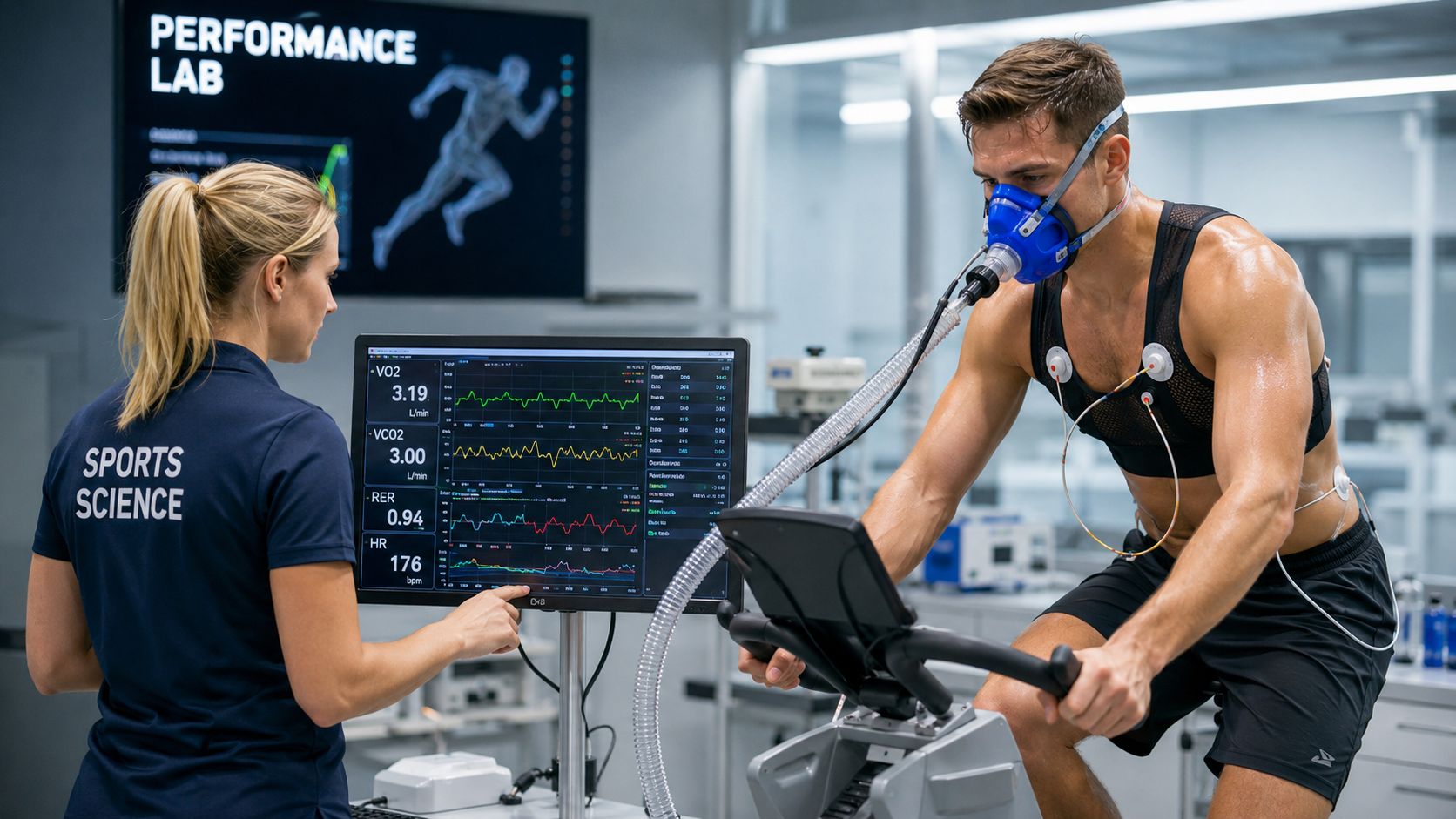
The Cosmed K5 Portable Metabolic System stands out as a premier piece of fitness testing equipment, offering gold-standard metabolic assessments in a portable package. This device goes beyond basic fitness tracking by providing real-time, breath-by-breath analysis of oxygen consumption (VO2), carbon dioxide production (VCO2), ventilation, and energy expenditure. This makes it invaluable for accurately assessing cardiorespiratory fitness, both in the field and in clinical settings. It's a powerful tool for personal trainers, sports scientists, and medical professionals seeking to understand and optimize an individual's physiological response to exercise.
The K5's versatility shines through its multiple connectivity options (Bluetooth, ANT+, Wi-Fi) and interchangeable battery system, facilitating extended testing durations. GPS integration further enhances its utility for outdoor fitness testing and research. Whether you're working with athletes striving for peak performance or patients undergoing rehabilitation, the K5's compatibility with both mask and mouthpiece breathing interfaces allows for customized testing protocols. For those wanting to dive deeper into how metabolism is measured, Learn more about Cosmed K5 Portable Metabolic System. This resource provides valuable context for understanding the data provided by the K5.
The Cosmed K5 sets the standard for portable metabolic testing, delivering accuracy comparable to laboratory systems. Its integrated software simplifies data analysis, providing valuable insights for training program design, rehabilitation progress monitoring, and research studies. While other portable metabolic analyzers exist, the K5 distinguishes itself through its combination of accuracy, portability, and extensive data analysis capabilities. This advanced fitness testing equipment empowers professionals to go beyond basic metrics and explore the intricacies of human performance.
However, this level of sophistication comes at a significant cost. The K5 is extremely expensive, ranging from $30,000 to $40,000. Additionally, operating the device correctly requires specialized training, and regular calibration and maintenance are essential for ensuring accurate results. The wearing apparatus, while necessary for data collection, can also influence natural movement patterns during testing, a factor to consider when interpreting results.
Pros:
- Portable gold-standard metabolic testing
- High accuracy comparable to laboratory systems
- Versatile for both indoor and outdoor testing
- Comprehensive software for data analysis
Cons:
- Extremely expensive (approximately $30,000-$40,000)
- Requires specialized training to operate correctly
- Regular calibration and maintenance needed
- Wearing apparatus may affect natural movement patterns
Website: https://www.cosmed.com/en/products/cardio-pulmonary-exercise-testing/k5
Implementing the Cosmed K5 into your practice requires careful planning and investment. Budget considerations aside, ensuring personnel receive appropriate training is paramount. Establishing a regular calibration and maintenance schedule is also essential for maintaining accuracy and prolonging the lifespan of this valuable fitness testing equipment.
7. Microgate OptoJump Next System
The Microgate OptoJump Next System is a top fitness testing device thanks to its high precision and versatility in assessing athletic performance and rehabilitation progress. This optical measurement system offers a highly accurate, non-invasive way to analyze jump performance, running gait, and other key movement patterns. While other fitness testing equipment may offer basic jump height measurements, the OptoJump Next delves deeper, providing granular data on contact time, flight time, and other temporal parameters that help in understanding power output, reactive strength, and movement efficiency. This makes it an invaluable tool for personal trainers, fitness instructors, exercise physiologists, sports scientists, rehabilitation practitioners, and sports performance facility managers.
The system works through two bars containing transmitting and receiving diodes. These bars detect interruptions in communication as an athlete performs a movement, allowing the system to measure flight and contact times with millisecond precision (1/1000 second accuracy). This data is then processed by dedicated software, providing immediate feedback and detailed analysis of movement patterns. This real-time feedback is particularly beneficial for athletes and coaches, allowing for immediate adjustments and optimization of training techniques.
Practical Applications and Use Cases:
- Power and Reactive Strength Assessment: Evaluate jump height, contact time, and reactive strength index (RSI) to monitor athletic development and identify areas for improvement. This is particularly relevant for plyometric training and sports involving jumping and explosive movements.
- Gait Analysis: Analyze stride length, step frequency, and contact time during running or walking to identify gait asymmetries and improve running efficiency. This is helpful for injury prevention and performance enhancement in runners.
- Rehabilitation Monitoring: Track progress in patients recovering from lower limb injuries by objectively measuring changes in jump performance and gait parameters. This allows therapists to tailor rehabilitation programs and monitor functional recovery.
- Balance and Stability Testing: Utilize the system for balance assessment protocols, providing objective measures of postural stability and sway.
- Research and Academic Applications: The OptoJump Next System is a valuable tool for research in biomechanics, sports science, and rehabilitation, enabling precise and reliable data collection for academic studies.
Features and Benefits:
- Extreme Precision: 1/1000 second timing accuracy ensures highly reliable data for detailed performance analysis.
- Modular and Expandable: The system can be expanded up to 100 meters, making it adaptable for various testing environments and group testing.
- Real-Time Feedback: Provides immediate visual feedback to athletes and coaches, facilitating real-time adjustments and technique refinement.
- Software: The included software offers in-depth analysis of movement patterns, generating reports and visualizing data for thorough assessment.
- Wireless Capability: Allows for testing in the field or outside of traditional laboratory settings.
Pros:
- Extremely precise measurement of temporal parameters
- Non-invasive testing methodology
- Versatile for multiple testing protocols
- Immediate visual feedback for athletes and coaches
Cons:
- High cost (starting at approximately $10,000)
- Requires a flat, level surface for accurate measurements
- Setup can be time-consuming for certain applications
- Requires specific technical knowledge for advanced analysis
Implementation and Setup Tips:
- Ensure a flat, even surface for accurate data collection. Any unevenness can affect the accuracy of the measurements.
- Familiarize yourself with the software before conducting testing sessions. The software offers numerous analysis options, and understanding its functionality is key to maximizing the system's capabilities.
- Calibrate the system regularly to maintain accuracy.
Comparison with Similar Tools:
While force plates offer similar functionalities, the OptoJump Next System offers a more portable and arguably more user-friendly option for certain applications, particularly in field testing scenarios. Force plates can provide more detailed force data, but the OptoJump Next excels in its ease of use and thorough temporal parameter analysis.
Website: https://www.microgate.it/en/training-and-sport-science/products/optojump-next
The Microgate OptoJump Next System represents a significant investment in fitness testing equipment. However, its precision, versatility, and the depth of information it provides make it a worthwhile addition for those seeking to improve their athletic assessment and rehabilitation protocols. It stands as a powerful tool for understanding human movement and optimizing performance.
8. Force Plate System (AMTI OR6-7)
The AMTI OR6-7 Force Plate represents a top-tier choice in fitness testing equipment, providing precise kinetic analysis. It's not just another piece of gym equipment; it's a powerful tool that measures ground reaction forces and moments in three dimensions, yielding invaluable insights into human movement. This system quantifies forces produced during a wide range of activities, from basic movements like standing to dynamic actions such as jumping, landing, and cutting, making it ideal for in-depth movement assessments. This data helps understand power production, identify asymmetries, and evaluate neuromuscular control, providing a complete view of an individual's physical capabilities.
For personal trainers and fitness instructors, the OR6-7 allows for precise identification of muscle imbalances and movement deficiencies, leading to more effective and targeted training programs. Exercise physiologists and sports scientists can utilize the force plate to analyze athletic performance, identify injury risks, and optimize training regimens. In clinical rehabilitation and physiotherapy, the system provides objective data to track patient progress and tailor treatment plans. Gym and sports performance facility managers can use this advanced fitness testing equipment to offer cutting-edge assessments to their clients, while university and academic sports science departments will find its research capabilities invaluable.
The AMTI OR6-7 boasts six-component force and moment measurement (Fx, Fy, Fz, Mx, My, Mz), ensuring a complete understanding of the forces acting on the body. Its high natural frequency (>1000 Hz) guarantees accurate dynamic measurement, even during rapid movements. The exceptional linearity and low crosstalk between channels ensure data integrity, while compatibility with motion capture systems allows for synchronized kinematic and kinetic data collection. Customizable sampling rates cater to a variety of applications, from gait analysis to high-impact sports movements.
While alternative force plates exist, the OR6-7 distinguishes itself through exceptional precision and reliability, earning its reputation as the gold standard for kinetic measurement. It is the premier option for those requiring the most accurate data.
Pros:
- Extremely high precision and reliability
- Gold standard for kinetic measurement
- Versatile for numerous testing protocols
- Durable construction with long service life
Cons:
- Very expensive (approximately $15,000-$25,000 per plate)
- Requires specialized software and technical expertise
- Permanent installation often necessary
- Limited portability due to weight and calibration requirements
Implementation Tips:
- Ensure adequate space and a stable foundation for installation.
- Invest in appropriate training for staff to operate the system and interpret the data.
- Integrate the force plate data with other fitness testing equipment for a comprehensive assessment.
Website: https://www.amti.biz/fps-overview.aspx
Due to the significant investment and technical requirements, the AMTI OR6-7 is most suitable for professional settings with dedicated resources. However, for those seeking the absolute best in kinetic analysis, this force plate system offers unmatched capabilities for enhancing fitness testing and research.
Fitness Testing Equipment Comparison
| Product | Best for | Typical budget | Main metric measured | Space/training requirements | Key limitation |
|---|---|---|---|---|---|
| Cartwright Fitness | Facilities building a mixed assessment setup from one supplier | Varies by system; entry products to premium lab tools | Depends on chosen product: step-test scoring, body composition, metabolic data | Moderate to high; support and training available through supplier | Budgeting can be harder when some systems require consultation |
| BodPod Body Composition Analyzer | Clinics, universities, and performance centres needing high-confidence body composition data | $30,000-$45,000 | Body fat percentage, fat-free mass, body density | Dedicated room, controlled environment, trained operator, routine calibration | Expensive and impractical for small facilities |
| Concept2 RowErg (Rowing Machine) | Coaches who need repeatable aerobic testing and work output tracking | $900-$1,200 | Pace, watts, time, distance, work output | Floor space plus user technique coaching | Limited to cardiorespiratory and rowing-specific testing |
| Polar H10 Heart Rate Monitor | Trainers, teams, and clinics needing affordable heart-rate monitoring during tests | About $90 | Heart rate, HRV, recovery response | Minimal space; low setup burden; basic protocol knowledge needed | Does not directly measure VO2, power, or body composition |
| Tanita MC-980MA Body Composition | High-throughput clinics and sports science sites needing fast segmental body-composition reports | $10,000-$15,000 | Segmental body composition, fat mass, lean mass, visceral fat | Dedicated area; standardized prep around hydration, meals, and exercise | Readings are sensitive to testing conditions |
| Cosmed K5 Portable Metabolic System | Advanced sport science, rehab, and field testing | $30,000-$40,000 | VO2, VCO2, ventilation, energy expenditure | High training burden; calibration required; wearable test setup | High total cost and more complex workflow |
| Microgate OptoJump Next System | Coaches and rehab teams tracking jump, contact time, and gait variables | $10,000+ | Flight time, contact time, reactive strength, gait timing | Flat surface, software familiarity, moderate setup time | Does not provide direct force data like a force plate |
| Force Plate System (AMTI OR6-7) | Elite sport, biomechanics, and research labs | $15,000-$25,000 per plate | Ground reaction force and moments | Permanent or semi-permanent installation; specialist analysis skills | Powerful but overkill for simple screening |
The main trade-off is simple: if you only need to monitor effort and progress, a lower-cost heart-rate tool plus a standardized test can be enough. If you need highly accurate body-composition data, a BodPod or a strong clinical-grade analyzer makes more sense. If your facility is answering performance or research questions about oxygen use, landing mechanics, or force production, that is when a metabolic cart, OptoJump, or force plate becomes justified. For a useful sport-specific primer on aerobic assessment methods, see more from Telomyx.
| Product | Core Features/Accuracy ✨ | User Experience/Quality ★ | Value Proposition/Price ? | Target Audience ? | Unique Selling Points ? |
|---|---|---|---|---|---|
| ? Cartwright Fitness | Validated step test kits, BodyMetrix, Cosmed analysers | ★★★★★ Reliable, expert support, >1,000 5★ reviews | Premium pricing; some products ~£2,200 | Clinicians, sports scientists, academics | Academic collaboration, personalised training |
| BodPod Body Composition Analyzer | Air displacement plethysmography, ±1-2% accuracy | ★★★★☆ Fast, non-invasive, research-grade | Very expensive ($30K–$45K) | Research, hospitals, sports centers | Gold standard whole-body densitometry |
| Concept2 RowErg (Rowing Machine) | PM5 monitor with Bluetooth, power/watt output, air resistance | ★★★★☆ Durable, consistent performance tracking | Mid-high price ($900–$1,200) | Rowers, CrossFit athletes, fitness testers | Industry standard rowing ergometer |
| Polar H10 Heart Rate Monitor | ECG-based HR ±1% accuracy, Bluetooth/ANT+ | ★★★★☆ Long battery, app compatible | Moderate price (~$90) | Fitness trainers, athletes, labs | Medical-grade accuracy, versatile connectivity |
| Tanita MC-980MA Body Composition | Multi-frequency BIA, segmental analysis, FDA-cleared | ★★★★☆ Quick, comprehensive body data | Very high ($10K–$15K) | Medical, sports science labs | Extensive parameters, medical clearance |
| Cosmed K5 Portable Metabolic System | Breath-by-breath VO2, VCO2, ventilation, GPS | ★★★★☆ Portable, lab-grade metabolic analysis | Extremely expensive ($30K–$40K) | Athletes, clinical populations | Outdoor testing, real-time metabolic data |
| Microgate OptoJump Next System | Optical timing 1/1000 sec accuracy, modular & wireless | ★★★★☆ Immediate feedback, versatile | High cost (~$10K+) | Coaches, rehab specialists | Precise temporal measurement, field-ready |
| Force Plate System (AMTI OR6-7) | 6-component force/moment, >1000 Hz sampling | ★★★★★ Gold standard kinetic analysis | Very expensive ($15K–$25K per plate) | Biomechanics, research, elite sports | High precision, motion capture compatible |
Choosing the Right Fitness Testing Equipment
For personal trainers and small studios
Start with tools that are easy to repeat well. In most cases, that means a heart-rate monitor, a standardized aerobic test, and possibly a rowing erg if you want a scalable conditioning test with clear output metrics. In our review, the most cost-effective path for this group was good / better / best: Polar H10 for heart-rate response, Concept2 RowErg for repeatable field-style testing, then a professional body-composition system only if clients will actually pay for that service.
The key buying criteria here are throughput and simplicity. Can you run several clients in a day without long resets? Can another coach in the facility get the same result using the same protocol? If the answer is no, the equipment may be more advanced than your business model needs.
For rehab and clinical settings
Clinical environments usually need comfort, standardization, and low operator error. A body-composition analyzer with fast reporting, a validated submaximal aerobic test, and dependable heart-rate monitoring often provide more practical value than highly technical sport-science hardware. I would put repeatability ahead of novelty here: if a system is sensitive to hydration, setup, or technician judgment, you need firm protocols before it becomes useful clinically.
Also look beyond purchase price. Calibration checks, consumables, replacement straps, annual servicing, and staff onboarding can materially change the total cost of ownership over a year.
For sports performance facilities
Advanced movement and metabolic tools begin to pay off. Coaches working with sprinters, jump athletes, field-sport players, or return-to-play cases often need more than a simple fitness score. Force plates help with asymmetry, rate of force development, and landing strategy. OptoJump is strong for reactive strength and gait timing. A portable metabolic system adds value when you need direct physiological data rather than estimates.
The important question is not whether elite equipment is impressive; it is whether staff can use it often enough and interpret it correctly enough to influence programming. In our editorial assessment, performance facilities get the best return when they buy one advanced system they can integrate into weekly decisions rather than several that sit unused.
For academic and research use
Research settings should prioritize validated measurement, calibration burden, data export quality, and operator consistency. BodPod, Cosmed K5, and AMTI force plates are often easier to justify in such contexts. Their upfront cost is high, but their value lies in tighter measurement, defendable protocols, and better suitability for repeated testing across studies or cohorts.
One useful benchmark is whether the system supports your reporting needs without excessive workarounds. If you must manually clean, reformat, or reconcile every session, the equipment may not fit the workflow even if the raw data quality is strong.
A good / better / best buying path
Good: Polar H10 plus a validated field test or step/rowing protocol. Best for screening, coaching, and regular progress checks.
Better: Add a professional body-composition tool or RowErg-based testing setup. Best for clinics, busy trainers, and facilities that need better reporting without a major technical burden.
Best: Add BodPod, Cosmed K5, OptoJump, or force plates only when your environment needs research-grade body composition, direct metabolic testing, or advanced biomechanics.
When choosing fitness testing equipment, accuracy is only one part of the decision. Also weigh operator skill required, calibration frequency, daily throughput, reporting clarity, and the cost of downtime if the device needs service. For online platforms, a slow website can impact user experience. Conducting a website speed test can help ensure the platform you choose provides quick and efficient access to your results. This is especially important when dealing with large datasets or cloud-based analysis platforms, as highlighted in "Website Speed Test: A Practical Guide to Boosting Your Site Performance from CLDY."
If you want a supplier that spans entry-level assessment tools through specialist systems, Cartwright Fitness remains a strong option. Their range makes sense for buyers who want expert guidance rather than guessing which products belong together.
Frequently Asked Questions
What fitness testing equipment is most useful for beginners?
For beginners, the most useful setup is usually a reliable heart-rate monitor and one simple, repeatable aerobic test. That gives you practical data on exercise response and progress without the cost or complexity of lab systems. A rowing erg or step-test setup can work well alongside this if you want a consistent benchmark over time.
Which tools are most accurate for body composition?
Among the tools listed here, the BodPod is the strongest option when you need high-confidence body-composition assessment in a professional setting. The Tanita MC-980MA is also useful, especially when you need fast testing and segmental breakdowns, but BIA-based systems are more sensitive to hydration, meals, and timing. For many facilities, the primary concern is not absolute accuracy on a single measurement, but whether the tool produces repeatable results under your normal testing conditions.
Do I need expensive lab-grade systems to run useful assessments?
No. Many coaches and clinics get excellent value from lower-cost tools if they use them consistently and follow standardized protocols. Lab-grade systems matter when you need direct measurement of metabolic variables, advanced kinetic data, or highly defensible body-composition testing. If your main goal is screening and progress tracking, simpler equipment is often enough.
How often should clients or athletes be retested?
For general fitness clients, every 6 to 12 weeks is usually frequent enough to show meaningful change without turning testing into noise. Athletes in structured programs may be tested more often for specific variables such as jump performance, heart-rate recovery, or workload response. The best retest schedule depends on how quickly the metric changes and whether the result will affect programming.
What is the best option for measuring metabolic fitness?
A portable or lab-based metabolic system such as the Cosmed K5 is the best option when you need direct measurement of oxygen consumption, ventilation, and energy expenditure. It is the right choice for advanced endurance testing, rehabilitation cases requiring closer physiological monitoring, and research work. For routine coaching, estimated aerobic tests are often far more practical.
Is heart-rate monitoring enough for most fitness assessments?
Heart-rate monitoring is enough for many routine assessments, especially when combined with a repeatable exercise protocol. It is excellent for tracking effort, recovery, and cardiorespiratory response, but it does not replace body-composition testing, metabolic measurement, or movement analysis when those are the actual questions you need to answer.


