

Most advice about buying exercise equipment online is built for home users. Compare prices. Check delivery times. Look at reviews. For a clinic, lab, university, or performance facility, that's the wrong starting point.
If you're buying validated testing equipment, you're not really buying a treadmill, ergometer, metabolic system, or body composition tool. You're buying a measurement capability that has to stay accurate, serviceable, and defensible long after the checkout confirmation arrives. That matters even more in a market where consumer e-commerce is expanding so quickly. The global home fitness equipment market is projected to reach USD 22.99 billion by 2034, with online channels estimated to hold 62% market share in 2025 according to Fortune Business Insights on the home fitness equipment market. The problem is that this flood of consumer-friendly online buying often hides what professional buyers need.
A cheap listing can become an expensive mistake if the device arrives without calibration evidence, software continuity, local servicing, or the right accessories. The same principle shows up in adjacent healthcare categories too. If you're comparing specialist products for patient support, this overview on how to find the right mobility aids online is useful because it reflects the same wider issue. Clinical and professional purchases fail when buyers focus on the item photo and ignore fit, support, and long-term usability.
Table of Contents
- Beyond Price Tags Why Buying Pro Equipment Online is Different
- Defining Your Technical and Operational Needs
- How to Decode Specs and Validate Claims Online
- Vetting Online Vendors and Their Support Systems
- Navigating Procurement Shipping and International Logistics
- Planning for Installation Training and Long-Term Support
Beyond Price Tags Why Buying Pro Equipment Online is Different
A home user can tolerate a bad purchase. A sports science lab usually can't.
If a rowing machine feels rough, a home buyer may just use it less. If an ergometer produces inconsistent output in a testing environment, you've got compromised assessments, awkward conversations with staff, and data you may not trust enough to compare across cohorts. That is the difference. Professional procurement is less about finding a product and more about protecting the quality of the work that depends on it.
The real purchase is capability
Professional buyers often inherit advice designed for retail shopping. Search widely. Shortlist by price. Look for deals. That approach breaks down when the equipment has to support repeatable testing, withstand heavy use, or integrate with software and existing workflows.
Practical rule: If the equipment will influence clinical decisions, athlete profiling, teaching outcomes, or published data, price should be one filter, not the lead filter.
A commercial rack, metabolic analyser, body composition device, or rehab bike has to survive more than casual use. It has to match the setting. It has to fit the user population. It has to remain supportable when something small fails, such as a sensor, strap, cable, mask, power supply, or licence key.
Consumer listings rarely answer professional questions
Most online listings are built to reduce friction at checkout. They highlight convenience, appearance, and a few top-line features. What they often skip is what matters most after delivery:
- Accuracy evidence for measured outputs
- Duty cycle suitability for repeated daily use
- Calibration history or process for devices used in assessment
- Software support and export compatibility
- Training requirements for staff who'll run the equipment
- Service pathways when parts fail
That last point gets overlooked constantly. A machine that arrives quickly but can't be serviced locally is not a bargain. It's a future disruption.
Cheap upfront often means expensive later
The worst online purchases are usually not obviously bad. They look good on the page, arrive in one piece, and work well enough in week one. Problems emerge later. Readings drift. Replacement parts are slow to source. Software updates stop. Consumables become awkward to order. Staff work around the equipment instead of trusting it.
Online procurement works well for professional buyers when they use the web as a research and sourcing channel, not as a substitute for technical due diligence.
That mindset changes every decision that follows.
Defining Your Technical and Operational Needs
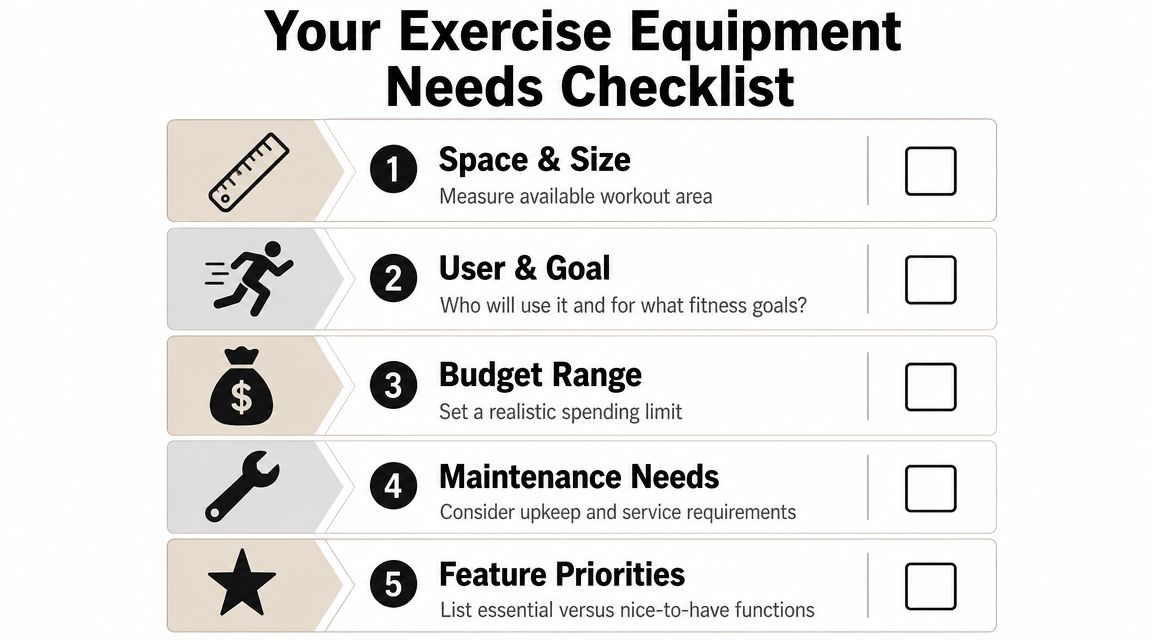
Before comparing brands, write down exactly what the equipment has to do. Not broadly. Precisely.
That sounds obvious, but many buying problems start with a vague brief such as "we need a bike for testing" or "we need a body composition system for athletes and patients." Those are categories, not specifications. The more expensive and specialised the purchase, the more dangerous that vagueness becomes.
Start with the protocol not the product
A better opening question is this. What protocol or service must this equipment support?
If you need a cycle ergometer for submaximal testing, your requirements differ from a facility buying bikes for general conditioning. If you're supporting respiratory analysis, software compatibility, consumables, and calibration routines become central. If you're building a teaching lab, durability and ease of repeated student use may matter as much as precision.
I usually separate needs into four buckets:
Measurement need
What output must be accurate or repeatable? Power, speed, gas exchange, body composition, heart rate capture, or workload staging all create different procurement demands.User population
Healthy athletes, deconditioned patients, older adults, school groups, or mixed populations all affect seat adjustment ranges, access height, hand support, protocol flexibility, and cleaning requirements.Operating environment
A private clinic room, university lab, open gym floor, and rehab department create different constraints around noise, footprint, supervision, storage, and infection control practice.Workflow need
Decide who will use it, who will maintain it, where data goes, and how often staff need to reset it between users.
Build a specification sheet people can actually use
A useful spec sheet isn't a marketing wishlist. It's a practical filter for suppliers and internal approval.
Industry guidance around gym and exercise equipment manufacturing recognises that professional equipment needs higher tolerances for load rating, frame gauge, and duty cycle, and that a common mistake is choosing by appearance rather than checking structural and operational suitability for commercial or clinical use, as outlined by IBISWorld's overview of gym and exercise equipment manufacturing. That principle applies just as much to online buying as it does to showroom purchasing.
Include details such as:
Physical constraints
Footprint, access routes, floor loading, ceiling clearance, transport wheels, and whether the unit can be assembled in the room where it'll live.Electrical and digital requirements
Power supply, plug type, battery backup if relevant, network dependency, USB export, and whether the software requires a dedicated machine or recurring licence management.Operational tolerances
Maximum user load, adjustment range, cleaning compatibility, and expected frequency of use in a day or week.Evidence requirements
Calibration method, validation documentation, service intervals, warranty terms, and availability of replacement accessories.
A compact way to document this is below.
| Requirement area | What to define before browsing |
|---|---|
| Primary use | Testing, rehab, teaching, conditioning, or mixed use |
| Users | Population, size range, mobility needs, supervision level |
| Outputs | Which measurements matter and how they'll be used |
| Facility | Space, power, flooring, ventilation, data access |
| Support | Installation, servicing, consumables, staff training |
One practical benchmark helps when you're assessing heavy-duty strength equipment. If you're buying racks or similar structures for serious use, buyers should verify frame construction and load suitability rather than trusting styling cues alone. For related examples of what belongs in a serious facility shortlist, Cartwright Fitness has a useful page on essential sports performance testing equipment.
Buy against a written requirement. If a supplier can't map their equipment to that requirement clearly, remove it from the shortlist.
How to Decode Specs and Validate Claims Online
A polished product page can hide a weak instrument.
For professional procurement, the question is not whether the equipment looks impressive online. The question is whether it will produce defensible data, fit your workflow, and remain serviceable after the first year. That is a very different standard from buying general gym kit.
Read the specification page like a skeptic
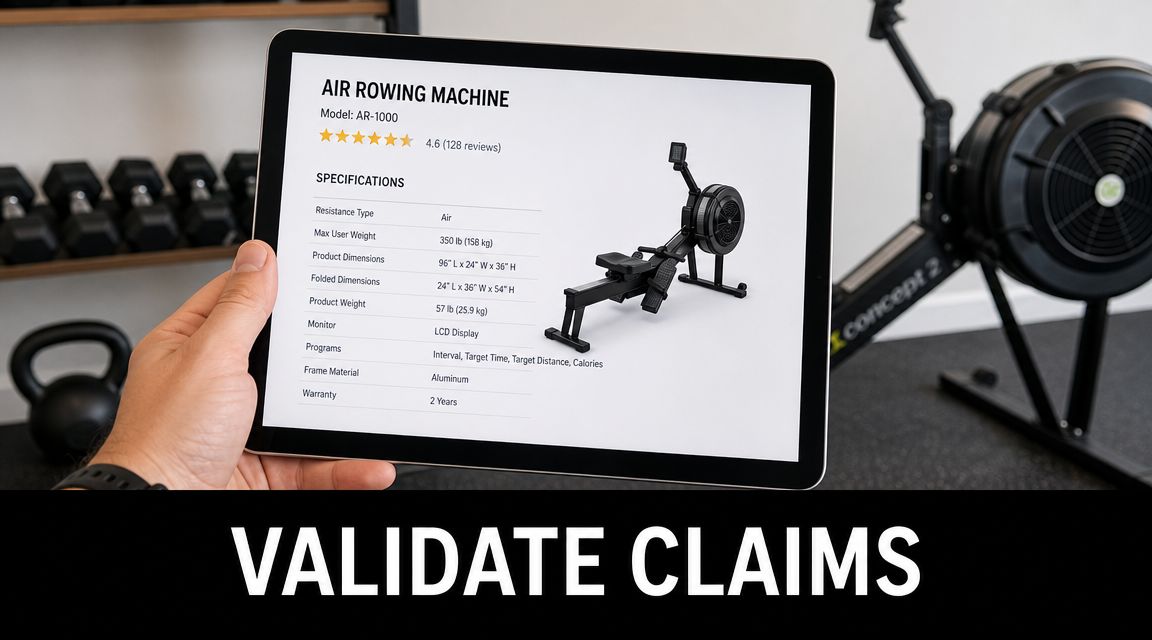
Start with nouns and numbers, not adjectives. Terms like advanced, commercial, intelligent, professional, and lab-grade have no procurement value unless the listing ties them to a measurable standard, a defined function, or a support document.
I usually test a listing by asking a simple question. Could I write an internal approval note from this page alone, or would I still be guessing? If the answer is guesswork, the listing has not done its job.
These are the points that expose weak specs fastest:
Measurement definition
Identify what the device measures directly and what it estimates through an algorithm. Vendors often present calculated outputs as if they were measured values.Accuracy and tolerance
Look for stated error ranges, repeatability, resolution, and test conditions. If none are published, treat performance claims cautiously.Calibration process
Check whether calibration is user-performed, engineer-performed, factory-only, or not described at all. That affects downtime, compliance, and ongoing cost.Data handling
Confirm export formats, raw data access, session logs, API availability, and whether the software limits you to the vendor's reporting workflow.System compatibility
Verify accessory, sensor, and software compatibility in writing. Heart rate belts, masks, tablets, printers, cables, and middleware can turn a workable system into a dead end if they are not supported.
That distinction matters with cycling systems in particular. A bike can be well built and still be a poor testing platform if resistance control, workload repeatability, and calibration are weak. For a practical definition, see what an ergometer is.
Validate the claim behind the claim
The bigger risk online is not an obvious falsehood. It is a vague statement that sounds technical enough to pass unchecked.
"High accuracy." "Assessment ready." "Suitable for professional use." None of those phrases should survive first review without evidence. Ask for the document set behind the marketing copy. That usually means calibration guidance, validation material, service intervals, software support notes, and confirmation of any claimed compliance or test standard.
A serious supplier may not publish every document on the product page. They should be able to send it promptly when asked. If they cannot, budget for more risk.
The cost implication is straightforward. An instrument that drifts, cannot be recalibrated easily, or exports poor data often costs more over its life than a higher-priced unit with clear validation and support. The purchase price is only one line in the file.
If a supplier says a device is suitable for assessment, ask what supports that statement. Calibration documentation, validation material, and service guidance should exist outside the sales copy.
A quick review of the areas below usually separates credible listings from sales-led ones:
| Listing claim | What to ask for |
|---|---|
| High accuracy | Published tolerance, test conditions, and calibration method |
| Professional use | Duty cycle, user limits, maintenance schedule, and expected service life |
| Smart connectivity | Export formats, supported platforms, firmware update process, and data ownership terms |
| Easy maintenance | Consumables list, cleaning method, replacement parts availability, and service response path |
One more check saves time. Look for contradictions between the brochure, the technical sheet, and the user manual. If load capacity differs across documents, if an output appears in one place but not another, or if software features are shown without version details, stop and ask for clarification before issuing a PO.
A short walkthrough can help when you're reviewing machine information in context:
Vetting Online Vendors and Their Support Systems
Vendor risk usually shows up after payment, not on the product page. A polished listing can still leave you with no calibration help, no parts path, and no clear owner when software or sensors fail.
Manufacturer distributor and reseller are not the same
The seller's place in the supply chain affects service quality, response time, and your total cost of ownership. I treat that as a procurement issue, not a branding detail.
A manufacturer often knows the hardware and firmware in depth but may have limited local coverage. A distributor may be the better option if they hold parts, train staff, and can get a field technician onsite without factory escalation. A marketplace reseller may offer broad access and competitive pricing, but many do not own the support process once the crate is delivered.
That distinction matters more with connected equipment. As noted earlier, connected gym hardware is a growing category. The practical implication is simple. More units now depend on firmware, app compatibility, user permissions, and data export settings. If the vendor cannot explain who supports those functions, the lowest online price can become the most expensive purchase on your register.
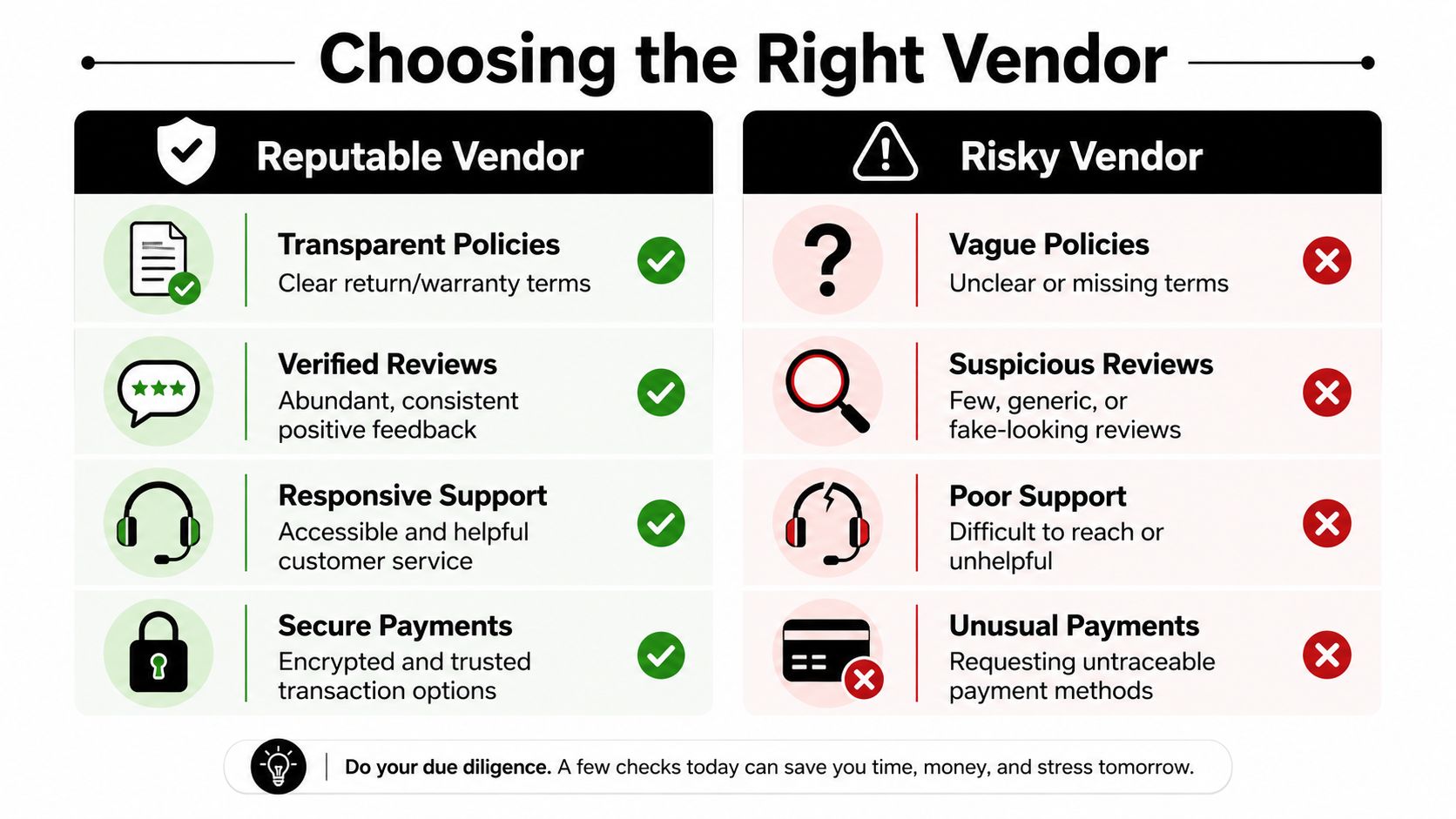
I use a simple screen before approving any supplier:
| Seller type | Usually strong at | Common limitation |
|---|---|---|
| Manufacturer | Factory knowledge, product history, engineering detail | Local service and response may be slower |
| Distributor | Regional training, spare parts access, service coordination | May only support selected models or territories |
| Marketplace reseller | Fast access, broad catalogue, visible pricing | Limited technical ownership after the sale |
A good supplier does not need to make the equipment. They do need to show clear responsibility for support.
Questions that expose weak support fast
Ask questions that require names, locations, and process steps. General reassurance is not enough.
Who owns the warranty claim from first report to resolution?
Ask for the actual process, including whether your team deals with the seller, the distributor, or the manufacturer.Where are spare parts stocked, and what is held locally?
A treadmill controller or sensor shipped only on demand from overseas creates a very different downtime risk than a locally stocked part.What support is included after installation?
Clarify whether the quote covers operator training, refresher training, software onboarding, and annual service reminders.Who supports the software stack?
Hardware support, account administration, firmware updates, and data export issues often sit with different parties. Get that split in writing.What happens if the unit fails a calibration or verification check?
The answer should include service escalation, expected turnaround, and whether a loan unit is ever available.
A professional vendor can explain failure handling in operational terms. Who answers the call, what gets tested first, which parts are commonly replaced, and how long the buyer is likely to be without the unit.
Good vendors also volunteer limits. If a seller says a device is suitable for high-throughput testing, ask how many assessments per day similar sites run, what preventive maintenance is recommended, and which components wear first. Evasive answers usually signal that support was never built for serious use.
I also look for signs that the supplier understands procurement beyond the shopping cart. Can they provide serialised documentation, service contacts, training records, and a clean paper trail for finance and compliance teams? If they handle cross-border equipment regularly, their process should sound disciplined. The same kind of documentation mindset outlined in AUSFF's guide for importing US cars applies here. Chain of custody, paperwork quality, and clear responsibility matter long before anything goes wrong.
The basic test is straightforward. If no one clearly owns commissioning, software access, spare parts, consumables, and servicing, your team will end up owning all of it. That is rarely visible in the online price.
Navigating Procurement Shipping and International Logistics
The online listing is the easy part. Procurement is where hidden cost shows up.
This is especially true when you're buying across borders, ordering bulky equipment, or importing anything with software, specialist power requirements, or fragile components.
Treat the quote as a risk document
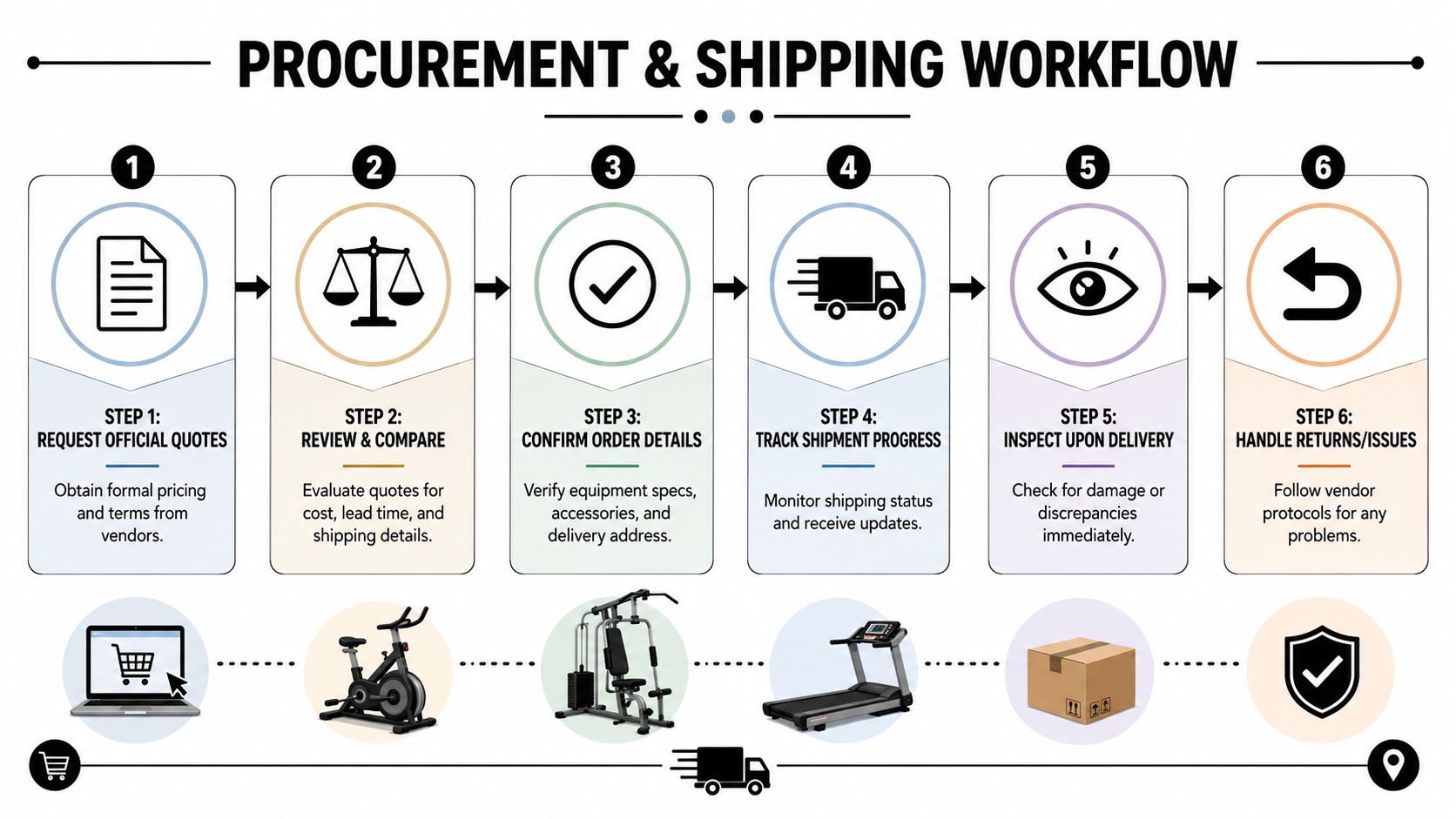
A formal quote should do more than state a selling price. It should clarify what is included, what isn't, and who carries responsibility at each stage.
For professional-grade purchases, ask the vendor to confirm:
Shipping basis
Whether pricing includes delivery only, customs handling, or full landed cost supportIncluded items
Accessories, cables, consumables, software access, manuals, and setup materialsLead time assumptions
Whether the timeline is based on stock on hand, factory dispatch, or third-party shipping estimatesDamage process
What happens if the crate arrives dented, incomplete, or non-functional
A lot of buyers approve a purchase order based on the visible line items and only later discover they still need adapters, local installation help, replacement consumables, or an extra software step before first use.
Cross-border buying fails in predictable ways
One of the largest blind spots in exercise equipment online procurement is cross-border risk. Buyers need to account for import duties, VAT, freight damage, and voltage compatibility, because those hidden issues can determine whether a purchase remains viable, as discussed in Global Fitness coverage of equipment buying considerations.
That applies whether you're importing a large treadmill, a compact analyser, or an accessory bundle. The item may be technically available to ship to your country, but that doesn't mean the purchase is operationally sensible.
Procurement warning: Never assume international shipping means ready-to-use delivery. Confirm customs responsibility, electrical compatibility, and who supports the equipment once it clears the border.
If your team isn't used to import documentation, it can help to look at guides outside the fitness sector that explain international logistics in plain language. For example, AUSFF's guide for importing US cars is useful because it shows how freight, compliance, and landed cost can diverge sharply from sticker price. The category is different, but the procurement lesson is the same.
A few checks prevent most nasty surprises:
Confirm voltage and plug standards before payment
Adapters are not always a proper solution for professional equipment.Inspect on delivery immediately
Note visible damage on the carrier paperwork and photograph everything before full unpacking if the item is high value or fragile.Clarify return practicality
Returning a small accessory is one thing. Returning a heavy machine internationally can be unrealistic in cost and time.Check local servicing before import
If no one in your region can inspect or repair the unit, your low purchase price may turn into extended downtime.
Planning for Installation Training and Long-Term Support
Delivery isn't the finish line. It's the handover point.
A lot of expensive equipment underperforms because the buying team planned the purchase but not the implementation. That shows up in simple ways. The room isn't ready. Staff don't know the calibration routine. A required consumable wasn't ordered. The software is installed on the wrong machine. Nobody owns maintenance.
Commissioning is part of the purchase
Before the equipment arrives, decide who is responsible for each part of first use:
| Task | Who should own it |
|---|---|
| Site readiness | Facility or lab lead |
| Physical installation | Vendor, engineer, or trained internal team |
| Software setup | IT plus supplier support |
| User training | Supplier and department lead |
| Acceptance checks | End user with procurement record |
Write those names down. If the responsibilities stay informal, they often stay undone.
For any equipment used in testing, create a basic commissioning record. Log the serial number, delivery condition, initial setup date, accessories received, software version, calibration status, and the staff members trained. That record becomes useful quickly when support is needed.
Think in years not delivery dates
Total cost of ownership is where professional buying becomes different from ordinary online shopping. The initial invoice matters, but so do servicing intervals, downtime risk, consumables, software continuity, and staff confidence in the data the device produces.
A maintenance plan moves beyond mere administration, becoming a key protector of value. A simple checklist for inspection, cleaning, accessory replacement, and service scheduling goes a long way, especially for busy departments. Cartwright Fitness provides a practical fitness equipment maintenance checklist that can help teams build a repeatable support routine.
Equipment lasts longer when someone owns the routine. Cleaning, checks, calibration, and software upkeep need a named person, not a general intention.
Keep a small stock of likely consumables and wear items if the equipment depends on them. Train more than one staff member. Record support contacts somewhere obvious. If a device is central to testing or teaching, plan for absence, turnover, and delay. That's how you protect uptime.
The strongest online purchases are rarely the cheapest. They're the ones that still work properly, still fit the workflow, and still produce trusted outputs years later.
If you're sourcing validated testing tools, body composition systems, respiratory equipment, or performance assessment hardware, Cartwright Fitness is one option to review alongside other specialist suppliers. Their catalogue focuses on professional-use testing equipment and related consumables, which is the kind of buying environment where accuracy, documentation, and post-sale support matter far more than a simple lowest-price comparison.