

We've all been there. You’re hitting the gym, eating clean, and feeling great, but that number on the bathroom scale just won't cooperate. It’s frustrating, and it can feel like you’re not making any progress. This is precisely where body composition analysis equipment steps in, shifting the focus from just your total weight to what that weight is actually made of.
Why Your Scale Is Only Telling You Half the Story
For decades, we’ve let the standard bathroom scale be the ultimate judge of our fitness. The problem? It tells a ridiculously limited story. Imagine two people who both weigh exactly 180 pounds. One could be a lean, muscular athlete, while the other might have a much higher percentage of body fat and less muscle. They have the same weight, but their health and fitness levels are worlds apart.
Your weight is just one number, and it simply can’t capture this crucial difference.
Think of it like this: your total weight is just the cover of a book. It gives you a tiny hint, but it tells you nothing about the story inside. Body composition analysis, on the other hand, reads you the entire book, chapter by chapter. It breaks down your total weight into its most important parts:
- Fat Mass: All the stored fat in your body.
- Muscle Mass: The weight of your skeletal muscles, the engine that powers your metabolism and strength.
- Bone Mass: The density and weight of your skeleton.
- Body Water: The total amount of fluid, which is vital for almost every process in your body.
When you see this detailed breakdown, everything changes. You realize the goal isn't just "weight loss." For most of us, the real win is losing fat while gaining (or at least maintaining) precious muscle. This is what fitness pros call body recomposition. Without the right data, you’re just guessing. You have no way of knowing if your diet and exercise plan is actually building muscle or if the weight you're losing is muscle mass, which is the last thing you want.
To put it simply, a traditional scale can be misleading. Here’s a quick look at what it hides compared to what a body composition analyzer reveals.
What a Standard Scale Hides
| Metric | What a Traditional Scale Shows | What a Body Composition Analyzer Reveals |
|---|---|---|
| Total Weight | A single number (e.g., 180 lbs). | A single number, but with context. |
| Body Fat | Nothing. It's completely invisible. | The exact percentage and pounds of fat mass. |
| Muscle Mass | Nothing. Muscle gain can be mistaken for a "plateau." | The precise weight of your skeletal muscle mass. |
| Progress | Only shows upward or downward movement of total weight. | Tracks changes in fat vs. muscle, giving a true picture of progress. |
This clearer picture is why people are moving beyond outdated methods. It’s not just a passing trend; it’s a fundamental shift in how we approach health. The market for these devices is expected to grow by 10.35% each year in the U.S. alone, fueled by a growing awareness that a single number isn't enough. You can learn more about the growing demand for these analyzers from IMARC Group.
Ultimately, this equipment gives you the detailed snapshot you need to stop guessing and start making truly informed decisions on your health journey.
How Body Composition Analyzers Work
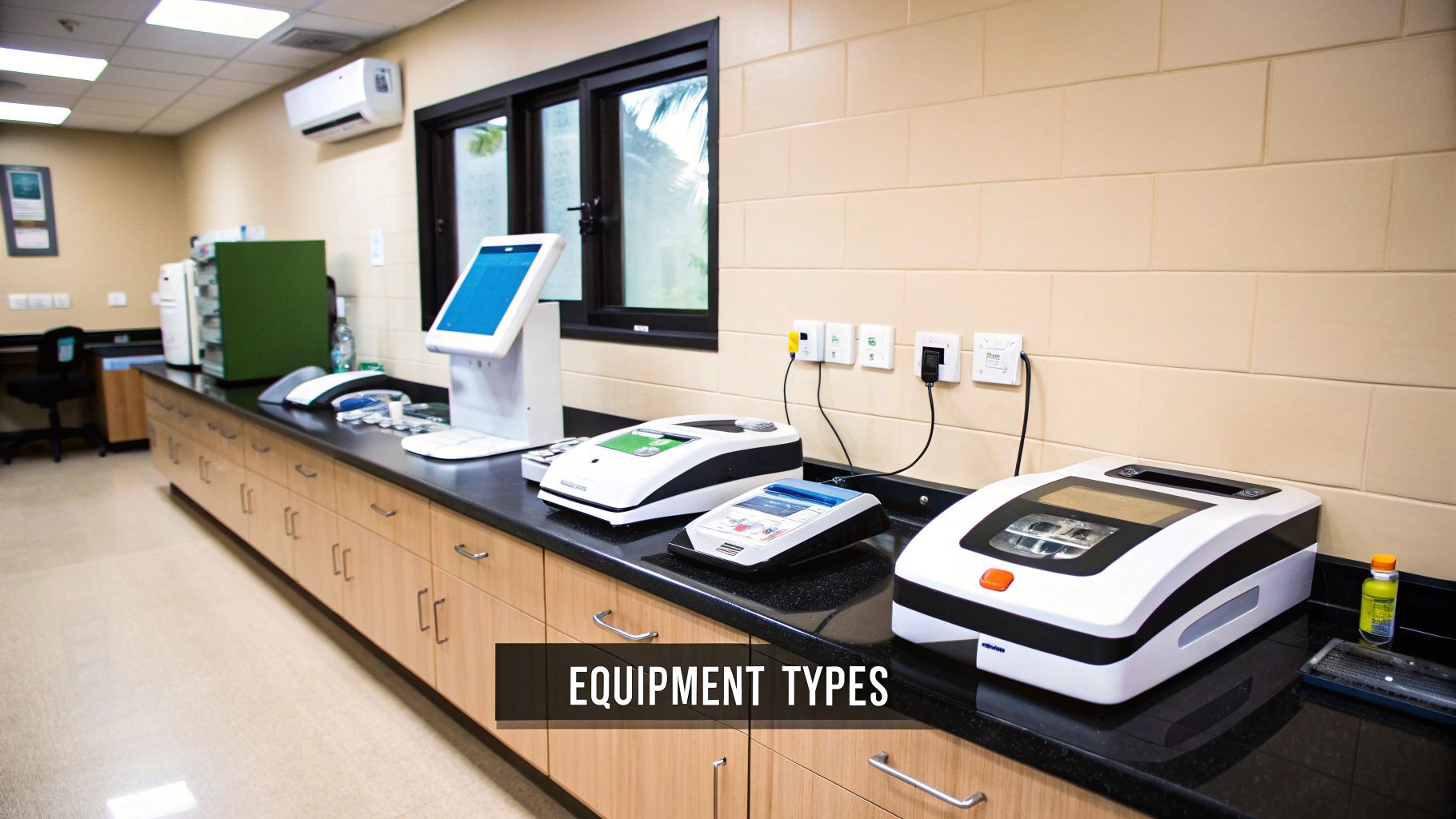
Trying to understand what goes on inside body composition analysis equipment can seem a little intimidating, but the science behind it is surprisingly straightforward. Each type of technology uses its own clever way to "see" what your body is made of, giving you a picture that goes far beyond the single number on a traditional scale.
Let's pull back the curtain on the science behind the most common methods. The idea isn't to get bogged down in technical jargon, but to build a solid, practical understanding of how these devices work their magic. Once you get the gist, you'll be able to make better sense of your results and pick the right tool for your goals.
Bioelectrical Impedance Analysis (BIA): The Gentle Current
You've probably seen a Bioelectrical Impedance Analysis (BIA) device before—they're the technology behind most of those popular smart scales and many professional analyzers. They work by sending a tiny, completely safe electrical current through your body.
Think of that current like water flowing through a landscape. Water moves quickly and easily through some materials but gets slowed down by others. In your body, muscle is packed with water, so it acts as a great conductor, allowing the electrical signal to pass through with very little resistance.
Fat tissue, on the other hand, is mostly dry. When the current hits fat, it meets resistance, which is also known as impedance. The BIA device precisely measures how much the signal slowed down on its journey.
In simple terms, the more resistance (or impedance) the signal encounters, the higher the body fat percentage the device estimates. Using this measurement, the machine then runs it through special formulas to calculate your body fat, muscle mass, and even your total body water.
This method is incredibly fast, completely non-invasive, and affordable, which is why it's a go-to for tracking progress at home or in the gym.
Dual-Energy X-ray Absorptiometry (DEXA): The High-Resolution Map
Often hailed as the gold standard in body composition, Dual-Energy X-ray Absorptiometry (DEXA) gives you an incredibly detailed look inside your body. It was first designed to measure bone density, but researchers quickly realized it was exceptionally accurate for mapping out fat and muscle, too.
Imagine you have a high-tech scanner that can distinguish between different layers of tissue. A DEXA scan does something similar, using two separate, low-dose X-ray beams, each with a different energy level.
Bone, fat, and lean tissue all absorb these X-ray beams in unique ways. By tracking how much of each beam gets absorbed as the scanner moves over you, the system can tell these three components apart with remarkable precision.
The end result is a detailed report that breaks down:
- Total body fat percentage and mass.
- Total lean muscle mass (with bone mass excluded).
- Bone mineral density, a vital marker for skeletal health.
- Segmental analysis, which shows you exactly where your fat and muscle are stored—in your arms, legs, and torso.
This level of detail makes DEXA an indispensable tool for medical clinics, serious athletes, and anyone who needs the absolute highest degree of accuracy.
Skinfold Calipers: The Old-School Pinch Test
The most hands-on approach involves skinfold calipers, a method that's been around for decades. It's built on a pretty simple and logical idea: the amount of fat you can pinch just under your skin (subcutaneous fat) is directly related to your total body fat.
Think of it like pinching a fold of fabric to gauge its thickness. A trained technician uses the calipers to gently pinch the skin and the underlying fat layer at several specific points on the body.
The most common measurement sites are:
- Triceps: On the back of your upper arm.
- Bicep: On the front of your upper arm.
- Subscapular: Just beneath your shoulder blade.
- Suprailiac: Right above the hip bone.
The thicknesses from these different spots are then plugged into a specific equation to estimate your overall body fat percentage. While its accuracy really depends on the skill of the person doing the measuring, it’s still a very low-cost and portable way to get a solid estimate of body fat.
How to Choose the Right Body Composition Analyser
Now that we’ve covered the science behind the different technologies, it's time to get practical. How do you pick the right tool for the job? It really comes down to a balancing act between three crucial factors: accuracy, cost, and convenience.
There’s no single "best" method for everyone. Each piece of body composition analysis equipment offers a different mix of these three elements. For instance, a clinical-grade DEXA scan delivers incredibly precise data, but it's expensive and you'll need an appointment at a special facility. On the flip side, a BIA smart scale is fantastic for daily check-ins at home, though it won't have the same pinpoint accuracy as a medical device.
Matching the Technology to Your Goals
The most important question to ask yourself is: what am I trying to achieve? Your personal goals should steer your decision. An elite athlete's needs are vastly different from someone just starting their health journey who wants to see long-term changes.
For Consistent Home Tracking: Bioelectrical Impedance Analysis (BIA) is a fantastic choice. Modern smart scales are affordable and make it incredibly simple to log your progress week after week, right from your own bathroom.
For Clinical-Grade Precision: Dual-Energy X-ray Absorptiometry (DEXA) scans are the gold standard. This is the go-to for medical assessments, scientific research, or for any athlete who needs the most accurate body fat and muscle measurements possible.
For a Budget-Friendly Manual Approach: You can’t go wrong with classic skinfold calipers. They are a very low-cost option, but there's a catch—their accuracy really hinges on the skill of the person taking the measurements. In the hands of a trained professional, they are a surprisingly reliable tool.
A Comparison of Body Composition Analysis Methods
To help you weigh the pros and cons, this table provides a head-to-head comparison of these popular analysis technologies. Think about what matters most to you as you review the options.
| Technology | Accuracy Level | Typical Cost | Convenience and Accessibility | Best Suited For |
|---|---|---|---|---|
| BIA | Good to Very Good | Low to Moderate | High | Home users tracking trends and general fitness enthusiasts. |
| DEXA | Excellent (Gold Standard) | High | Low | Athletes, medical patients, and researchers needing top-tier precision. |
| Skinfold Calipers | Fair to Good | Very Low | Moderate | Budget-conscious individuals with access to a trained technician. |
Ultimately, this comparison highlights the trade-offs. BIA offers incredible ease of use, DEXA provides unmatched accuracy, and calipers are the most budget-friendly if you can ensure consistent measuring technique.
The infographic below gives you a feel for the rich, detailed data a good analysis can provide, breaking down muscle, fat, and even water content.
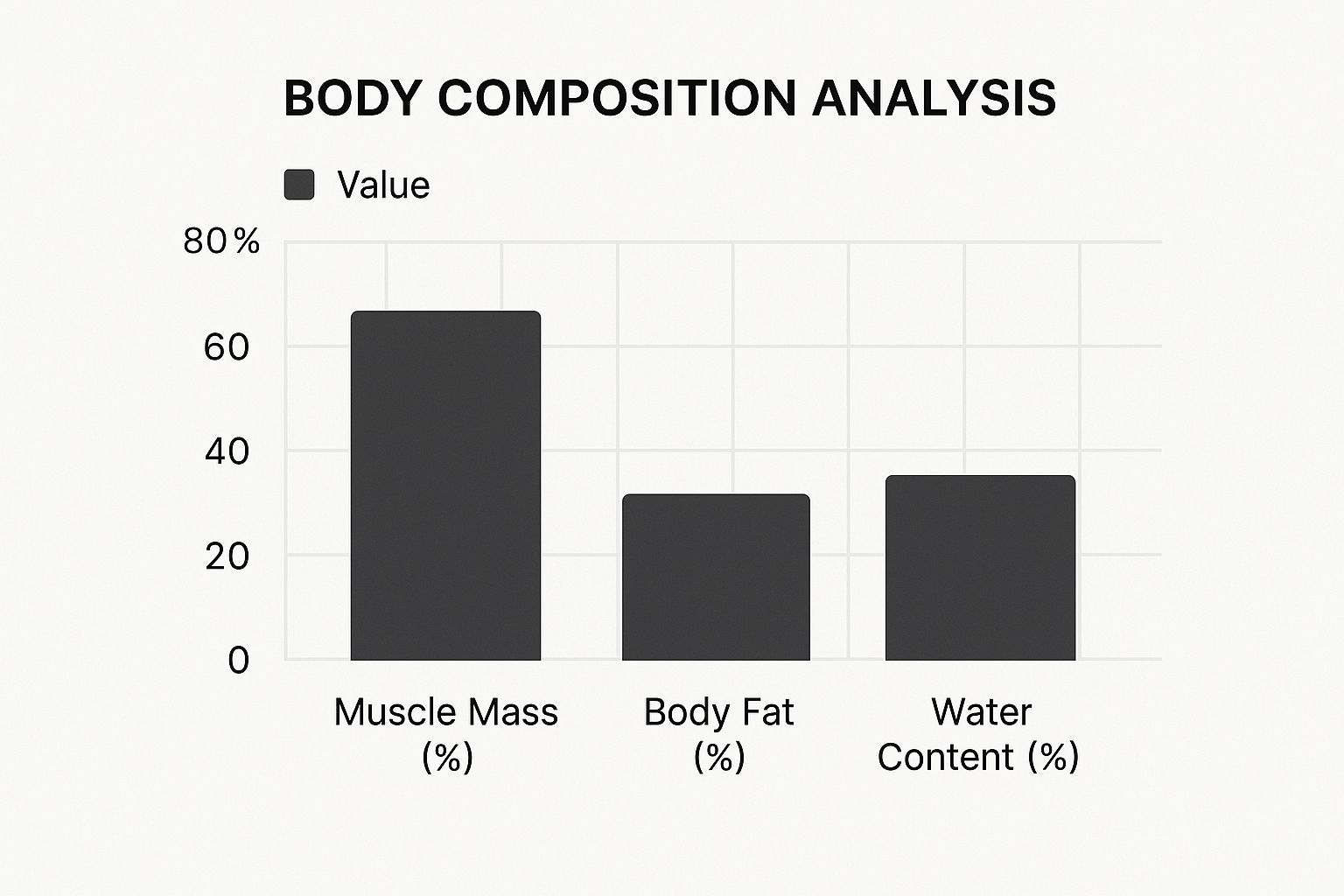
It’s this kind of insight—seeing how all the core components add up—that a simple weight scale just can't give you.
At the end of the day, the best method is the one you'll actually use consistently. An affordable BIA scale you step on every week will give you far more valuable trend data than a single, expensive DEXA scan you only get once a year.
By carefully considering these factors against your own needs, you can confidently choose the right equipment. For professionals outfitting a gym or wellness center, exploring a full range of validated fitness testing equipment is the best way to meet the diverse needs of your clients.
Making Sense of Your Results
So you’ve just finished your scan and have the report in your hands. It’s exciting, but that page full of numbers, graphs, and charts can look more like a complicated science experiment than a simple health summary. This is where the true power of body composition analysis equipment comes into play. Getting the numbers is just the start—the real magic happens when you learn what they mean for you and your goals.
Instead of obsessing over a single number on a traditional scale, you now have a rich, detailed story about what’s happening inside your body. It allows you to set smarter, more meaningful goals that go far beyond just "losing weight." Let's walk through the key metrics on a typical report and decode what they’re actually telling you.
Decoding Your Key Metrics
Most professional analyzers give you a detailed printout that offers a much richer picture than just body fat. While you'll see familiar numbers like BMI, it’s the other metrics that provide the real insights. Here are the core components you’ll want to pay close attention to.
Body Fat Percentage: This is the classic metric—the percentage of your total weight that's made up of fat. A certain amount of fat is absolutely essential for things like hormone function and energy, but tracking this number helps you see if the weight you're losing is actually fat, not something else.
Skeletal Muscle Mass (SMM): This is the good stuff. It's the weight of the muscles attached to your skeleton, the ones you can actually grow and strengthen in the gym. SMM is the engine of your metabolism; the more muscle you have, the more calories your body burns around the clock.
Visceral Fat: Pay close attention to this one. Visceral fat is the dangerous, "hidden" fat stored deep within your abdomen, packed around your vital organs. High levels are a major red flag for health risks, making it one of the most critical numbers to monitor and reduce.
Total Body Water: This tells you how much of your body is fluid. It's more important than you might think, especially because muscle is roughly 75% water. Proper hydration is key for performance, recovery, and getting an accurate reading, which you can learn more about in our guide on how accurate body fat scales are and what affects their readings.
Turning Numbers into Actionable Insights
Armed with this data, you can finally stop the guesswork. Ever been frustrated when the scale won't budge? A body composition report might reveal you've actually had a fantastic month, losing 2 pounds of fat while gaining 2 pounds of muscle—a huge win that a regular scale would have completely missed.
Your report isn’t just a snapshot of where you are today; it’s a roadmap for where you want to go. Watching your visceral fat drop or your skeletal muscle mass climb gives you tangible proof that your hard work is changing your body in ways that truly matter for long-term health.
This shift towards smarter health tracking is why the body composition analyzer market is booming. Valued globally at USD 0.66 billion, it's on track to reach USD 1.53 billion. You can dig into the details of this expanding market and its drivers on SkyQuestt.com. This incredible growth shows just how much people want to understand their health on a deeper level.
Finding the Right Equipment for You
Stepping into the world of body composition analysis equipment can feel a bit like walking into a crowded electronics store—so many choices, so much technical jargon. The trick is to tune out the noise and figure out what you actually need. Before you spend a dime, you need a clear picture of your goals, your budget, and the features that will genuinely help you.
Think about it: are you a competitive athlete needing surgical precision to shave seconds off your time, or are you just trying to get a handle on your health and watch your progress over the long haul? Your answer changes everything, guiding you toward completely different tools. A little self-assessment upfront saves a lot of second-guessing later.
Clarifying Your Needs and Budget
To find your perfect match, let's start with a few simple questions. Running through this checklist is the quickest way to cut through the clutter and zero in on what makes sense for you.
- What’s the main goal here? Are you focused on shedding fat, building muscle, or just keeping an eye on your overall health?
- How often will you use it? If you plan on weekly check-ins, you'll want something more convenient than a machine you only use twice a year.
- What’s the budget? You can find great smart scales for under a hundred bucks, but clinical-grade machines can run into the thousands.
- What features are must-haves? Do you absolutely need your data synced to an app? Is a detailed breakdown of each limb important, or do you need to track visceral fat?
Being honest with yourself here creates a solid foundation for your search. For clinics and professional facilities, the high cost of top-tier equipment can be a barrier, but options like applying for medical supply grants can help make it more manageable.
The best device is the one that gives you the right information for your goals and fits into your life without a fuss. There's no point in paying for bells and whistles you'll never touch.
This push for personalized health data is a big deal, and it's making the market boom. The global market for these analyzers is on track to hit nearly USD 935.80 million by 2032, largely because more people are focused on preventive health and want devices that connect to their digital lives. You can read more about these health technology market projections on GlobeNewswire.
What this growth means for you is more choice than ever before. Whether you’re looking for a simple scale for your bathroom or a professional machine for a gym, taking a moment to match the tech to your needs is the most important step you can take. To see some professional-grade examples, our guide to body composition analyzers is a great place to start.
Frequently Asked Questions
Even after getting familiar with the tech, you probably have a few practical questions about using body composition analysis equipment day-to-day. That's perfectly normal. This section answers the questions we hear most often, helping you get reliable readings, stay safe, and trust the numbers you see.
Let's dive into those final details.
How Often Should I Measure My Body Composition?
This is a big one. For most people, measuring your body composition every two to four weeks is the sweet spot. This timeframe is long enough to show real, meaningful trends—like fat loss or muscle gain—without getting thrown off by normal daily fluctuations.
After all, your weight can swing quite a bit from one day to the next based on hydration, what you ate, or if you just finished a workout. Measuring too frequently can be misleading and, frankly, a bit discouraging.
The golden rule for tracking progress is consistency. Always measure yourself under the same conditions. The best way to do this is first thing in the morning, right after you've used the restroom and before you've had anything to eat or drink.
Sticking to this routine gives you a stable baseline. It ensures the changes you’re tracking are actual shifts in your body’s makeup, not just background noise from your daily life. This is how you get a true picture of your long-term progress.
Are At-Home BIA Scales Actually Accurate?
It’s a fair question, and one we get all the time. The short answer is: it depends on what you mean by "accurate." Will your smart scale at home give you the same exact reading as a clinical DEXA scan? No, it won't. But it’s an incredibly valuable tool for what matters most at home: tracking trends over time.
Think of your home scale less like a hyper-precise lab instrument and more like a trusted guide pointing you in the right direction. Its readings can be affected by a few things:
- Hydration: Being dehydrated or even just extra hydrated can throw off the numbers significantly.
- Recent Meals: A big meal can temporarily alter the reading until it's digested.
- Exercise: A tough workout can shift your body's fluid balance for hours.
The key is consistency. If you use your scale the same way, at the same time, every time you measure, it becomes remarkably good at its job. It will clearly show you if your body fat percentage is trending down while your muscle mass is heading up. And for tracking progress at home, that trend data is far more useful than any single number.
Can I Use a Body Composition Analyzer If I Have a Pacemaker?
This is a critical safety question, so let's be direct. For most devices that use Bioelectrical Impedance Analysis (BIA), the answer is a firm no. BIA technology works by sending a tiny, imperceptible electrical current through your body to measure its resistance.
Manufacturers are very clear in their warnings: you should not use BIA equipment if you have a pacemaker or any other implanted electronic medical device, such as an implantable defibrillator. There’s a potential risk, however small, that the device's electrical signal could interfere with your implant's function.
Your safety comes first, so always follow these steps:
- Consult Your Doctor: Before you even consider using a BIA device, get explicit clearance from your physician.
- Read the Manual: Always take the time to read the manufacturer's safety warnings and contraindications. They are there for a reason.
- Choose a Safe Alternative: If you have an implant, non-electrical methods like skinfold calipers are a much safer way to estimate your body composition.
When it comes to your health, you can't be too cautious. Never take a risk with a medical implant. If BIA isn't right for you, there are still great methods available to track your progress safely and effectively.
At Cartwright Fitness, our focus is on providing professional-grade, validated testing equipment so you can get the most accurate and reliable health data possible. Take a look at our curated selection of analyzers and tools designed to elevate your fitness assessments.
Discover our professional health testing equipment at Cartwright Fitness


